

AI for Early Cancer Detection: A Doctor's Mission

Dr. Bea Bakshi discusses how AI is revolutionizing early cancer detection by analyzing patient data, potentially saving lives and reducing healthcare costs.

3 min read
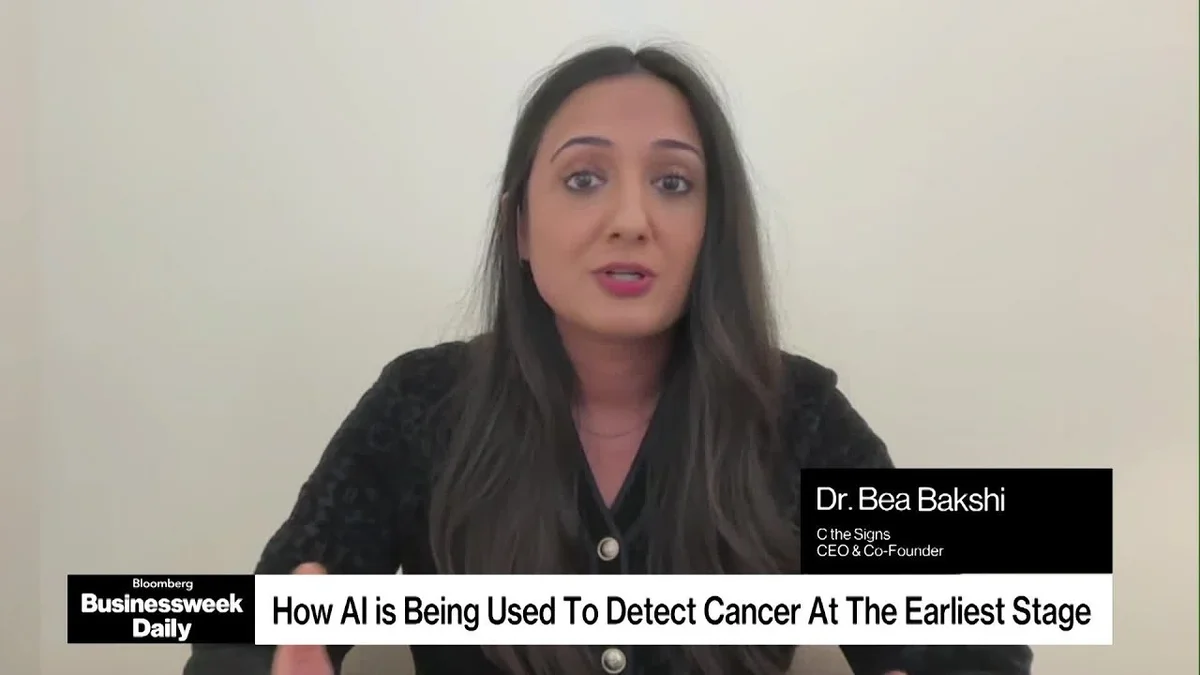
Dr. Bea Bakshi speaking on a split-screen video call about AI and cancer detection.
Image credit: Bloomberg Businessweek Daily· Bloomberg Podcast

Dr. Bea Bakshi, a former junior doctor and CEO & Co-founder of C the Signs, shared her journey into using artificial intelligence for early cancer detection on Bloomberg Businessweek Daily. Her motivation stemmed from witnessing firsthand the tragic outcomes of late cancer diagnoses during her time in the emergency room.

From ER to AI: Dr. Bakshi's Journey

Bakshi's career began in the emergency room, where she frequently encountered patients whose cancers were diagnosed at advanced stages. This experience highlighted a critical gap in the healthcare system. She observed that despite patients presenting with worsening symptoms over months, the system often failed to identify the underlying cancer early enough. This led her to a pivotal realization: the difference between life and death for many patients often hinged on the timing of their diagnosis.

The Power of AI in Early Cancer Detection

This personal insight fueled Bakshi's passion for developing a proactive approach. She recognized the potential of AI to analyze vast amounts of data from electronic health records (EHRs) to identify individuals at higher risk of developing cancer. By flagging these patients early, the goal is to facilitate timely interventions, screenings, and diagnoses, thereby improving patient outcomes.

Related startups

The full discussion can be found on Bloomberg Podcast's YouTube channel.
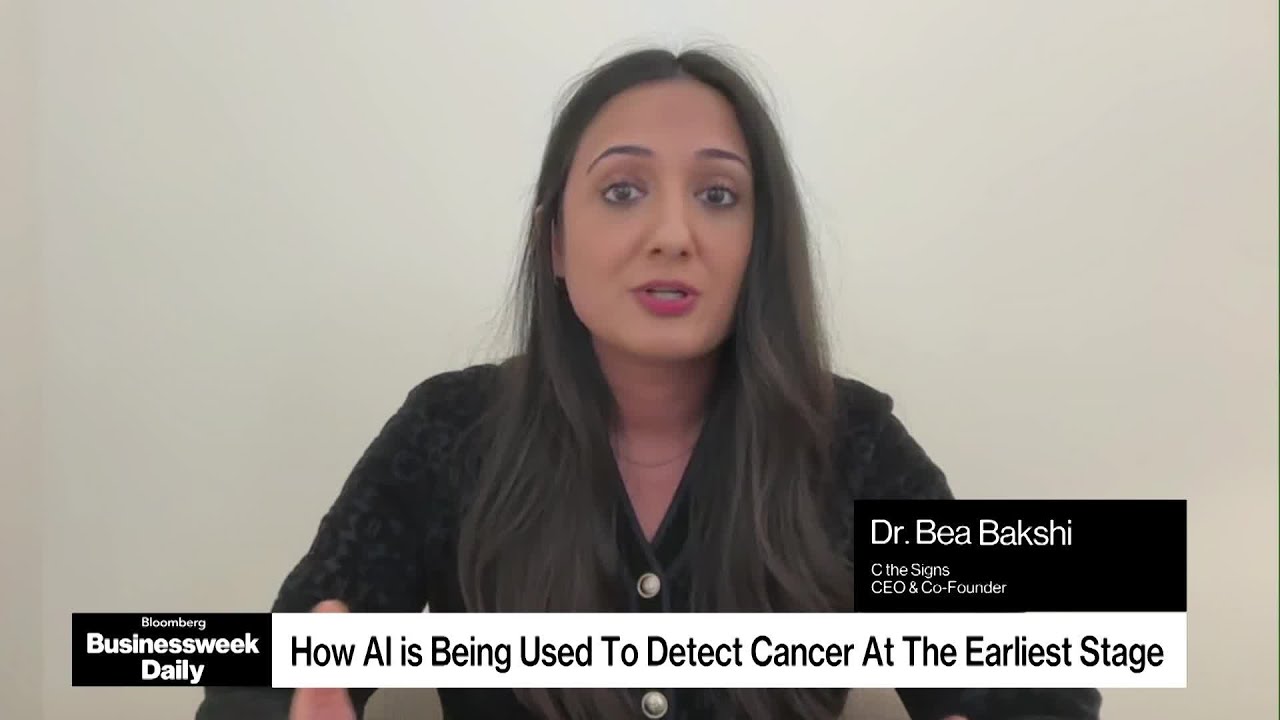
How AI Is Being Used To Detect Cancer at The Earliest Stage - Bloomberg Podcast
How AI Is Being Used To Detect Cancer at The Earliest Stage — from Bloomberg Podcast

Bakshi explained, "We have demonstrated a 36% stage shift from moving it from three to two stages to moving it from three to two stages and two to one, and detecting 99% sensitivity for cancer to capturing all patients at risk of cancer." This means C the Signs' AI can significantly improve the accuracy and reach of cancer risk prediction.

Addressing the Choke Point: Data and Accessibility

The primary challenge in implementing such AI solutions lies in the data itself. While EHRs contain a wealth of information, extracting and analyzing it effectively for predictive purposes is complex. Bakshi highlighted that the traditional approach to cancer detection can be costly and resource-intensive, often involving widespread, less targeted screening methods.

"We've been really excited about all the success we've had in the UK's National Health Service," Bakshi stated. She detailed how C the Signs has analyzed data from over 500,000 patients, identifying 75,000 individuals with cancer across more than 100 cancer types. This data-driven approach not only demonstrates the efficacy of AI but also its potential to make cancer detection more accessible and affordable.

The Economic and Societal Impact

Bakshi emphasized the significant cost savings associated with early detection. She noted that while late-stage cancer treatment can cost upwards of £150 billion for the NHS, moving towards earlier detection through AI can drastically reduce these costs. This economic benefit, coupled with the improved patient survival rates, makes AI a powerful tool in the fight against cancer.

"Cancer is a leading cause of premature death across all age groups," Bakshi pointed out. "We've been really excited about the power that AI has when it comes to early cancer diagnosis, democratizing access and reaching those patients in rural geographies."

The Future of AI in Healthcare

The conversation underscored the transformative potential of AI in healthcare, moving beyond reactive treatment to proactive prevention and early intervention. C the Signs' work exemplifies how technology can be harnessed to improve patient care, reduce healthcare costs, and ultimately save lives by catching diseases like cancer at their earliest, most treatable stages.

© 2026 StartupHub.ai. All rights reserved. Do not enter, scrape, copy, reproduce, or republish this article in whole or in part. Use as input to AI training, fine-tuning, retrieval-augmented generation, or any machine-learning system is prohibited without written license. Substantially-similar derivative works will be pursued to the fullest extent of applicable copyright, database, and computer-misuse laws. See our terms.