


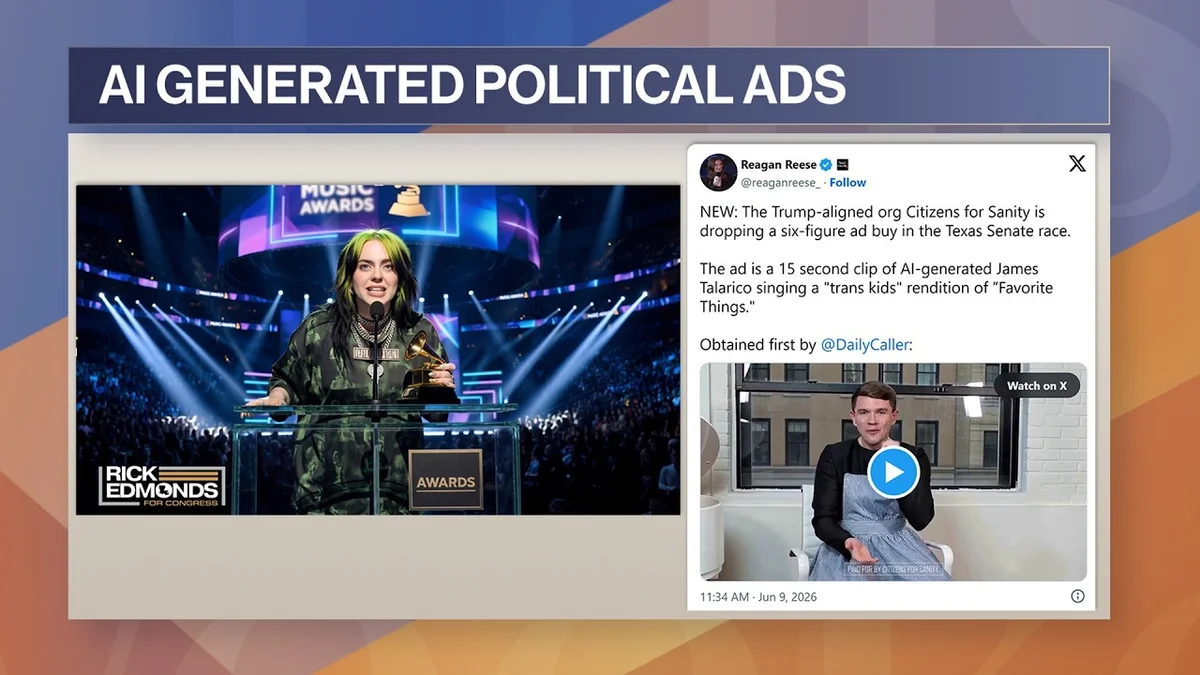
Artificial intelligence is rapidly permeating every facet of society, and the political arena is no exception. As the 2022 midterm elections demonstrate, AI is reshaping how campaigns are funded and how messages are delivered to voters. This includes a significant influx of money from tech billionaires into Super PACs, which are then used to influence elections, often by supporting candidates who align with their interests regarding AI regulation. A key concern highlighted is the growing use of AI-generated political ads, including sophisticated deepfakes, which can spread misinformation and potentially sway public opinion.
AI's Growing Political Influence
The current political cycle is seeing an unprecedented level of AI integration. Emily Birnbaum, a reporter specializing in corporate lobbying and influence, noted that the AI industry has pledged substantial sums, with two major Super PACs alone reportedly backing candidates with around $275 million towards midterm elections. One of these, 'Leading the Future,' is linked to prominent figures like Marc Andreessen and Ben Horowitz, and has focused its spending on candidates who support a favorable AI regulatory agenda. Another, 'Think Big,' backed by Ron Conway, also demonstrates the significant financial muscle being deployed by the AI sector.
The Rise of AI-Generated Political Ads
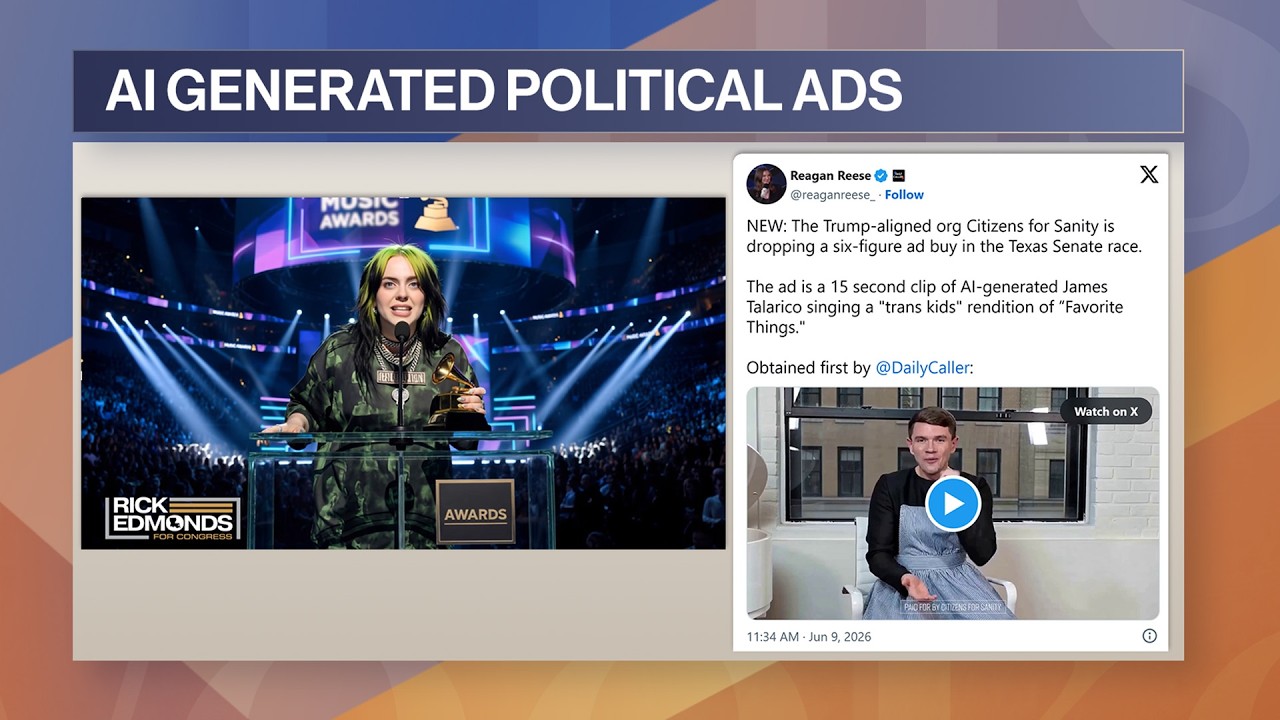
Beyond campaign finance, the proliferation of AI-generated content, particularly deepfake advertisements, presents a new frontier of concern. Birnbaum discussed a specific instance where an AI-generated ad depicted a political candidate singing a song, with the visuals and audio manipulated to appear authentic. Such content, even if recognized as fake by some, can still be effective in spreading narratives and influencing voters, especially those less familiar with the nuances of AI technology. The ease with which these can be created and disseminated poses a significant challenge to the integrity of political discourse.
The full discussion can be found on Bloomberg Podcast's YouTube channel.
Generational Divide in AI Perception
There appears to be a potential generational divide in how AI-generated content is perceived. While younger voters might be more adept at identifying and dismissing fabricated content, older voters may be more susceptible to manipulation through these advanced AI tools. This suggests that the impact of deepfakes and other AI-generated political messaging could disproportionately affect certain demographics, further complicating the electoral process.