

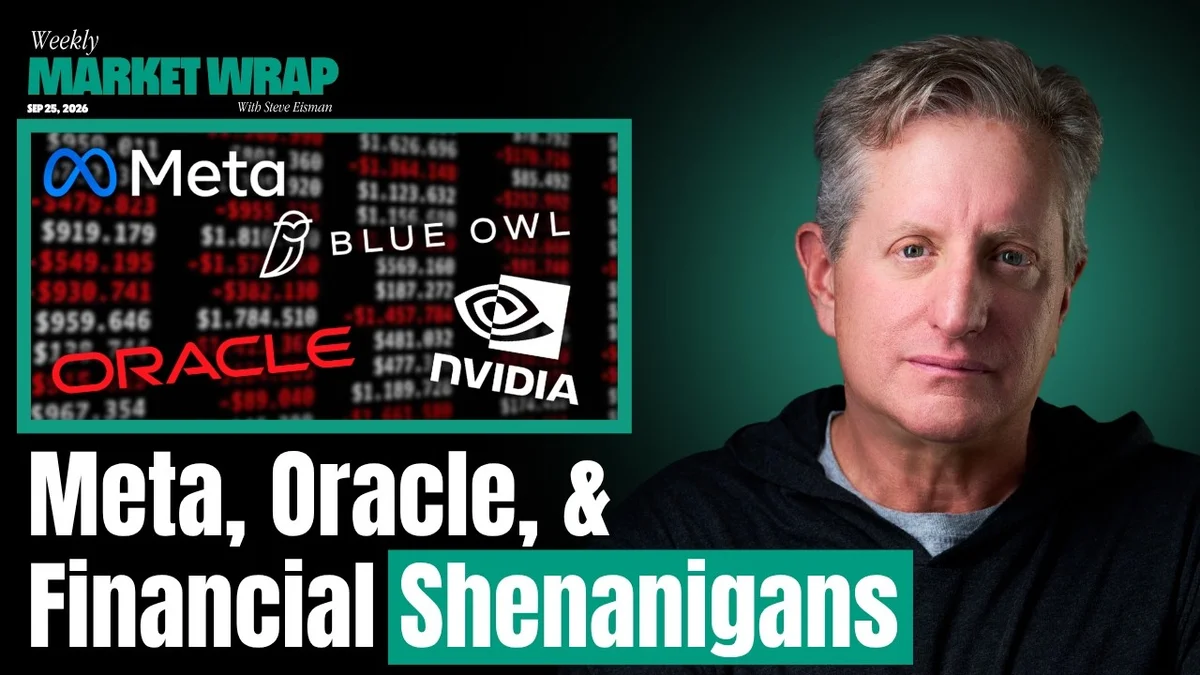
AI data centers are hiding debt like Enron did

Steve Eisman warns AI data centers are reviving Enron-style off-balance-sheet vehicles to hide debt and protect credit ratings.

AI data center with financial overlay showing off-balance sheet debt structure
Meta's Hyperion structure illustrates the new SPV model· YouTube
Visual TL;DR
Tight money triggersDriver
oil prices and 10-year yield above 5.10 percent drive market stress
Enron-style SPVsContext
delaware special purpose vehicles borrow money to own ai data center assets
From the articleWhat troubles him is the resurrection of Enron-style vehicles and, separately, the 2007 structured investment vehicles that Wall Street used to hold mortgage assets off balance sheet, finance long-term securities with short-term asset-backed commercial paper, and hide leverage until renewal failed and the assets snapped back on balance sheet.
Debt hidden off booksEffect
tech companies take minority equity stakes and lease facilities for 15 to 20 years
From the articleAgainst that backdrop he points to what worries him more than rates: off-balance-sheet financing that keeps AI infrastructure debt off Big Tech balance sheets.
Rating agencies fooledOutcome
agencies score only what sits on the balance sheet leaving guaranteed debt elsewhere
From the articleRating agencies score what is on the balance sheet.
Meta leads adoptionCore
meta is the big tech company using these off-balance-sheet vehicles for ai infrastructure
Tight money triggersDriver
oil prices and 10-year yield above 5.10 percent drive market stress
Enron-style SPVsContext
delaware special purpose vehicles borrow money to own ai data center assets
From the articleWhat troubles him is the resurrection of Enron-style vehicles and, separately, the 2007 structured investment vehicles that Wall Street used to hold mortgage assets off balance sheet, finance long-term securities with short-term asset-backed commercial paper, and hide leverage until renewal failed and the assets snapped back on balance sheet.
Debt hidden off booksEffect
tech companies take minority equity stakes and lease facilities for 15 to 20 years
From the articleAgainst that backdrop he points to what worries him more than rates: off-balance-sheet financing that keeps AI infrastructure debt off Big Tech balance sheets.
Rating agencies fooledOutcome
agencies score only what sits on the balance sheet leaving guaranteed debt elsewhere
From the articleRating agencies score what is on the balance sheet.
Residual value guaranteesContext
From the articleThe tech company takes a minority equity stake, leases the facility for 15 to 20 years, and guarantees the residual value if the project underperforms.
Meta leads adoptionCore
meta is the big tech company using these off-balance-sheet vehicles for ai infrastructure
Yields above 5 percentOutcome
eisman argues if yields stay above 5 percent a market correction is imminent
From the article 2 mentionsEisman says the only two variables that matter now are oil prices and the 10-year yield, which pushed above 5.10% on strong data that week before a reported Strait of Hormuz deal sparked a rebound.
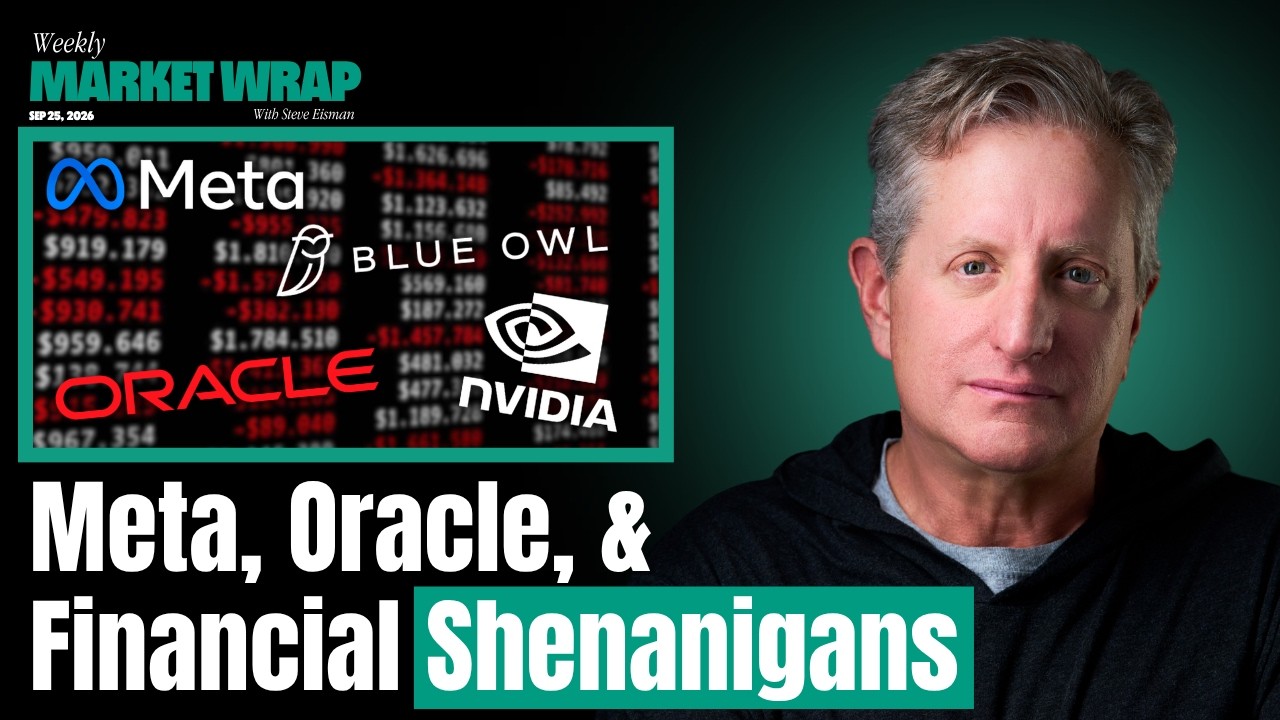
The Weekly Wrap opens with a warning and Steve Eisman makes it plain. The Enron-era trick of moving debt into a special purpose vehicle is back, this time to build AI data centers.

AI data centers are hiding debt like Enron did

The market trigger is tight money.

Eisman says the only two variables that matter now are oil prices and the 10-year yield, which pushed above 5.10% on strong data that week before a reported Strait of Hormuz deal sparked a rebound. If yields stay above 5%, he argues a correction is imminent. Against that backdrop he points to what worries him more than rates: off-balance-sheet financing that keeps AI infrastructure debt off Big Tech balance sheets.

The mechanism is simple to describe and hard to audit. A Delaware vehicle borrows the money and owns the asset. The tech company takes a minority equity stake, leases the facility for 15 to 20 years, and guarantees the residual value if the project underperforms. Rating agencies score what is on the balance sheet. The guaranteed debt sits elsewhere.

Meta is the case study. Eisman details a $27 billion campus in Louisiana financed through a vehicle he names Bayou Investor LLC SPV. Meta holds 20% and Blue Owl and Pimco hold the rest. Meta will lease the site for twenty years and absorb delay and overrun costs, yet the debt does not appear on its balance sheet. The structure is known in filings as Beignet Investor, a vehicle that sold $27.3 billion of senior secured debt while Meta booked only a $2.37 billion equity stake against a disclosed maximum exposure of $45.99 billion.

Ernst & Young, Meta's auditor, did not bless it quietly. In the 2025 10-K it flagged the variable interest entity determination as a critical audit matter, calling the judgment especially challenging due to the need to identify which activities most significantly affect economic performance and who directs them. Eisman reads that language as obscurity by design and says the firm relied on Meta's description while noting it did very little independent work to validate the non-consolidation conclusion.

Oracle shows the other side of the trade, the cash crunch. Eisman notes Standard & Poor's cut Oracle to BBB-, one notch above non-investment grade, after leverage rose to fund AI buildouts. For Project Jupiter, the 1,400-acre campus in New Mexico that Oracle is building for OpenAI as part of Stargate, a bank syndicate lent roughly $18 billion late last year. Oracle then sent a force majeure notice to Blue Owl's developer Stack Infrastructure to defer payments if the 2028 launch slips, while loans tied to the project traded around 89 to 91 cents on the dollar. Reuters reporting cited in the search notes Oracle cannot terminate the lease and must secure power while carrying about $3 billion in equity against the bank debt.

The pattern is not just bilateral funding where Nvidia lends and the borrower buys Nvidia chips. Eisman says that circular flow is obvious and funded from cash flow. What troubles him is the resurrection of Enron-style vehicles and, separately, the 2007 structured investment vehicles that Wall Street used to hold mortgage assets off balance sheet, finance long-term securities with short-term asset-backed commercial paper, and hide leverage until renewal failed and the assets snapped back on balance sheet.

He recalls Enron moving billions to entities controlled by CFO Andrew Fastow, a disclosure that sat in the 10-K until prosecutors charged Arthur Andersen and the firm collapsed. Fastow went to prison. No bankers went to prison for the SIV unwind. The question he leaves open is whether the AI guarantees create a new too-big-to-fail loop.

Costs make the temptation larger. Eisman cites Nvidia raising chip prices 15% and hyperscalers including Google, Amazon, Microsoft, Oracle and Meta planning about $700 billion in AI capex this year, a swing from a low-capital, cash-rich model to raising debt for the first time in decades. SoftBank illustrates the leverage directly, replacing a $10 billion bridge loan for its OpenAI investment with $11 billion in high-risk bonds.

The accounting still holds, for now. Filings say the vehicles are not consolidated because the sponsor is not the primary beneficiary. Auditors call it a tough judgment. Investors see the headline credit rating, not the guarantee footnote. That gap is the product.

© 2026 StartupHub.ai. All rights reserved. You may not republish this article in full without a license. Search engines and AI research tools may crawl and summarize for reference. Bulk reproduction or model training requires a license. See our terms.
Daniel Singer

Written by

Daniel Singer

Editor, StartupHub.ai

Daniel Singer is the editor of StartupHub.ai, a technology expert and thought leader on AI and its applications across sectors, from fintech and healthcare to developer tooling and consumer software. He writes and tests the tools covered here thoroughly and regularly, and built StartupHub.ai to give founders, operators and buyers a clearer read on what they are actually being sold.