

AI Agents: The Next Application Layer?

Vercel CTO Malte Ubl discusses the rise of AI agents as the next application layer, exploring their impact on software development, infrastructure, and the future of AI innovation.

3 min read
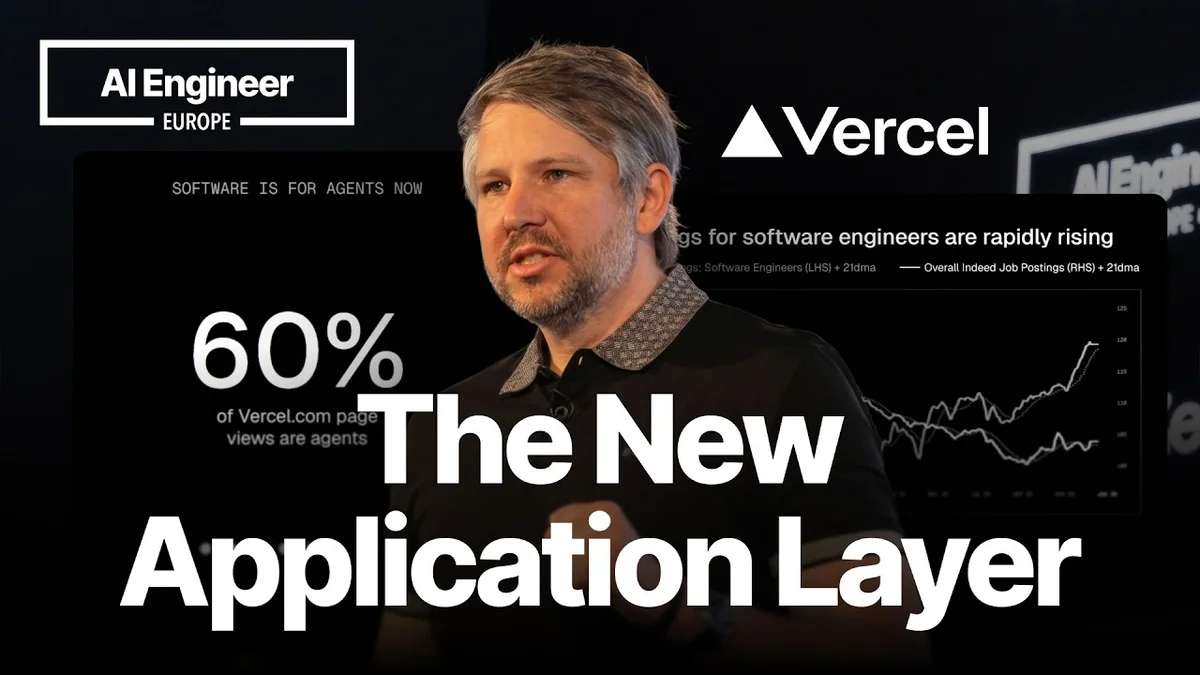
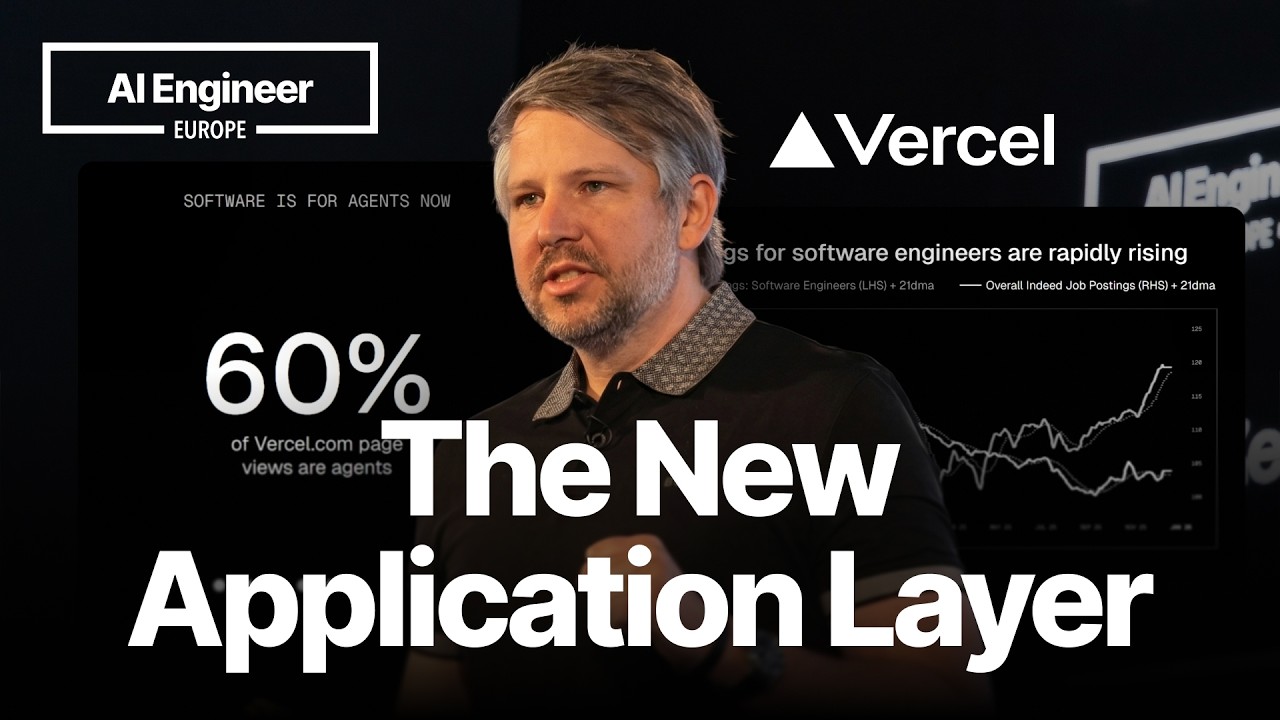
Malte Ubl, CTO of Vercel, speaking on stage at AI Engineer Europe.
Image credit: AI Engineer Europe· AI Engineer

Malte Ubl, CTO of Vercel, recently took the stage at AI Engineer Europe to discuss the emerging role of AI agents as the next application layer. Drawing on his extensive experience in software development and infrastructure, Ubl presented a compelling vision for how AI agents are poised to redefine how we build and interact with technology.
AI Agents: The Next Application Layer? - AI Engineer
AI Agents: The Next Application Layer? — from AI Engineer

The core thesis of Ubl's talk centered on the idea that AI agents are not just a new tool but a fundamentally different kind of software. He highlighted the progression from static web pages to dynamic applications, and now to intelligent agents capable of autonomous action and complex problem-solving.

The Evolution of Software: From Pages to Agents

Ubl began by tracing the evolution of the web, moving from static HTML pages to interactive applications, and now to the era of AI agents. He emphasized that this shift is not merely an incremental improvement but a significant change in how we conceive and build software. The ability of agents to understand context, make decisions, and execute tasks autonomously marks a new frontier in software engineering.

Related startups

He illustrated this point by referencing the development of tools like Chat SDK and Just Bash, which facilitate the integration of AI agents into various communication platforms and command-line interfaces. These tools, he suggested, are early indicators of a broader trend towards agent-centric development.

Redefining Infrastructure for AI Agents

A significant portion of Ubl's presentation focused on the infrastructure required to support this new wave of AI-driven applications. He argued that traditional infrastructure, designed for deterministic software, is often ill-suited for the probabilistic and dynamic nature of AI agents.

"We need agentic (security) infrastructure," Ubl stated, underscoring the need for specialized systems that can handle the unique demands of AI agents. This includes considerations for scalability, security, and the ability to manage complex interactions between agents and their environments.

The "Make" vs. "Buy" Dilemma in the AI Agent Era

Ubl also touched upon the strategic decisions companies face when adopting AI agents, framing it as a "buy" versus "make" dilemma. While off-the-shelf AI solutions are becoming more prevalent, Ubl suggested that the true value lies in companies building their own agents tailored to specific business needs.

He presented a thought-provoking diagram illustrating the relationship between existing software, agent-based software, and the ideal future state. The diagram suggested that as AI capabilities advance, more business processes will transition from traditional software to agent-driven solutions, creating new opportunities for innovation and efficiency.

Agents: The Next Application Layer

Ubl concluded by reiterating his central argument: AI agents are not just a feature but the next fundamental application layer. He pointed to the increasing reliance on agents for tasks ranging from research and support to complex decision-making, highlighting that this trend is likely to accelerate.

He also noted the growing trend of companies leveraging agents to automate tasks that were previously too costly or complex for traditional software. This shift, he believes, will democratize AI capabilities, making them accessible to a broader range of businesses and developers.

Future Outlook: Europe's Role in AI Engineering

In his closing remarks, Ubl touched upon the broader implications of AI engineering innovation, suggesting that Europe is emerging as a leader in this space. He expressed optimism about the future, emphasizing the collaborative spirit and the drive for practical, impactful AI solutions that he has observed within the European tech community.

The talk underscored the transformative potential of AI agents and the critical need for developers and businesses to adapt to this evolving landscape. As Ubl suggested, the future of software development is increasingly agent-centric, and those who embrace this shift will be best positioned to thrive in the coming years.

© 2026 StartupHub.ai. All rights reserved. Do not enter, scrape, copy, reproduce, or republish this article in whole or in part. Use as input to AI training, fine-tuning, retrieval-augmented generation, or any machine-learning system is prohibited without written license. Substantially-similar derivative works will be pursued to the fullest extent of applicable copyright, database, and computer-misuse laws. See our terms.