


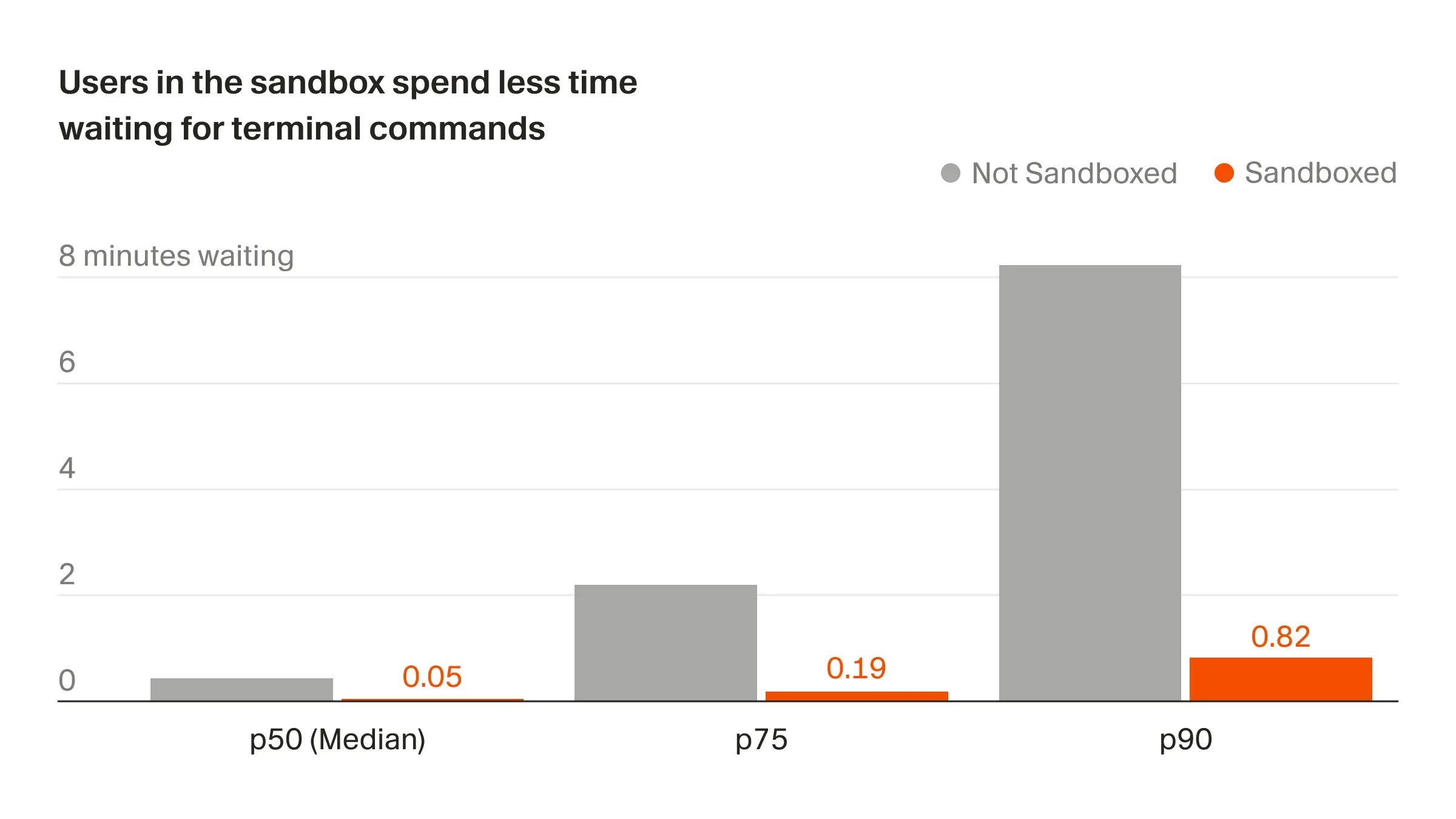
Coding agents are becoming adept at executing terminal commands, but this power comes with significant risk. Unsupervised agents can corrupt data, deploy faulty code, or expose sensitive information. While human approval gates these actions, approval fatigue renders this safeguard ineffective over time.
To address this, a secure agent sandbox has been rolled out across macOS, Linux, and Windows. This controlled environment allows agents to operate freely, only prompting for approval when they need to perform actions outside its boundaries, such as accessing the internet. This reduces interruptions by 40%, saving users considerable time.
Sandbox Goals
The primary objective was to eliminate interruptions while enhancing security. The aim is to grant agents sufficient operational freedom without exposing systems to undue risk. Striking this balance is challenging, as many development tasks require elevated privileges.
A usable sandbox necessitates navigating trade-offs between security and functionality, respecting each operating system's limitations. The implementation provides a uniform API across platforms, leveraging distinct sandboxing primitives unique to macOS, Linux, and Windows.
Implementation Details
On macOS, the Seatbelt framework, despite being deprecated, was chosen for its robust subprocess tree containment and fine-grained permission control. Policies are dynamically generated based on user settings and workspace configurations.