

AI's 'Industrial Revolution' in Healthcare

Boston Children's Hospital's Dr. Joan LaRovere discusses AI's transformative role in healthcare, emphasizing data diversity and personalized medicine.

5 min read
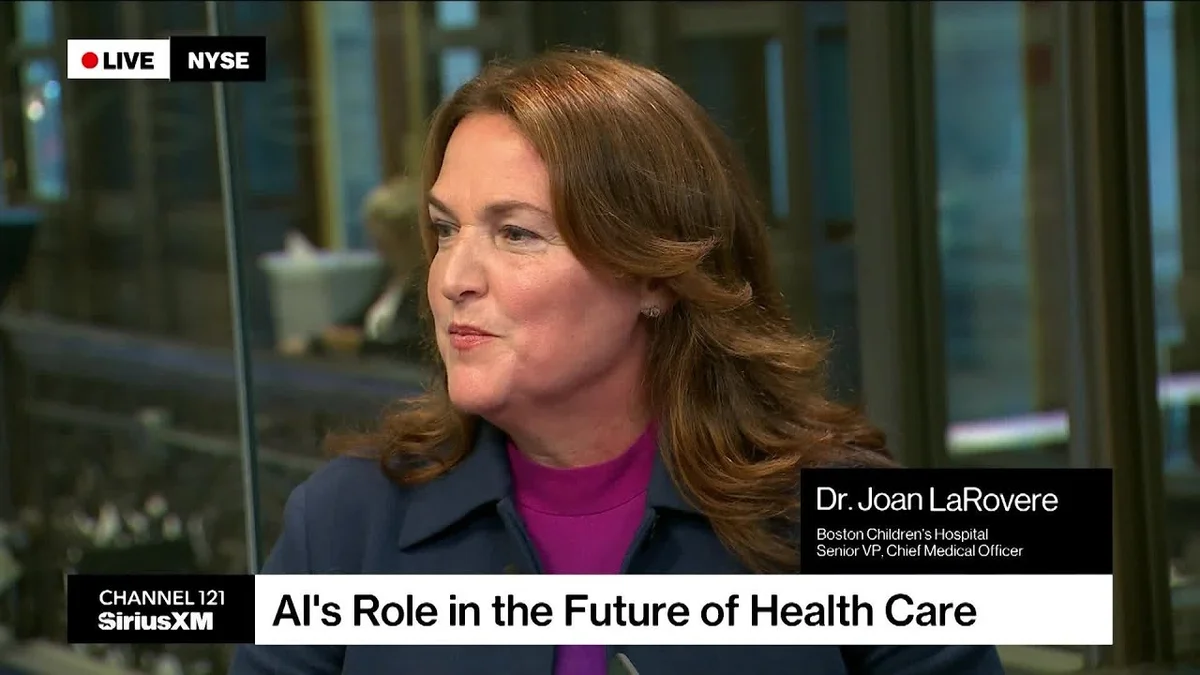
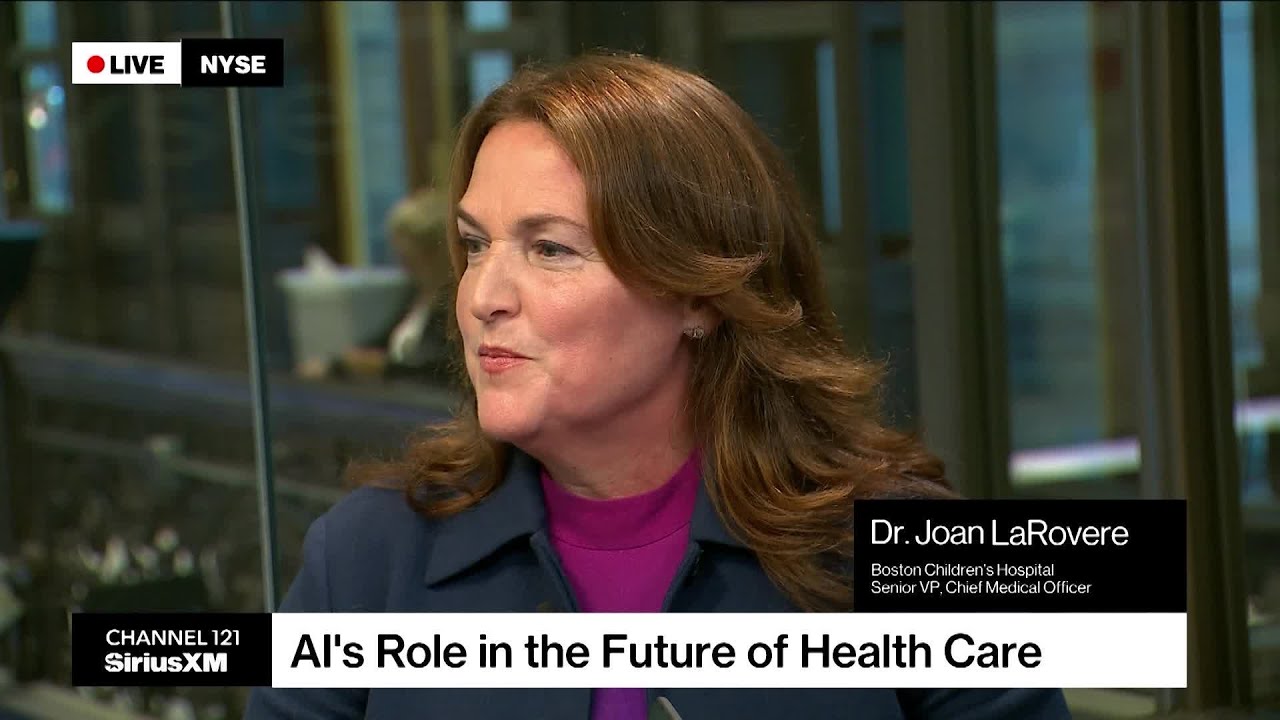
Dr. Joan LaRovere, Chief Medical Officer at Boston Children's Hospital, speaks on healthcare and AI.
Image credit: StartupHub.ai· Bloomberg Podcast
Visual TL;DR
AI in HealthcareCore
From the article 4 mentionsJoan LaRovere, Senior VP and Chief Medical Officer at Boston Children's Hospital, believes that artificial intelligence is ushering in a new era for healthcare, comparable to an industrial revolution.
Transformative PowerEffect
fundamental shift in how healthcare can be delivered, from diagnostics to treatment
Data Diversity & EquityDriver
From the articleHowever, she also stressed the critical need for caution and a mindful approach to its implementation, particularly concerning data diversity and accuracy.
Drug DevelopmentEffect
AI's role in accelerating drug discovery and personalized medicine
From the articleThe conversation touched upon the significant impact AI is expected to have on drug development, a field known for its high costs and long timelines.
Personalized MedicineEffect
tailoring treatments to individual patient needs and genetic makeup
From the article 2 mentionsFurthermore, AI's capacity to analyze individual patient data, including genetic information and lifestyle factors, is paving the way for truly personalized medicine, allowing for interventions tailored to each person's unique biological makeup and disease trajectory.
Clinician TimeEffect
From the articleShe noted that AI tools are already being integrated into clinical workflows, assisting with tasks such as transcribing patient conversations to generate notes, thereby freeing up clinicians to spend more one-on-one time with patients.
Future is AI-InfusedOutcome
AI integration into clinical workflows and patient care
From the articleThis focus on equitable data is seen as a vital step in preventing future generations from facing the same healthcare disparities.
Contents(4)

Dr. Joan LaRovere, Senior VP and Chief Medical Officer at Boston Children's Hospital, believes that artificial intelligence is ushering in a new era for healthcare, comparable to an industrial revolution. Speaking on Bloomberg Businessweek Daily, Dr. LaRovere emphasized the immense potential of AI to transform patient care, from diagnostics to treatment personalization. However, she also stressed the critical need for caution and a mindful approach to its implementation, particularly concerning data diversity and accuracy.

The Transformative Power of AI in Medicine

Dr. LaRovere highlighted that AI is not just a technological advancement but a fundamental shift in how healthcare can be delivered. She noted that AI tools are already being integrated into clinical workflows, assisting with tasks such as transcribing patient conversations to generate notes, thereby freeing up clinicians to spend more one-on-one time with patients. The ability of AI to analyze vast amounts of data, including real-time data streams, promises to significantly improve diagnostic accuracy and accelerate the discovery of new treatments.

Addressing Data Gaps and Ensuring Equity

A key concern raised by Dr. LaRovere is the historical lack of diverse data, especially concerning women, in clinical trials and AI model training. She stressed that to realize AI's full potential, it's crucial to ensure that data sets are representative of all populations. This includes building and utilizing data from diverse sources, such as electronic health records and large biobanks, to create more nuanced and personalized understandings of diseases and treatments. This focus on equitable data is seen as a vital step in preventing future generations from facing the same healthcare disparities.

The full discussion can be found on Bloomberg Podcast's YouTube channel.

AI 'Industrial Revolution' Taking Place, Says Boston Children's Chief Medical Officer - Bloomberg Podcast
AI 'Industrial Revolution' Taking Place, Says Boston Children's Chief Medical Officer, from Bloomberg Podcast

AI's Role in Drug Development and Personalized Medicine

The conversation touched upon the significant impact AI is expected to have on drug development, a field known for its high costs and long timelines. Dr. LaRovere suggested that AI can accelerate this process, enabling the discovery and market introduction of new therapies, particularly for rare diseases. Furthermore, AI's capacity to analyze individual patient data, including genetic information and lifestyle factors, is paving the way for truly personalized medicine, allowing for interventions tailored to each person's unique biological makeup and disease trajectory.

The Future of Healthcare is AI-Infused

Dr. LaRovere concluded by stating that the current moment is indeed revolutionary for healthcare, with AI playing a central role. She emphasized that while technology is a key enabler, it must be accompanied by robust data infrastructure, trust-building, and thoughtful regulation to ensure equitable access and outcomes. The focus is shifting towards AI solutions that are designed for local communities and can bridge geographical gaps, ultimately leading to more targeted and effective care for all.

© 2026 StartupHub.ai. All rights reserved. Do not enter, scrape, copy, reproduce, or republish this article in whole or in part. Use as input to AI training, fine-tuning, retrieval-augmented generation, or any machine-learning system is prohibited without written license. Substantially-similar derivative works will be pursued to the fullest extent of applicable copyright, database, and computer-misuse laws. See our terms.