Meta Infrastructure Lab Opens Currictain on AI Hardware Buildout
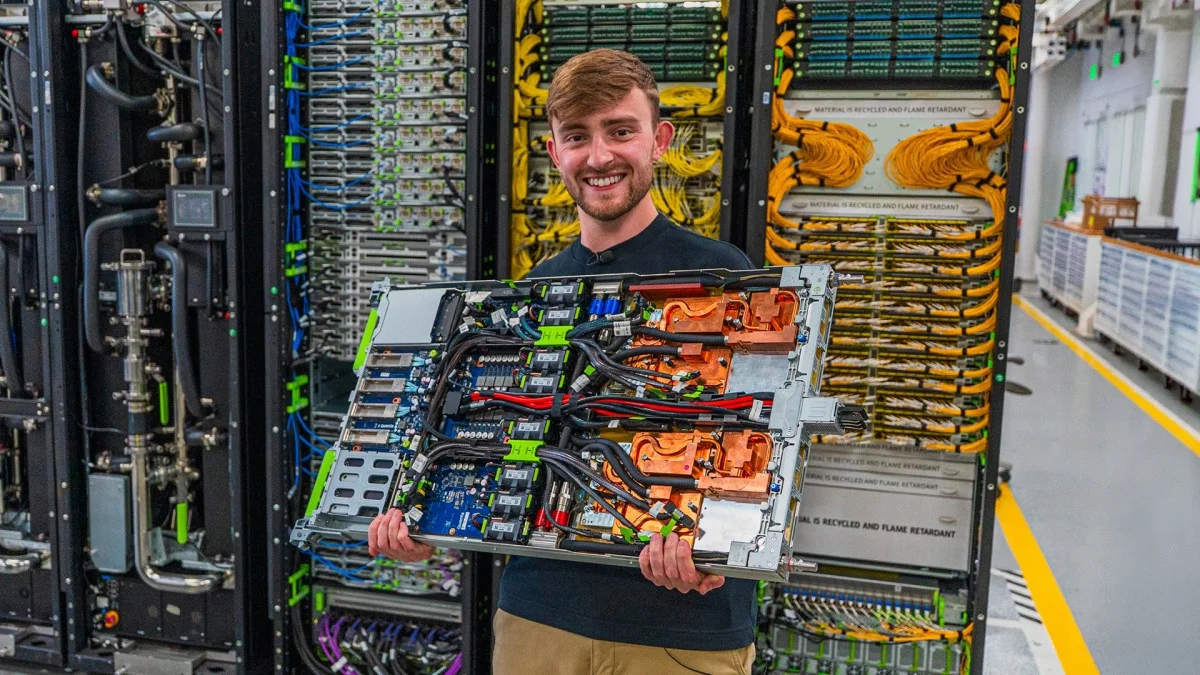
Meta Infrastructure Lab in Menlo Park opened its doors on September 1 for a filmed walkthrough. Host Tom Shaw showed off hardware destined for the next generation of AI, according to the Meta Newsroom.
The announcement is thin on specs. Beyond location and host, Meta revealed no performance numbers or deployment timeline.
That thinness is itself a signal in a year when Meta is simultaneously scaling bought compute and building its own.
Why a lab tour matters now
Meta confirmed a multiyear partnership to deploy millions of NVIDIA Blackwell and Rubin GPUs alongside Spectrum-X Ethernet across hyperscale data centers for training and inference.
The company is also moving its in-house chip codenamed Iris into production in September as part of a plan to reach 14 gigawatts of computing capacity.
Showing the lab now frames both bets as complementary rather than competing.
How Meta Infrastructure Lab shifts leverage for chip vendors
For merchant silicon, the takeaway is price and power pressure, not displacement.
NVIDIA remains the default training and inference supplier while Meta reserves the option to offload steady state workloads to MTIA family chips co-designed with Broadcom.
StartupHub.ai data shows NVIDIA with a score of 82/100, ahead of many hardware rivals in our tracking.
AMD is the clearest near term challenger after posting $11.5 billion in Q2 2026 revenue on a 107 percent surge in its Data Center segment.
StartupHub.ai data puts AMD at 36/100 versus Intel at 85/100 and NVIDIA at 82/100, reflecting scale gaps that its Helios rack and Instinct GPUs are now trying to close.
Cerebras Systems illustrates the funding bar for wafer scale alternatives, having raised $1 billion at a $23 billion valuation in its Series H after an $1.1 billion Series G at $8.1 billion.
StartupHub.ai data gives Cerebras a score of 45/100 for its specialized wafer scale approach.
Groq sits on the inference edge of the same fight after raising $750 million at a $6.9 billion post money valuation.
Meta keeping a lab in Menlo Park while buying Blackwell at hyperscale tells those vendors that design wins will be measured in gigawatts and networking integration, not just chip peak FLOPS.
What to watch next
The lab does not replace a product spec sheet, so the proof will be whether Iris ramps on schedule and whether Meta publishes real throughput and efficiency against Blackwell and Helios systems.
If Iris ships in September and slots into training and recommendation fleets without throttling Spectrum-X fabrics, custom silicon gains permanent leverage over merchant pricing.
If it slips or stays narrowly scoped, the Blackwell and Rubin deployment remains the binding constraint and the lab is theater.