

Intel Unveils Agentic AI Architectures

Intel Unveils Agentic AI Architectures
Intel Newsroom
Contents(3)

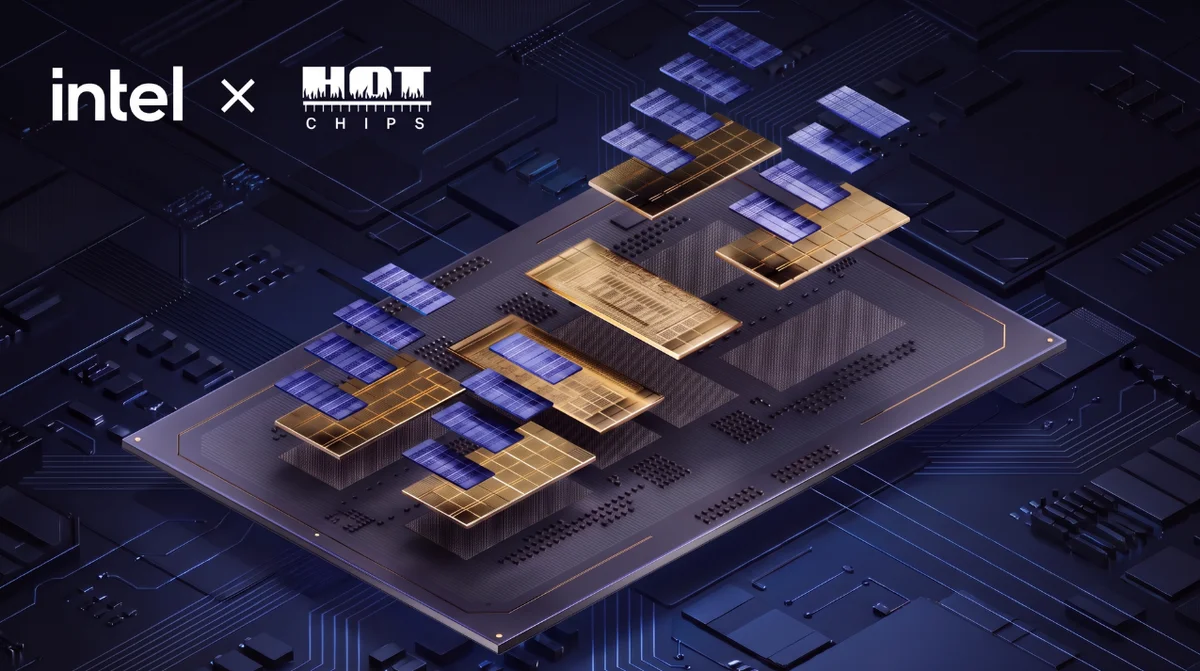
Intel detailed three Agentic AI architectures at Hot Chips 2026: Diamond Rapids, Crescent Island and Wildcat Lake. They scale Agentic AI from high-performance data centers to intelligent edge devices.

Intel's strategy integrates general-purpose compute with specialized acceleration, advanced packaging and open chiplet technologies.

It aims to balance power, cost and scalability for real-world AI deployments.

Intel Foundry technologies underpin the architectures, including the Intel 18A process family and Foveros Direct 3D packaging.

They also use early adoption of the UCIe standard for interoperability.

Diamond Rapids

Diamond Rapids is the next generation Xeon processor for enterprise-scale Agentic AI workloads.

It is built on Intel 18A-P. It uses adaptable compute blocks, a unified memory fabric and flexible I/O for consistent performance and efficiency.

It offers up to 256 new cores, 16 memory channels and PCIe Gen6 support for demanding AI applications.

The processor family contributes to Intel's overall push in AI hardware alongside other recent developments.

StartupHub.ai data gives Intel 32/100, while NVIDIA Corp and Broadcom score 83/100, reflecting intense competition in high-performance AI silicon.

Crescent Island

Crescent Island is a GPU optimized for AI inference to redefine inference economics.

Its low-power PCIe card design offers substantial compute and memory for larger models and longer context windows.

It improves inference efficiency at scale to help enterprises accelerate AI adoption and increase infrastructure utilization.

It leverages Intel's Xe architecture with 32 Xe cores and up to 480GB of LPDDR5X memory. It is designed for sustained inference performance and reduced cooling demands.

Inference efficiency is a key battleground where Nvidia (NASDAQ:NVDA) has historically excelled.

Wildcat Lake

Wildcat Lake SoC, launched as Intel Core Series 3 processors, brings AI to mainstream laptops and edge platforms.

Built on the Intel 18A process, it integrates new CPU cores and Xe3 graphics with XMX acceleration. It includes an NPU delivering up to 17 TOPS for hybrid AI.

It marks the first use of UCIe in an Intel processor, enabling cost-effective multi-chip designs for mainstream AI.

It broadens Intel's reach into consumer and edge AI markets where specialized NPUs are increasingly critical.

StartupHub.ai data shows Celestial AI, focused on edge AI acceleration, scores 72/100, underscoring demand for efficient integrated AI solutions.

The future of AI is heterogeneous and demands solutions spanning cloud, enterprise and edge.

Intel's strategy with Diamond Rapids, Crescent Island and Wildcat Lake is underpinned by Intel Foundry technologies and open industry standards. It aims to provide a scalable foundation for Agentic AI at scale.

It addresses performance, cost and deployment flexibility to compete in the rapidly evolving AI hardware market.

Execution on these architectures will be closely watched as demand for sophisticated AI processing surges.

© 2026 StartupHub.ai. All rights reserved. You may not republish this article in full without a license. Search engines and AI research tools may crawl and summarize for reference. Bulk reproduction or model training requires a license. See our terms.
Daniel Singer

Written by

Daniel Singer

Editor, StartupHub.ai

Daniel Singer is the editor of StartupHub.ai, a technology expert and thought leader on AI and its applications across sectors, from fintech and healthcare to developer tooling and consumer software. He writes and tests the tools covered here thoroughly and regularly, and built StartupHub.ai to give founders, operators and buyers a clearer read on what they are actually being sold.