

World's Largest Electric Aircraft Flies on $5 Charge

Hart Aerospace flew a 25,000 lb, 100-foot electric demonstrator for $5 in power, prepping a 30-seat hybrid ES30.

3 min read
Hart Aerospace electric aircraft on runway with 100 foot wingspan during first flight
Hart Aerospace's demonstrator before its August 12 flight in Plattsburgh, New York· YC

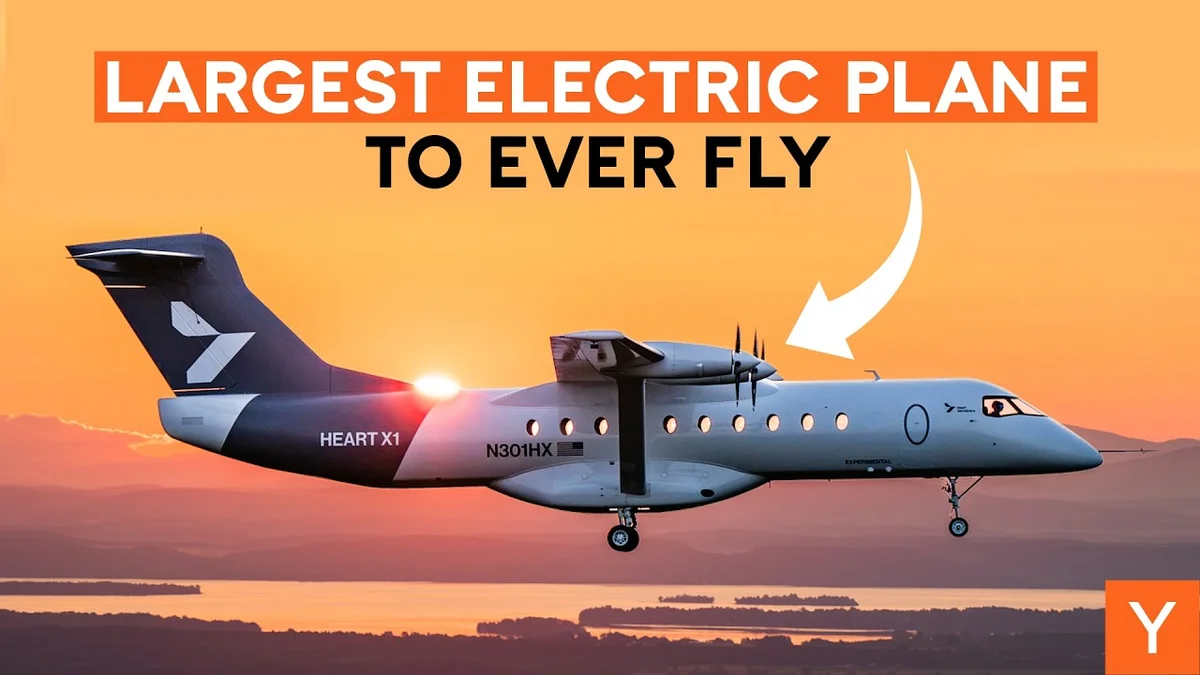
25,000 pounds left the ground for $5. The prototype from YC alum Hart Aerospace is now the world's largest electric aircraft to fly, with a 100-foot wingspan and roughly twice the mass of any predecessor.

It is also the first clean-sheet airliner flown in the US in 18 years, electric or otherwise.

The full discussion can be found on YC's YouTube channel.
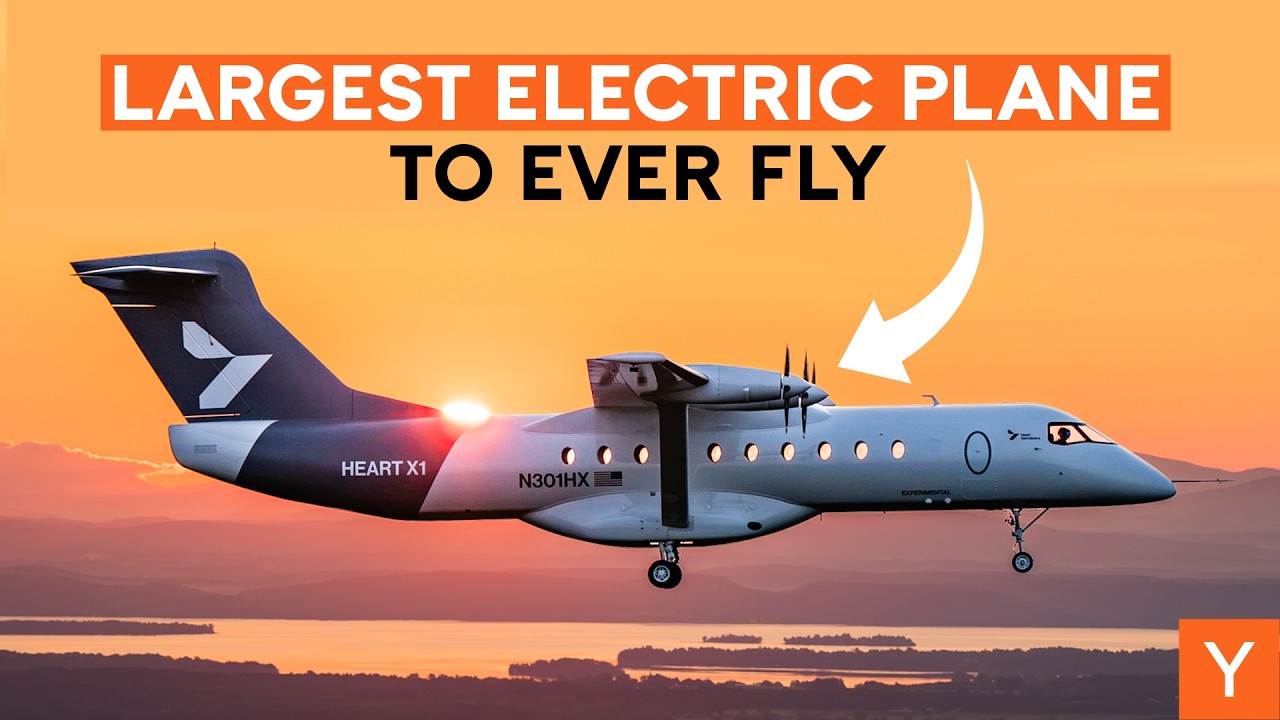
The World’s Largest Electric Aircraft Just Flew - YC
The World’s Largest Electric Aircraft Just Flew, from YC

Its successor, the ES30, is pitched at 125 miles on battery alone and 500 miles as a hybrid, with a 30-minute recharge.

CEO Andrew Porceland showed the same design seven years ago as a palm-sized 3D print at YC demo day. Today a 40-person team in LA builds it as a conventional-looking turboprop replacement.

How the world's largest electric aircraft actually works

Jet engines have thousands of hot, wearing parts. Hart swaps them for 400 kW electric motors with essentially one moving part and near-constant torque.

Think of a drone motor scaled up. A few grams on a drone give way to the same architecture driving a 36-seat airliner.

Power comes from eight battery packs laid across the fuselage floor. The demonstrator carries about four Teslas' worth of cells and $40 of charge.

The catch is reserves. One in a thousand US flights diverts, requiring 45 minutes of loiter plus 100 miles to an alternate.

Batteries don't get lighter as you burn them, so a pure electric would need two-thirds of its pack just for reserves. Hart adds a simple, cheap turboprop as a range extender, about 20% of upfront cost, to close that gap.

Why this matters, and what still isn't fixed

Half of all flights globally are under two hours, yet jets waste up to 10% of fuel just taxiing and suffer on short hops. Hart says the economics flipped from 33% better to 48% better in the last year as oil rose.

That market still flies 40-year-old turboprops. A silent, low-vibration aircraft with six inches of extra legroom at 30 seats fits 5,000 existing US airports without new infrastructure.

Cells aren't quite there. The lab's best pouch on the table is 370 Wh/kg, with a 400 Wh/kg sample expected in months.

The aircraft is wired as a giant test bench fed by 1.6 megawatts, running fault injection from code errors to cut wires. StartupHub tracks Hart alongside Joby Aviation and Beta Technologies, though Hart is the only one in that cohort chasing a 30-seat airliner instead of a 4-seat VTOL.

First flight was August 12 in Plattsburgh, New York. The platform is designed to get better after delivery, like a car that improves with denser cells.

© 2026 StartupHub.ai. All rights reserved. You may not republish this article in full without a license. Search engines and AI research tools may crawl and summarize for reference. Bulk reproduction or model training requires a license. See our terms.