Visual TL;DR
AI Agent Setup IssuesDriver
local setups fail to reproduce or deploy elsewhere easily
From the article 3 mentionsBy providing a curated, reproducible baseline, new engineers can onboard faster and contribute effectively without getting bogged down in environment-specific setup issues.
OpenClaw AgentsCore
AI agents for reproducible, secure, and portable development
From the article 9+ mentionsThe "Lobster Trap" methodology aims to solve this by packaging OpenClaw agents and their dependencies into containers.
Lobster Trap PhilosophyContext
methodology for consistent agent environments from local to K8s
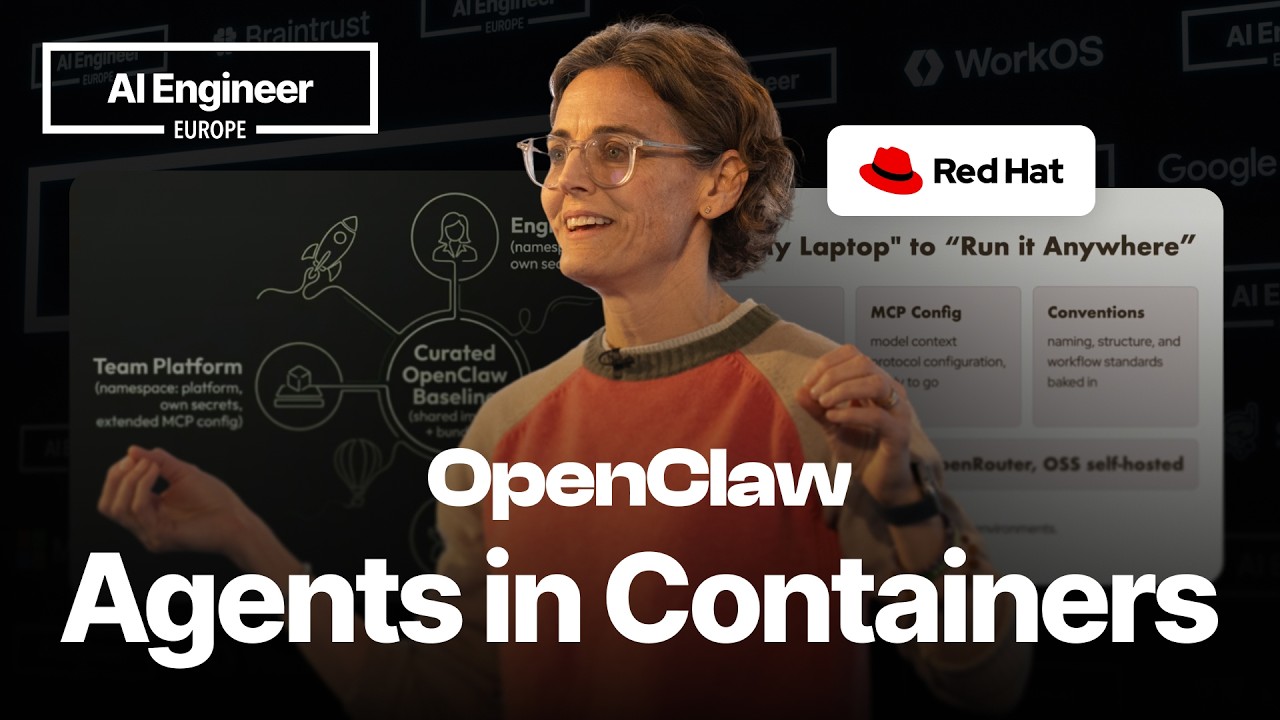
From the article 2 mentionsSally Ann O'Malley, a Principal Software Engineer at Red Hat, presented "Lobster Trap: OpenClaw in Containers from Local to K8s and Back" at AI Engineer Europe.
ContainerizationContext
packaging agents and dependencies into isolated environments
From the articleThe presentation concluded with a demonstration of the OpenClaw installer, showcasing how easily agents can be deployed locally or to Kubernetes, highlighting the flexibility and power of containerization in the AI development workflow.
Reproducible EnvironmentsEffect
From the article 8 mentionsReproducible Environments: Using the same container image ensures that all agents operate in identical conditions, regardless of the underlying infrastructure.
Secure & Portable AIEffect
enhances security and portability across different platforms
Local to KubernetesOutcome
seamless deployment from local machines to K8s clusters
From the article 8 mentionsPortability Across Infrastructure: Containers can be easily moved between different environments, from a local machine to a virtual machine, or a Kubernetes cluster, with minimal changes.
Team-Wide AdoptionOutcome
facilitates easier sharing and collaboration among teams