Nepal floods August 2026: Amazon Deploys Relief

Nepal floods after an August 26 glacier collapse killed 500+ and leave 2,000 missing as Amazon activates cash, supplies and India hubs.

6 min read
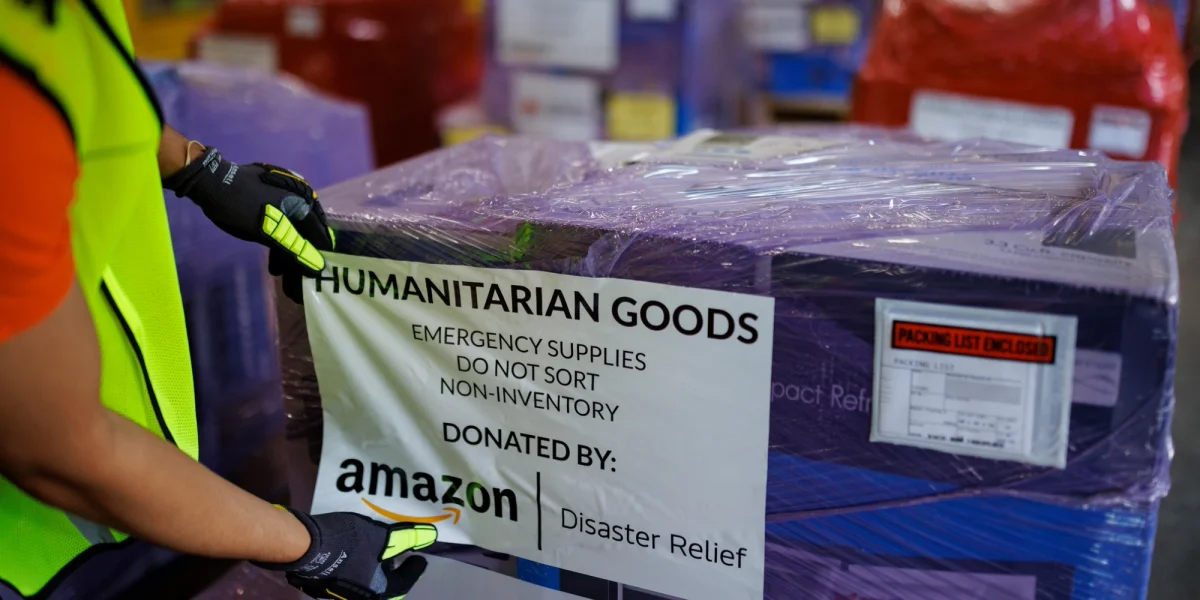
Flooded mountain valley with relief supplies staged for delivery
Amazon is activating disaster hubs and partner donations after floods along the Nepal border.· Amazon News
Visual TL;DR
Glacier CollapseDriver
From the article 2 mentionsNepal floods August 2026 have killed more than 500 people after a glacier collapse on August 26 triggered flash floods and landslides along the Nepal border, with nearly 2,000 still missing according to Amazon News.
Flash FloodsEffect
water and debris buried communities across nepal and northern india
From the article 3 mentionsNepal floods August 2026 have killed more than 500 people after a glacier collapse on August 26 triggered flash floods and landslides along the Nepal border, with nearly 2,000 still missing according to Amazon News.
Amazon ActivatesCore
relief activated within hours using playbook built since 2017
From the article 9 mentionsAmazon (NASDAQ:AMZN) detailed its relief activation within hours.
Hub NetworkEffect
amazon coordinating directly with humanitarian groups on t
From the article 3 mentionsIt will draw on three Disaster Relief hubs in India and a global hub network stocked with tarps, toiletries and other supplies, and is working with DonateKart in India to pre-stage inventory if northern India floods.
Glacier CollapseDriver
From the article 2 mentionsNepal floods August 2026 have killed more than 500 people after a glacier collapse on August 26 triggered flash floods and landslides along the Nepal border, with nearly 2,000 still missing according to Amazon News.
Flash FloodsEffect
water and debris buried communities across nepal and northern india
From the article 3 mentionsNepal floods August 2026 have killed more than 500 people after a glacier collapse on August 26 triggered flash floods and landslides along the Nepal border, with nearly 2,000 still missing according to Amazon News.
Amazon ActivatesCore
relief activated within hours using playbook built since 2017
From the article 9 mentionsAmazon (NASDAQ:AMZN) detailed its relief activation within hours.
2000 MissingOutcome
From the articleNepal floods August 2026 have killed more than 500 people after a glacier collapse on August 26 triggered flash floods and landslides along the Nepal border, with nearly 2,000 still missing according to Amazon News.
Debris Dam RiskDriver
blocked channels could trigger secondary downstream flooding in india
Cash DonationsContext
From the article 2 mentionsAmazon made cash donations to two long-term partners, the International Organization for Migration and the World Food Programme, and is assessing delivery of tents, thermal blankets and solar lights for immediate shelter and power.
Supply LogisticsContext
tents, thermal blankets and solar lights routed via india hubs
From the article 2 mentionsOperationally, Amazon runs a 24/7 monitoring team to inform logistics decisions.
Hub NetworkEffect
amazon coordinating directly with humanitarian groups on t
From the article 3 mentionsIt will draw on three Disaster Relief hubs in India and a global hub network stocked with tarps, toiletries and other supplies, and is working with DonateKart in India to pre-stage inventory if northern India floods.
Response GapsOutcome
long-term recovery and debris dam mitigation not yet detailed
From the article 2 mentionsWalmart pioneered disaster response with trailers and water, IKEA focuses on shelter kits, Coupang and Wayfair move fast in market fulfillment but without standing humanitarian stockpiles.

Contents(4)

Nepal floods August 2026 have killed more than 500 people after a glacier collapse on August 26 triggered flash floods and landslides along the Nepal border, with nearly 2,000 still missing according to Amazon News.

Amazon (NASDAQ:AMZN) detailed its relief activation within hours. The speed reflects a playbook built since 2017, not a one-off donation.

What caused the flooding?

The collapse sent water and debris down river systems that straddle Nepal and northern India.

The surge buried communities and blocked channels. Experts now warn those debris dams could trigger secondary flooding downstream in India if they fail.

How is Amazon responding?

Amazon made cash donations to two long-term partners, the International Organization for Migration and the World Food Programme, and is assessing delivery of tents, thermal blankets and solar lights for immediate shelter and power.

Abe Diaz, head of Amazon Disaster Relief, said the company is coordinating directly with humanitarian groups on the ground given logistical constraints. Vidya Sampath, Senior Product Manager for Amazon Disaster Relief, authored the update.

Operationally, Amazon runs a 24/7 monitoring team to inform logistics decisions. It will draw on three Disaster Relief hubs in India and a global hub network stocked with tarps, toiletries and other supplies, and is working with DonateKart in India to pre-stage inventory if northern India floods.

Why does this logistics model matter?

Since 2017 Amazon says it has delivered more than 30 million essential supplies across more than 200 disasters, including the Venezuela earthquake and the Türkiye and Syria earthquake. That scale puts its network closer to a humanitarian supply chain than a corporate CSR program.

Competitors rely on similar warehousing but rarely maintain dedicated disaster hubs. Walmart pioneered disaster response with trailers and water, IKEA focuses on shelter kits, Coupang and Wayfair move fast in market fulfillment but without standing humanitarian stockpiles.

StartupHub.ai data shows Amazon scoring 81/100, well ahead of Inter IKEA Group at 70/100, Wayfair at 59/100, Coupang at 49/100, Walmart at 41/100 and Qoo10 at 22/100. The company also reports VERIFIED financials of $10B raised in 2025, which underwrites that inventory density.

What is missing from the response so far?

The announcement does not detail dollar amounts, tonnage, or delivery timelines. That is typical for the first 48 hours, when needs assessment is still fluid.

The gap to watch is last-mile delivery in monsoon-damaged terrain. Solar lights and thermal blankets help, but blocked roads and secondary flood risk will test whether hub proximity in India translates into speed in Nepal.

Amazon's hubs change the math on response time, not on access. Roads still decide who gets aid first.

© 2026 StartupHub.ai. All rights reserved. Do not enter, scrape, copy, reproduce, or republish this article in whole or in part. Use as input to AI training, fine-tuning, retrieval-augmented generation, or any machine-learning system is prohibited without written license. Substantially-similar derivative works will be pursued to the fullest extent of applicable copyright, database, and computer-misuse laws. See our terms.

