


Artificial intelligence (AI) chatbots are an exciting technology that has the potential to transform the way we interact with brands and businesses. Today automated chatbots can be used by marketers, salespeople, and customer service representatives to deliver better value for the customers and improve customer experience. The technology is still in its infancy, but if we get it right, there’s no limit to what AI chatbots can do for businesses in B2B.
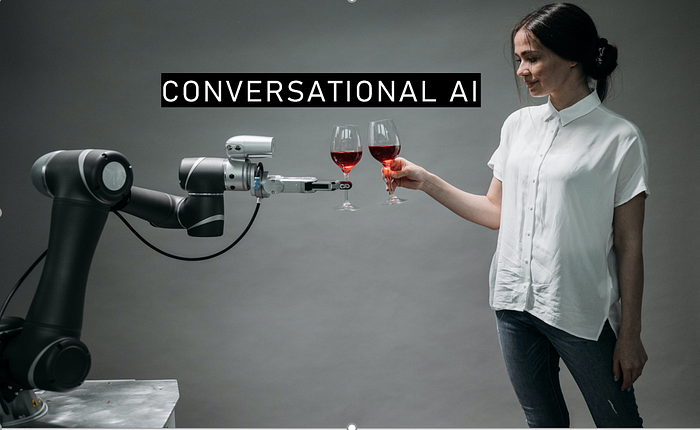
I believe that AI will have a significant role to play in improving B2B marketing over time. AI is already being used by brands such as Kyndryl, Amazon, Netflix, and Spotify as well as email marketing platforms like MailChimp, which are all using AI technology effectively in their business processes today.
Let’s take it from the top; Conversational artificial intelligence (AI) refers to technologies, like chatbots or virtual agents, which users can talk to. They use large volumes of data, machine learning, and natural language processing to help imitate human interactions, recognizing speech and text inputs and translating their meanings across various languages.
When designing a conversational AI, it’s important to think about how your potential users might want to interact with your product and the main questions they may have. You can then use conversational AI tools to help route them to relevant information. In this section, we’ll walk through ways to start planning and creating a conversational AI.
A chatbot for example carries out conversations and automates recurring tasks. It can be used to answer questions, perform tasks, and make decisions. A chatbot can be programmed to do things like: