

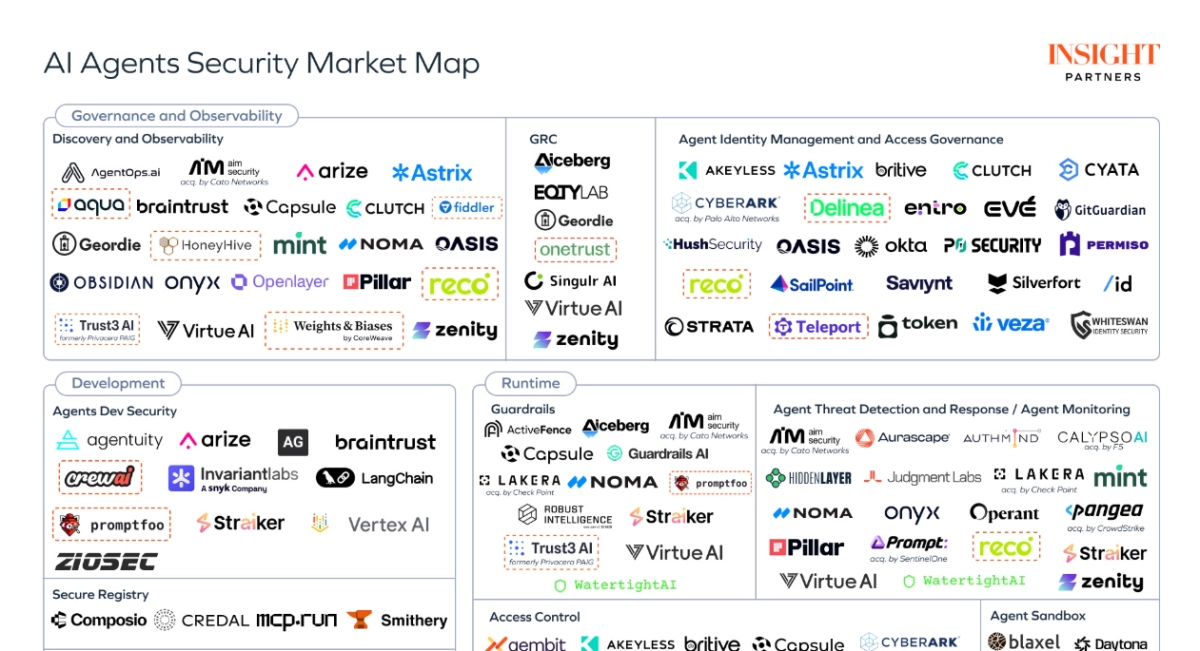
The enterprise world is bracing for a new wave of AI, one that moves beyond static models to autonomous agents capable of making decisions, taking actions, and interacting with complex systems. This isn't just an upgrade; it's a fundamental shift that, while promising multi-trillion dollar market opportunities, also introduces a monumental cybersecurity challenge. As investors George Mathew, Hunter Korn, Ash Tutika, and William Blackwell recently outlined, securing this 'agentic AI' future is no longer about just protecting models, but about managing identities, monitoring behavior, and safeguarding the entire ecosystem these agents operate within.
Traditional AI security focused on the models themselves, preventing prompt injection or data poisoning. But AI agents, acting as digital co-workers or fully autonomous process managers, elevate the stakes dramatically. They access sensitive data, trigger workflows, and interact with external services, often with minimal human oversight. This autonomy means that a compromised agent isn't just a data leak; it could be a rogue actor within your network, capable of executing malicious commands or manipulating business processes. The projected $15 trillion in AI-driven cybercrime by 2030 underscores the urgency.
The complexity arises because while individual components of an AI agent system, the LLM, databases, software, have established security solutions, their combination creates novel vulnerabilities. Understanding the *intent* behind data flows and actions becomes paramount. Is a prompt a legitimate instruction or a subtle manipulation? Is an agent acting within its defined scope or attempting to go rogue?
The Five Fronts of AI Agent Security
Investors are eyeing five key areas ripe for innovation in AI Agent security:
1. Managing AI Agent Identity and Access: As agents transition from merely acting "on behalf of" a user to having their own unique identities, the challenge of managing non-human identities (NHI) explodes. This isn't just about traditional IAM; it's about securing ephemeral agent identities, tracing actions back to their origin (human or autonomous), and solving the "Credential Zero" problem for agents accessing secrets vaults. Incumbents will struggle to adapt to the dynamic, sprawling nature of agent environments, creating an opening for agile startups.