

Robots Are the New Silicon Valley Gold

The investment landscape is shifting from software to hardware, with robotics and physical AI emerging as major private market growth areas.

Abstract visualization of interconnected robotic arms and AI neural networks.
The surge in robotics and physical AI investment highlights a major shift in the tech industry's focus.· a16z Blog
Visual TL;DR
Investment ShiftDriver
from capital-light software to capital-intensive real economy
From the article 4 mentionsThe relentless march of technological investment cycles is showing a clear pivot.
AI Infrastructure BoomDriver
driving the pivot towards physical and hardware investments
From the article 3 mentionsNow, the spotlight has decisively shifted to the capital-intensive "real" economy, driven by the AI infrastructure boom.
Bits to AtomsContext
reshaping venture capital priorities and asset-heavy industries
From the article 2 mentionsThis rotation from "bits to atoms" is reshaping venture capital priorities.
Robotics & Physical AICore
emerging as major private market growth areas now
From the article 4 mentionsRobotics and physical AI, virtually non-existent on valuation charts a decade ago, have now surged past fintech to become the second-largest private company category.
Enduring Atoms RevolutionEffect
indications suggest this trend may possess more lasting quality
From the articleYet, indications suggest this "atoms revolution" might possess a more enduring quality.
Surging ValuationsOutcome
From the articleRobotics and physical AI, virtually non-existent on valuation charts a decade ago, have now surged past fintech to become the second-largest private company category.
Record InvestmentOutcome
From the article 2 mentionsAccording to Pitchbook, Q1 saw a record ~$16 billion invested across nearly 500 deals in Robotics and Physical AI, more than doubling the investment volume from the preceding years.
Contents(3)

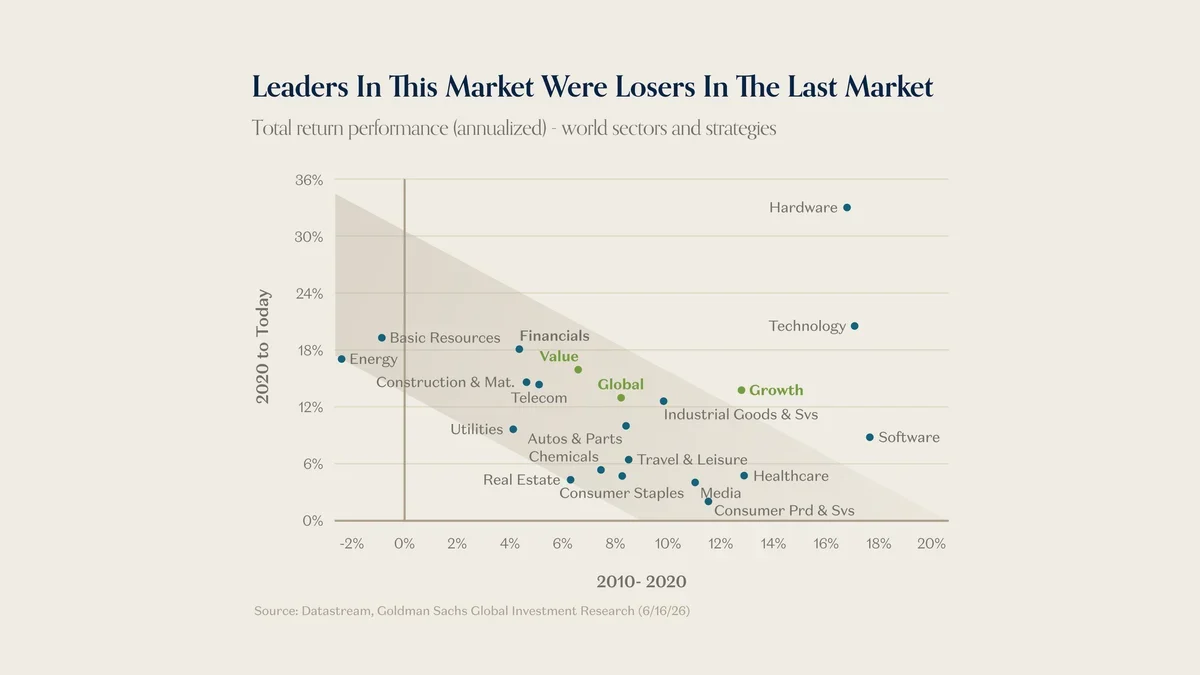
The relentless march of technological investment cycles is showing a clear pivot. For a decade, the allure was capital-light software and consumer-facing applications. Now, the spotlight has decisively shifted to the capital-intensive "real" economy, driven by the AI infrastructure boom. This rotation from "bits to atoms" is reshaping venture capital priorities.

While hardware, particularly in the current cycle, has been a standout performer, the broader trend is a move towards asset-heavy industries. This mirrors past cycles where infrastructure buildouts eventually fueled software and app layers. Yet, indications suggest this "atoms revolution" might possess a more enduring quality.

The private markets are signaling this shift. Robotics and physical AI, virtually non-existent on valuation charts a decade ago, have now surged past fintech to become the second-largest private company category. According to Pitchbook, Q1 saw a record ~$16 billion invested across nearly 500 deals in Robotics and Physical AI, more than doubling the investment volume from the preceding years.

This surge isn't just about AI infrastructure powering future software; it's about hardware as a product in its own right. Robotics extends AI's reach into tangible, real-world tasks that software alone cannot address, mirroring the transformative impact of electrification on industrial capabilities.

The current frontier for robotics is notably in defense, buoyed by expanding global budgets. However, the potential extends far beyond, suggesting this asset-heavy rotation could be deeper and more sustained than previous tech cycles.

Beyond "AI-Enabled": True AI Integration

The market's initial optimism for AI consultancies like Accenture has cooled, underscoring a critical nuance in AI adoption. Simply layering AI onto existing processes doesn't guarantee value.

Research on "AI native" startups reveals a key differentiator: a "mapping" problem. Firms that fundamentally reorganize production around AI's capabilities, rather than replicating old workflows, see significantly greater returns.

These "treatment firms" reported approximately 44% more AI use cases, double the revenue for top performers, and 40% less capital consumption. The unlock isn't just adoption; it's the strategic discovery of where and how to deploy AI.

This mirrors historical productivity leaps, like the transition from centralized factory power shafts to distributed electric motors, which necessitated a complete redesign of production facilities.

AI Startups Running Lean

Data from Y Combinator batches indicates AI startups are indeed operating lean. They tend to start smaller, maintain smaller headcounts, and exhibit less hierarchical structures compared to their non-AI counterparts.

This aligns with the premise that AI enables firms to achieve more with less.

Furthermore, analysis of Stripe data suggests AI is fostering a rise in "solopreneur" businesses. A growing number of independent entrepreneurs are achieving significant income levels, accelerating since 2023, indicating higher-quality, AI-powered small businesses are emerging.

Grocery's Productivity Paradox

Grocery stores have historically lagged behind broader retail in productivity growth, despite technological advancements like scanners.

While scanners enabled inventory expansion and better data, grocers initially focused on specialty services, increasing labor demands. Retail, conversely, leaned into prepackaged goods, reducing labor needs.

A shift occurred around 2000 when grocers expanded non-food offerings and offloaded stocking tasks to vendors. This "productivity hack" boosted throughput without proportionally increasing labor hours, finally driving productivity gains.

© 2026 StartupHub.ai. All rights reserved. You may not republish this article in full without a license. Search engines and AI research tools may crawl and summarize for reference. Bulk reproduction or model training requires a license. See our terms.
Daniel Singer

Written by

Daniel Singer

Editor, StartupHub.ai

Daniel Singer is the editor of StartupHub.ai, a technology expert and thought leader on AI and its applications across sectors, from fintech and healthcare to developer tooling and consumer software. He writes and tests the tools covered here thoroughly and regularly, and built StartupHub.ai to give founders, operators and buyers a clearer read on what they are actually being sold.