Walk into any modern building and you’re surrounded by invisible systems: the plumbing, the HVAC, the electrical grids. These complex networks didn't materialize by magic; they are the product of architects, engineers, and contractors coordinating on designs. Yet, the software underpinning this $13 trillion global industry, the Architecture, Engineering, and Construction (AEC) sector, largely hasn't evolved since 1997. This reliance on outdated technology, as detailed by a16z Blog, costs the industry billions annually in errors, rework, and delays.
The AEC ecosystem is notoriously fragmented. Developers, architects, MEP consultants, general contractors, and specialty trades all operate with disconnected tools. Most of this software is desktop-bound, requiring manual data transfer and leading to significant inefficiencies. Professionals spend over 14 hours a week on non-productive tasks like hunting for information or resolving conflicts arising from miscommunication.
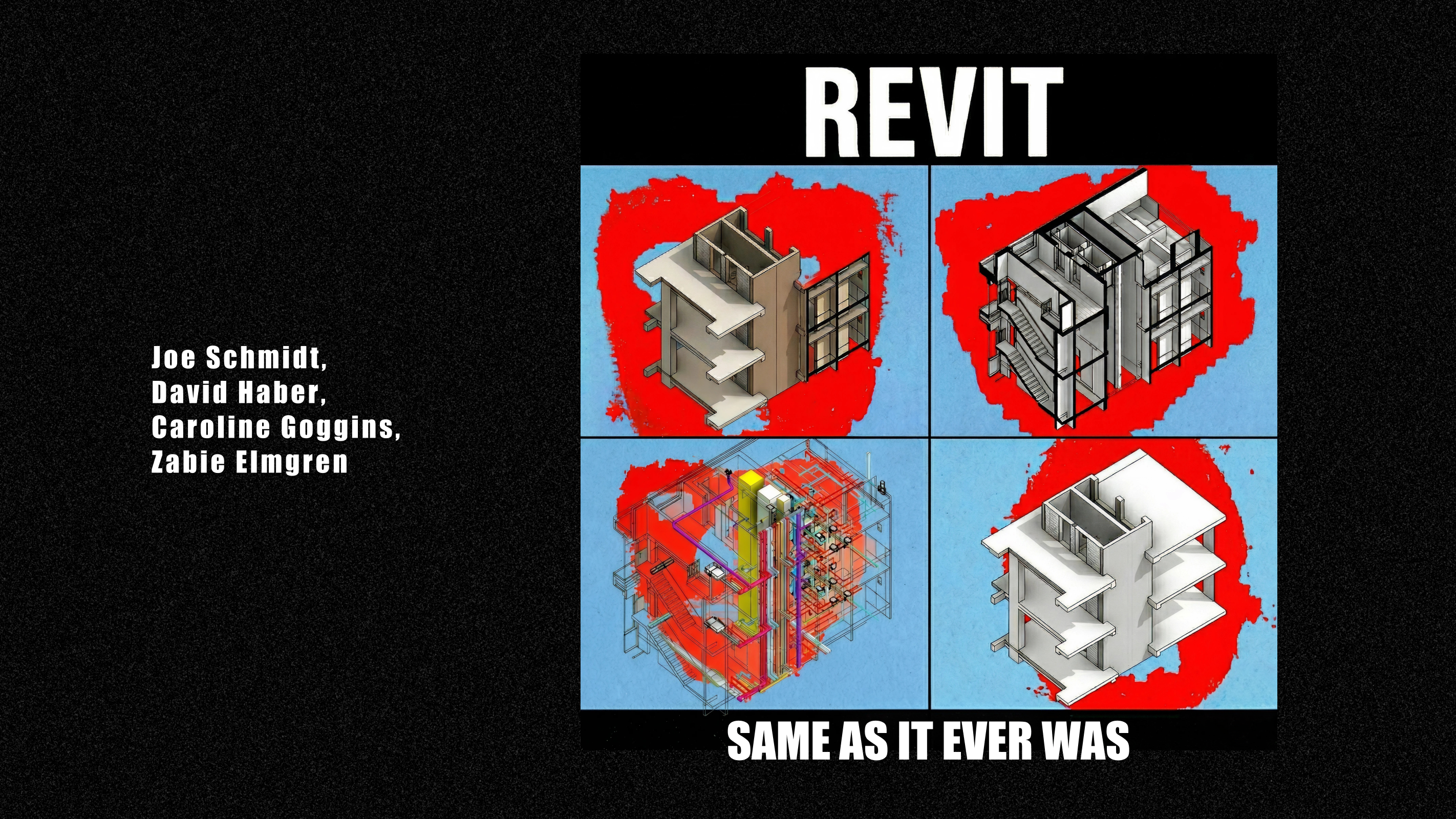
The core issue stems from a foundational tool: Autodesk's Revit. Launched in 1997 and acquired by Autodesk in 2002, Revit pioneered Building Information Modeling (BIM). It became the industry standard, taught in every architecture and engineering school, and now commands over 95% market share. Its proprietary file formats and lack of cloud-native collaboration lock in decades of firm-specific data and prevent seamless information flow between stakeholders.
The Monopoly's Stagnation
Despite its dominance, Revit's core functionality has seen minimal updates in two decades. Collaboration remains a manual process of syncing local files, leading to cascading errors. A structural beam change on Tuesday might not be discovered by MEP consultants until Friday, by which point ductwork is already routed through it.
This inefficiency has tangible consequences: 85% of construction projects exceed budgets, and three-quarters finish late. Rework and miscommunication, often traced back to design errors, cost the US industry $177 billion annually. The problem isn't just the software's age; it's that it struggles to truly *understand* a building's physics and interdependencies.

This is where AI in AEC design enters the picture, driven by two major shifts. First, the advent of advanced Large Language Models (LLMs) and vision models allows software to parse and understand the vast, often unstructured metadata within BIM models. This enables AI to classify rooms, calculate cooling loads, and map code requirements—tasks previously requiring manual interpretation.
Second, the urgent need for new infrastructure, particularly data centers, has highlighted AEC's capacity constraints. The talent pipeline cannot keep pace with demand, making AI-driven efficiency gains not just desirable but existential for industry growth.
Three Paths for AI Disruption
AI is attacking this $13 trillion market through three primary strategies:
- Directly challenging Revit: Building cloud-native, AI-enabled BIM platforms from scratch. This is the most ambitious approach, requiring firms to retrain staff and rebuild project libraries. Motif, founded by a former Autodesk co-CEO, is a notable contender aiming for feature parity leveraging AI.
- Building around Revit: Developing new software that addresses workflows Revit handles poorly or not at all. This includes AI tools for document review, error flagging, and coordination checks, which currently consume vast human hours and still miss many issues. LightTable is tackling this gap, turning project data into labeled training sets.
- Automating services budgets: Targeting the immense $150 billion global MEP (mechanical, electrical, plumbing) design services market. Much of this work involves manually translating specifications into drawings and documentation. AI can automate these rule-based, code-constrained tasks, unlocking capacity for firms drowning in backlogs. Endra is developing an AI-native MEP design platform to achieve this.
The opportunity extends beyond just faster project completion; it enables firms to accept projects they previously couldn't staff. This mirrors AI's impact in fields like legal and accounting, where massive, rules-based markets with legacy tools are being revolutionized.
The business model shift is significant. By addressing the bottleneck of qualified personnel and operational speed, AI transforms capacity-constrained "world of atoms" industries into more efficient digital workflows. This is particularly relevant for companies like Autodesk, which has seen past innovation attempts in areas like MEP design yield limited results.
The AEC industry's reliance on technology from the late 1990s presents a ripe opportunity for AI-driven transformation. Companies like Autodesk, which has faced scrutiny over its innovation pace and pricing strategies, may find their long-standing dominance challenged by AI-powered solutions that finally bring this critical sector into the 21st century.