The 20 Best AI Recruiting Tools for Talent Teams in 2026

From AI candidate sourcing and automated screening to structured ATS platforms and global employment infrastructure, these 20 recruiting tools define what competitive talent teams use to hire faster in 2026.

9 min read
The 20 Best AI Recruiting Tools for Talent Teams in 2026

Hiring has fractured into a multi-system problem. A mid-sized company running 30 open roles at once needs sourcing infrastructure to find passive candidates, screening automation to filter 400 inbound applications, scheduling software to coordinate interviews across six time zones, an ATS to track each candidate's stage, and then a separate system to manage offer letters and onboarding paperwork. The average talent team now runs eight or more tools to execute a process that should feel like one thing.

What changed in the last two years is not the number of tools, but the intelligence layered into each of them. Sourcing platforms now maintain continuous candidate graphs updated from public data, not static databases refreshed quarterly. Screening tools run role-specific job simulations rather than generic aptitude tests. Scheduling assistants handle the full back-and-forth of candidate and interviewer availability without recruiter intervention. The shift is measurable: teams that adopted intelligent recruiting platforms in 2024 reported time-to-fill reductions of 30 to 50 percent within two quarters.


The twenty platforms below cover every distinct layer of the recruiting stack, from early-talent networks and global employment infrastructure to technical interview platforms and candidate assessment tools. Some are built for specific verticals, healthcare, startups, enterprise. Some solve a narrow problem extremely well. A few are attempting to unify the entire workflow. Understanding which layer your team is currently weakest in is the prerequisite to evaluating any of them.

Handshake website homepage screenshot
Handshake logo
86
DAR

The early-talent marketplace where 15 million students and 700,000 employers find each other first.

Handshake built the dominant network for campus recruiting before most incumbents recognised that Gen Z job searches start on mobile, not job boards, giving employers direct, verified access to students at 1,400 educational institutions.

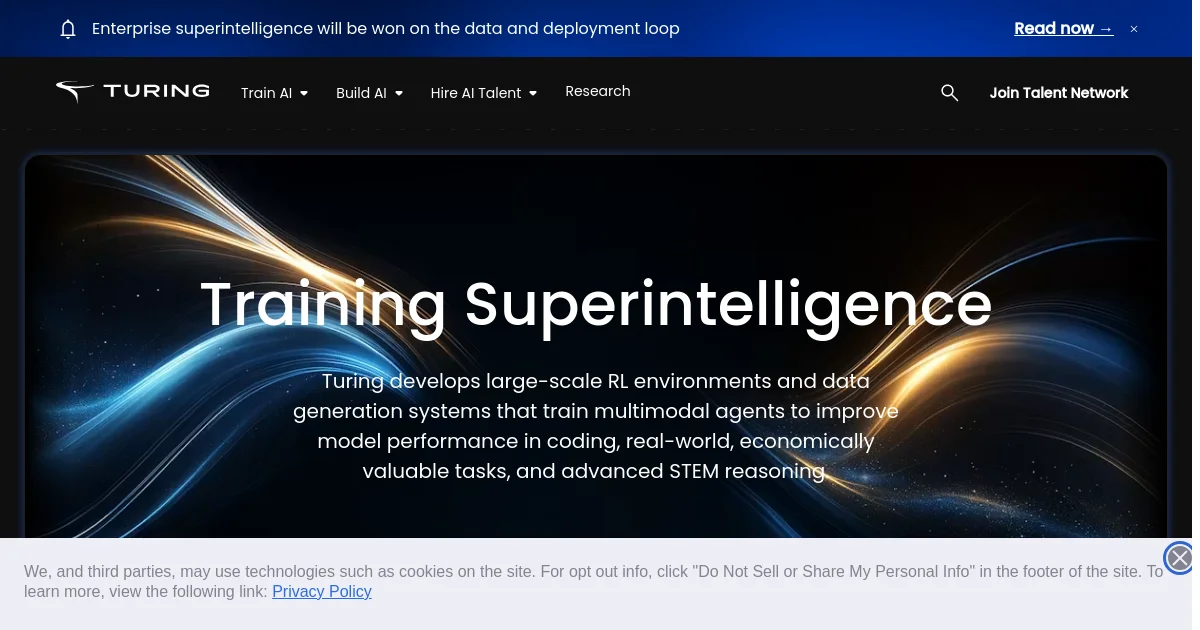
Turing website homepage screenshot
Turing logo
85
DAR
#2

Turing

A talent cloud that vetted over three million engineers before presenting companies a curated shortlist.

Turing's automated assessment layer screens remote engineering candidates across 100-plus skills and time zones, so hiring teams receive a shortlist of developers who have already passed technical and communication benchmarks relevant to their stack.

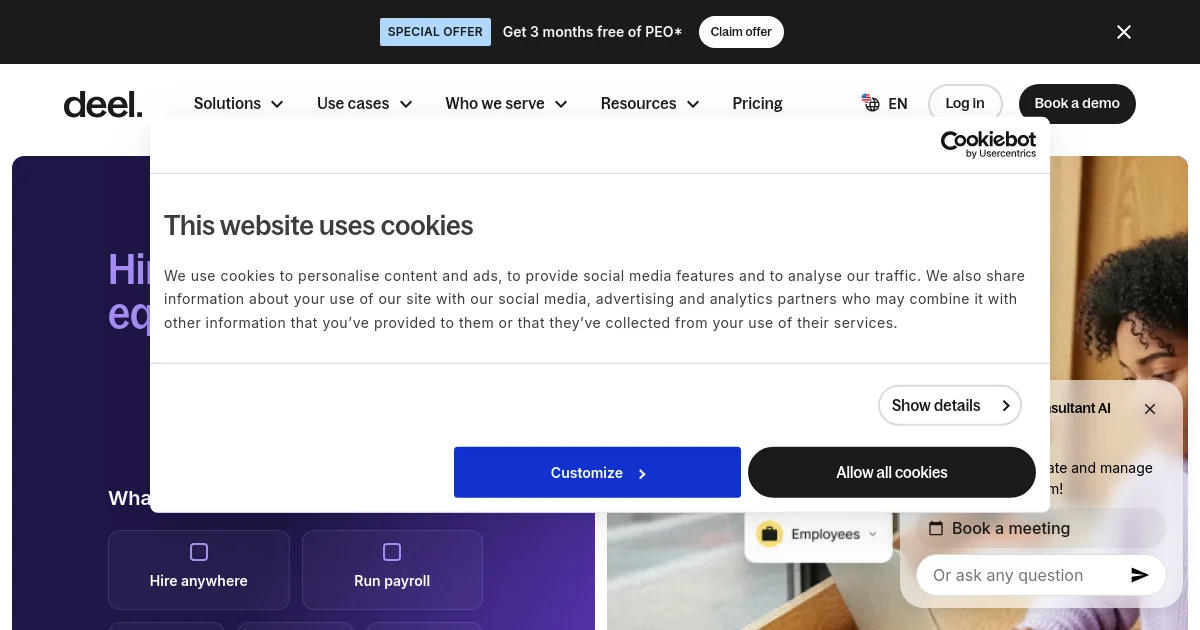
Deel website homepage screenshot
Deel logo
76
FAR
#3

Deel

Global HR infrastructure that compresses entity-free hiring into a single contract-to-payroll workflow.

Deel removes the legal complexity that stalls international hiring: its Employer of Record coverage across 150-plus countries means companies can onboard a contractor in Berlin or a full-time hire in Lagos without standing up a local entity.

Eightfold.ai website homepage screenshot
Eightfold.ai logo
75
DAR

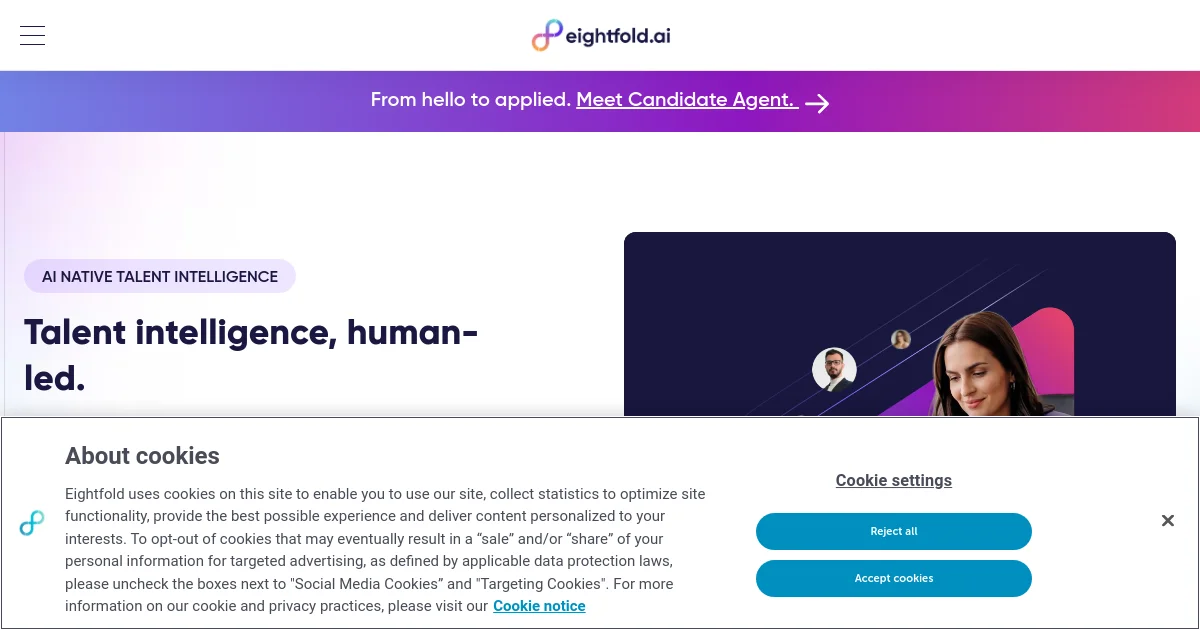
Enterprise talent intelligence platform that matches candidates to roles using a deep career graph.

Eightfold's underlying model maps skills and career trajectories across millions of anonymised profiles, surfacing candidates whose potential trajectory fits an open role rather than relying on keyword-matched resumes.

Paradox website homepage screenshot
Paradox logo
71
#5

Paradox

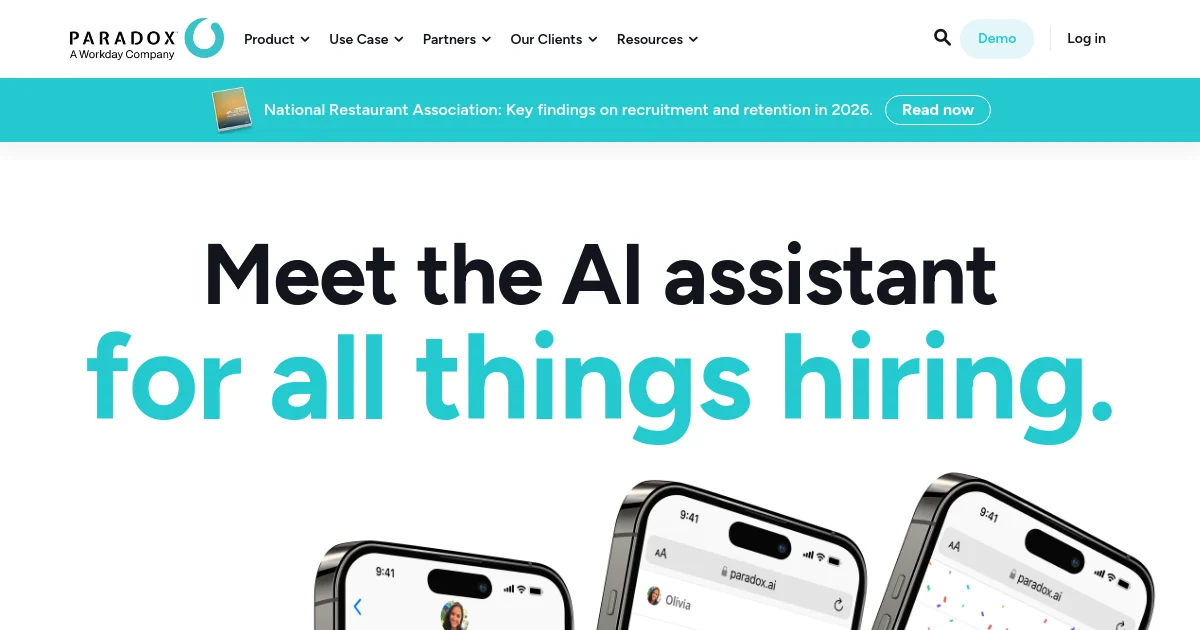
Conversational recruiting assistant that handles screening, scheduling, and candidate questions at volume.

Paradox's Olivia assistant automates the repetitive, high-volume steps in high-turnover hiring: initial screen conversations, interview scheduling, and FAQ responses, cutting time-to-hire without requiring additional recruiter headcount.

Jobandtalent website homepage screenshot
Jobandtalent logo
70
DAR

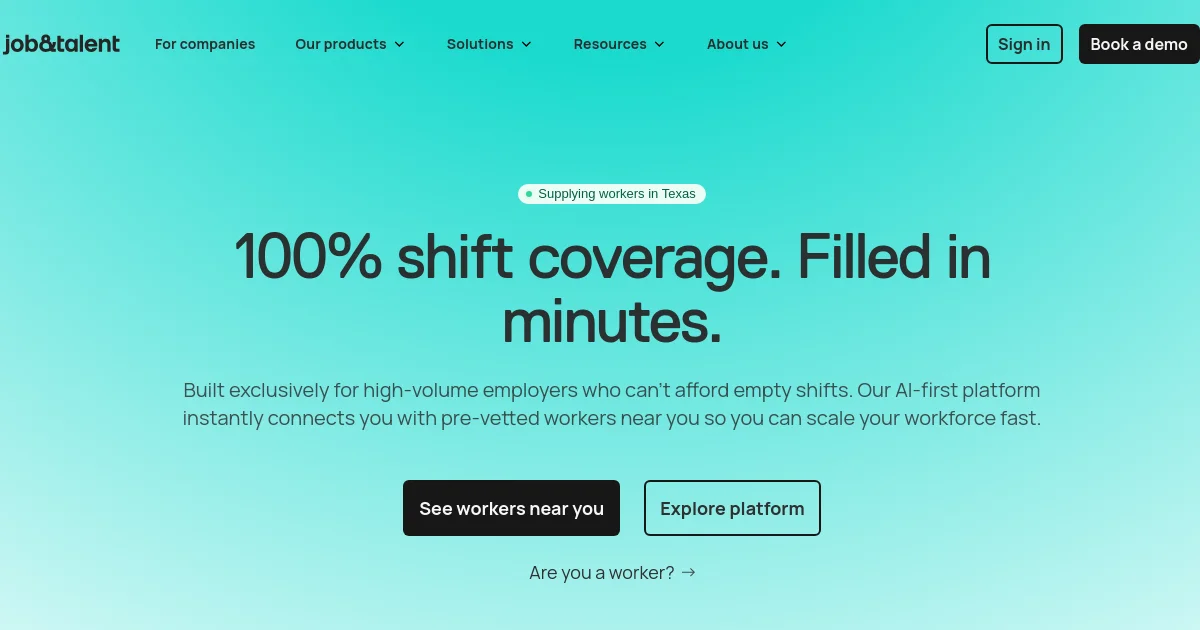
On-demand staffing platform that fills shift-based roles through a managed digital workforce.

Jobandtalent handles the compliance, scheduling, and payment infrastructure for flexible labour, giving logistics, retail, and warehouse operators a controllable on-demand workforce without the administrative overhead of traditional temp staffing.

Oyster HR website homepage screenshot
Oyster HR logo
70
DAR

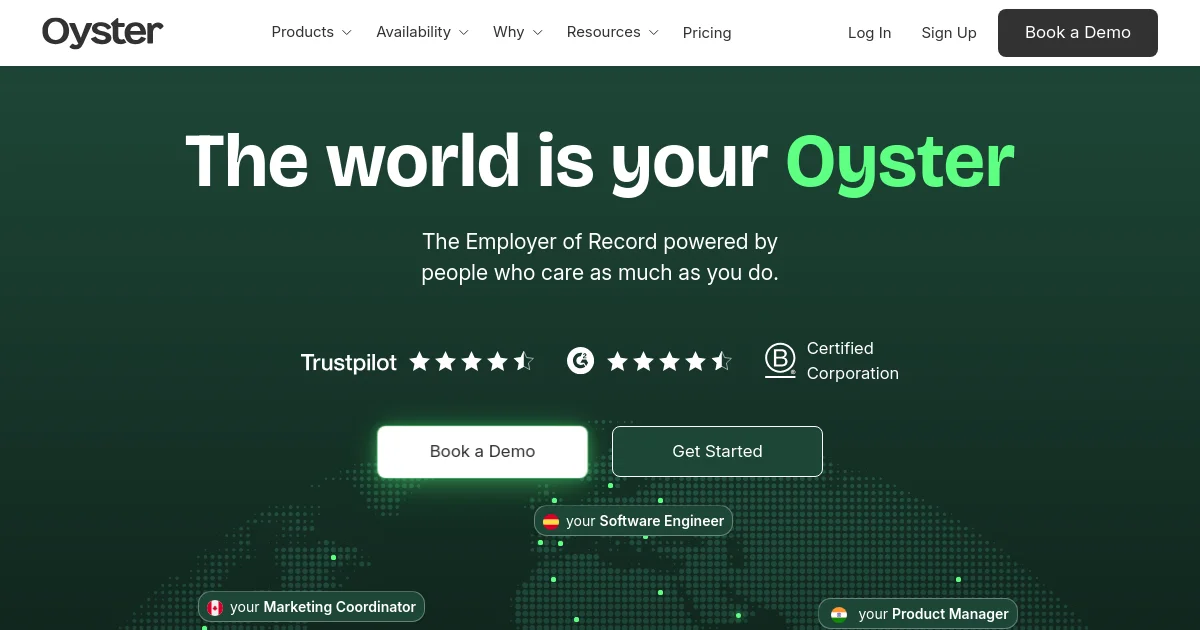
Employment platform designed for distributed-first companies that need compliant global hiring without subsidiary complexity.

Oyster wraps employer of record services, benefits administration, and payroll into one platform for remote-first teams, handling the country-specific compliance that typically requires a local HR legal expert in each jurisdiction.

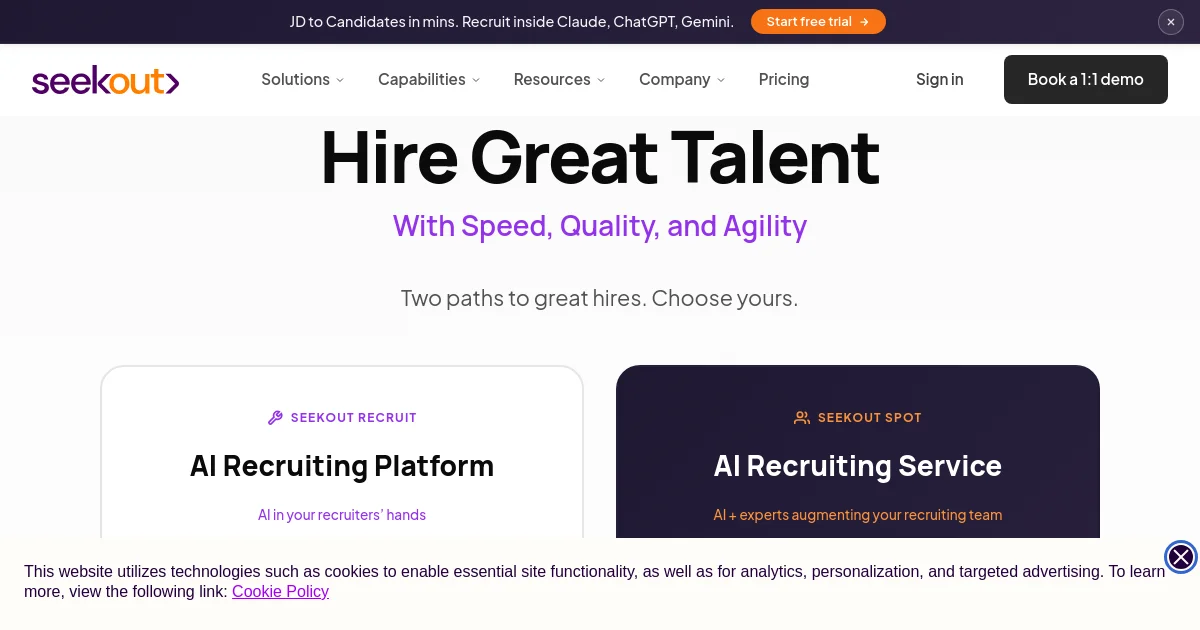
SeekOut website homepage screenshot
SeekOut logo
68
DAR
#8

SeekOut

Talent acquisition platform that surfaces passive candidates from technical, diversity, and professional datasets.

SeekOut's sourcing engine indexes public profiles from GitHub, research publications, and professional networks to help recruiting teams identify candidates who are not actively applying, with filters that support diversity sourcing objectives.

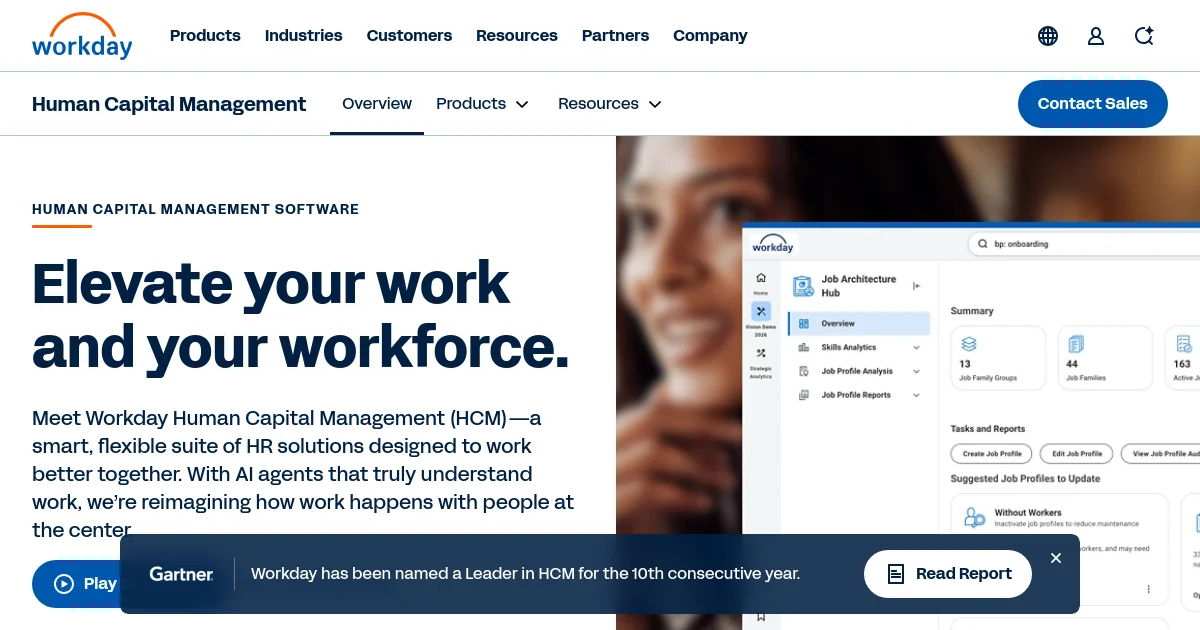
Workday Human Capital website homepage screenshot
Workday Human Capital logo
68
DAR

Enterprise cloud platform that runs workforce planning, talent management, and HR analytics as one system.

Workday HCM is the system of record for large enterprise people data: it connects headcount planning, performance reviews, compensation, and learning into a single dataset that HR leaders use to model workforce decisions.

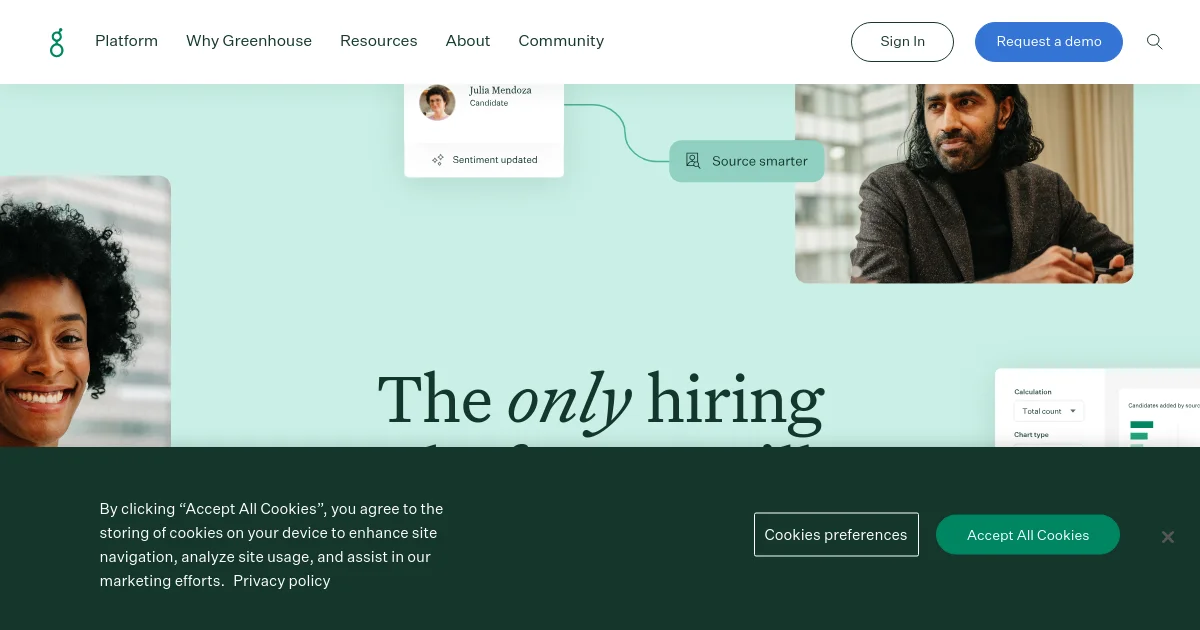
Greenhouse website homepage screenshot
Greenhouse logo
66
DAR

Structured hiring software that standardises the interview process across every open role and team.

Greenhouse enforces consistent scorecards and interview stages, reducing the variance in how different hiring managers assess candidates and giving talent teams the data to identify which evaluation steps actually predict retention.

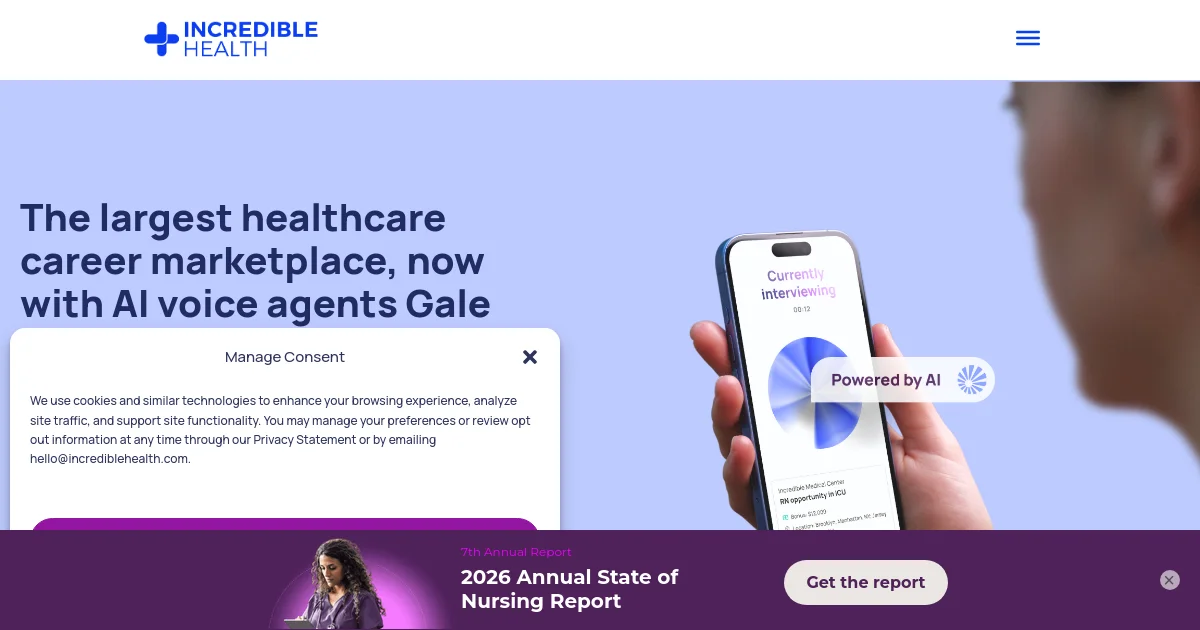
Incredible Health website homepage screenshot
Incredible Health logo
66

Healthcare career marketplace that matches permanent nursing and clinical staff to hospital employers nationwide.

Incredible Health flips the traditional nurse recruiting model: instead of nurses applying and waiting, the platform has hospitals compete for candidates, cutting time-to-hire from the sector average of three months to under three weeks.

Personio website homepage screenshot
Personio logo
64
FAR
#12

Personio

All-in-one HR platform built for European small and mid-sized companies managing hiring, payroll, and people operations.

Personio bundles applicant tracking, employee records, time tracking, and payroll into a single system calibrated for the German, Austrian, and Swiss compliance environment, removing the multi-vendor complexity that burdens SMB HR teams.

Gupy website homepage screenshot
Gupy logo
64
DAR
#13

Gupy

Brazil's dominant HR platform, processing over 150 million applications per year through AI-driven recruitment workflows.

Gupy has become the infrastructure layer for large-scale hiring in Latin America, with its resume screening and automated funnel management handling application volumes that manual review processes cannot absorb cost-effectively.

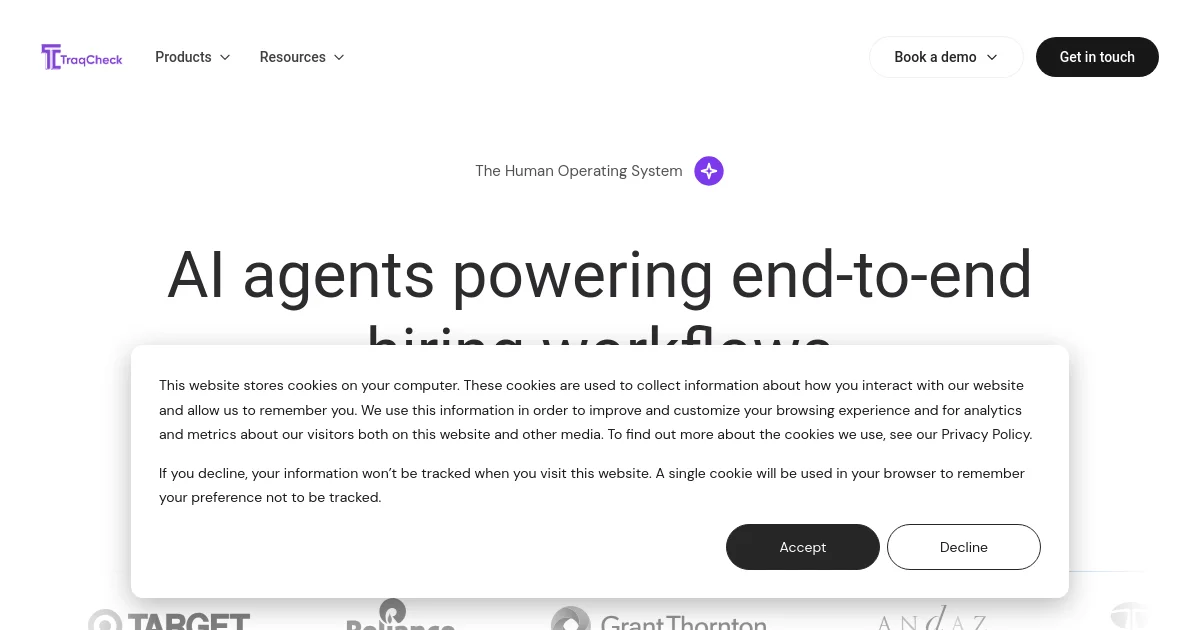
TraqCheck website homepage screenshot
TraqCheck logo
63
FAR
#14

TraqCheck

Talent acquisition automation that combines candidate screening with autonomous background verification in one pipeline.

TraqCheck deploys autonomous agents across the candidate journey from initial screening through background checks, collapsing what typically spans multiple vendors and weeks of coordination into a single managed workflow.

ClearCompany website homepage screenshot
ClearCompany logo
63
DAR

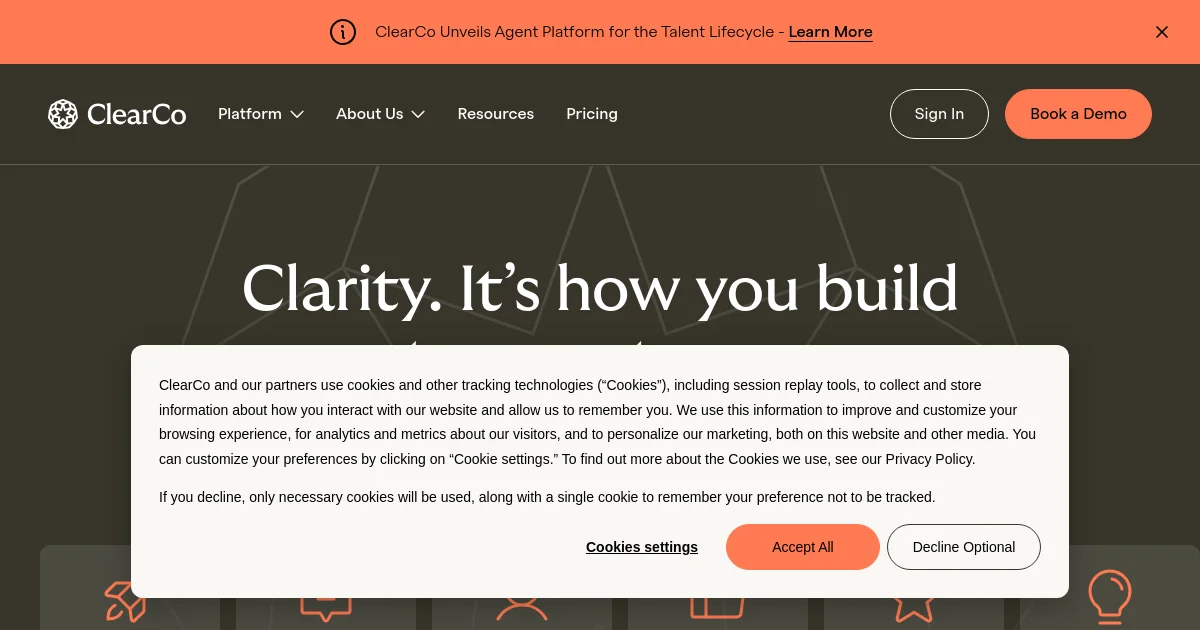
Unified talent platform spanning recruiting, onboarding, performance, and workforce planning for mid-market teams.

ClearCompany integrates ATS functionality with performance management and onboarding workflows, so HR teams handle the full employee lifecycle without reconciling data across disconnected point solutions.

Findem website homepage screenshot
Findem logo
62
DAR
#16

Findem

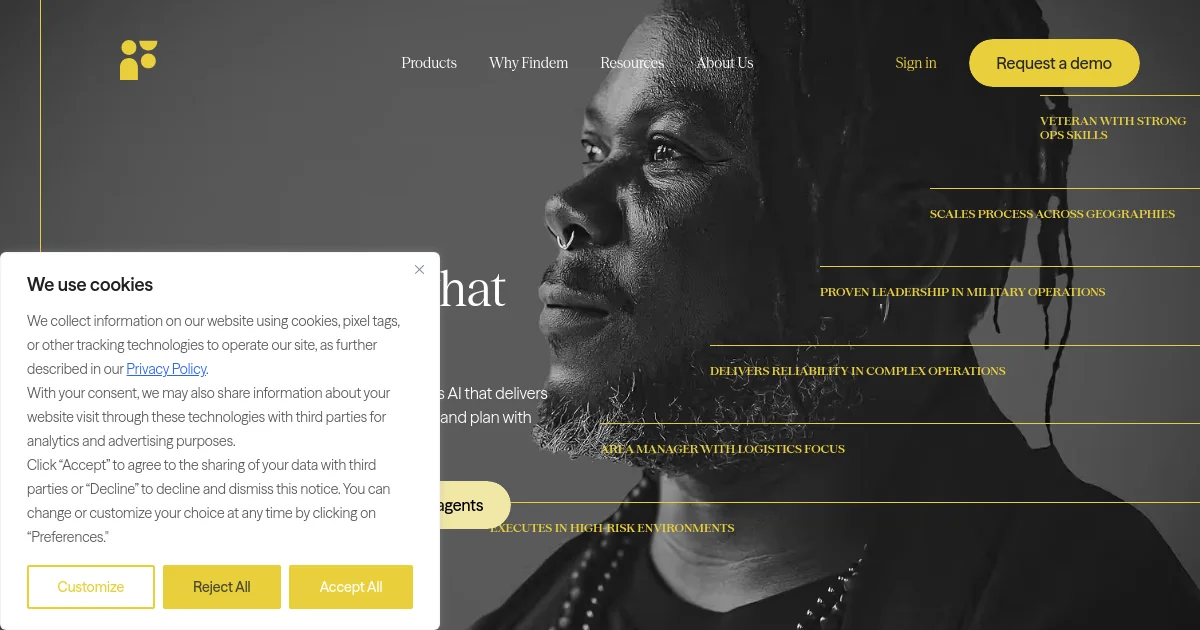
Talent intelligence platform that enriches candidate profiles with over 1,800 data attributes sourced continuously.

Findem's multi-dimensional candidate graph connects public data across professional networks, job postings, and company records to build richer profiles than a CV alone provides, with scoring that helps talent teams prioritise outreach to the highest-signal candidates.

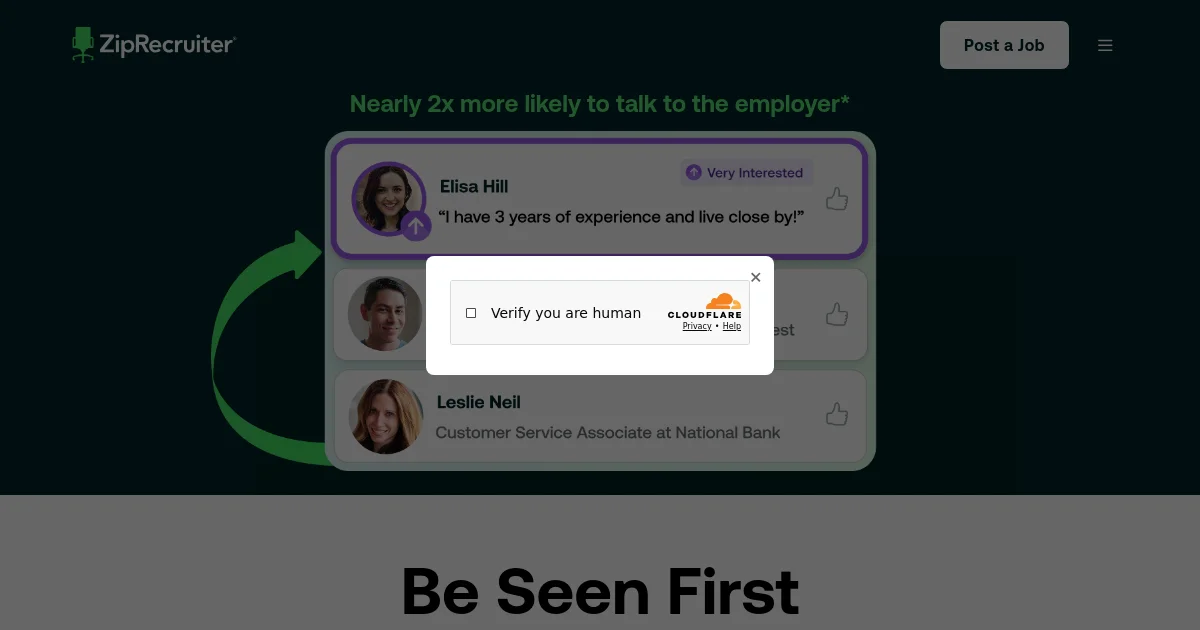
ZipRecruiter website homepage screenshot
ZipRecruiter logo
62
DAR

Employment marketplace using matching algorithms to connect 2.8 million employers with active job seekers.

ZipRecruiter's Smart Apply feature surfaces the platform's best-match candidates directly to recruiters and uses behavioural data from past hires to continuously improve the relevance of its job-to-candidate matches.

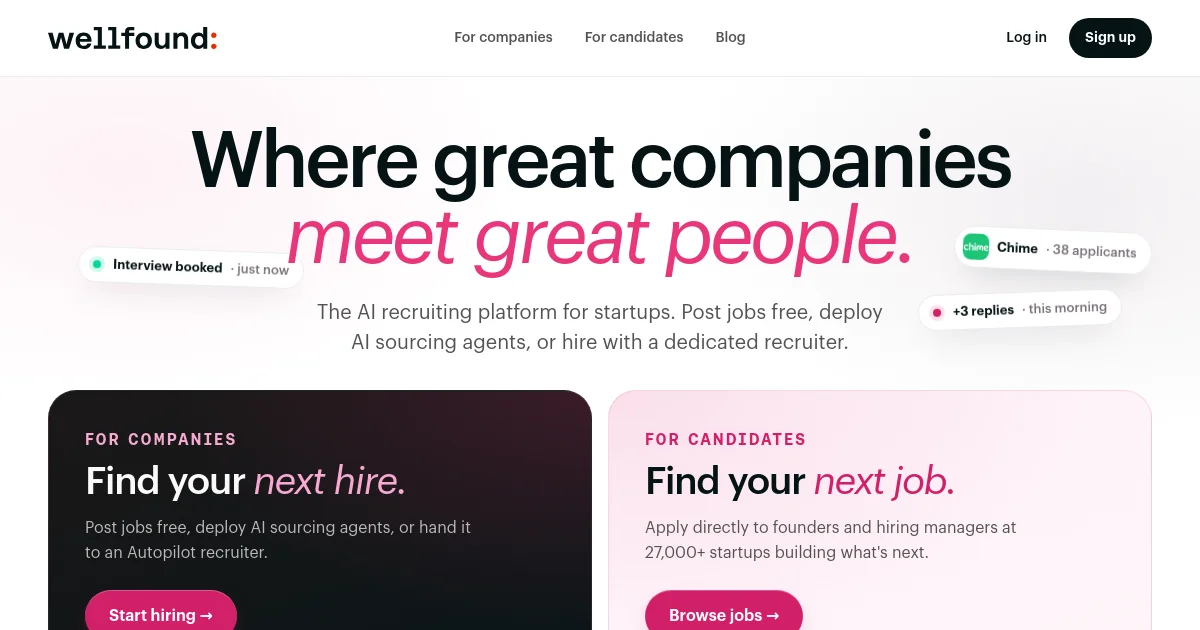
Wellfound website homepage screenshot
Wellfound logo
62
FAR
#18

Wellfound

Startup-focused job platform where 10 million technical and product candidates search roles at venture-backed companies.

Wellfound gives startups access to candidates who specifically want early-stage environments, filtering for people comfortable with equity compensation and the pace and ambiguity that most enterprise job boards cannot surface.

Canditech website homepage screenshot
Canditech logo
61
DAR
#19

Canditech

Candidate assessment platform that tests real job skills through role-specific tasks rather than cognitive proxies.

Canditech replaces resume screening with job-simulation assessments, letting candidates demonstrate actual coding, writing, or analytical ability in the context of the role before any recruiter time is invested in a phone screen.

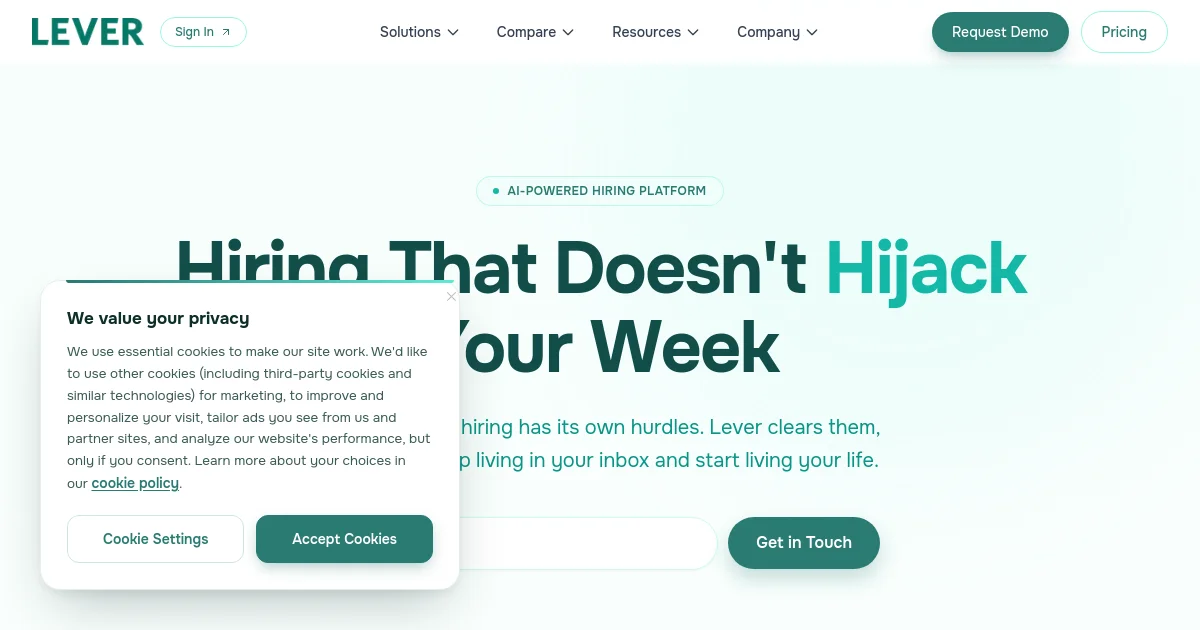
Lever website homepage screenshot
Lever logo
61
DAR
#20

Lever

Talent acquisition suite combining ATS pipeline management with a built-in CRM for nurturing long-term candidates.

Lever's dual ATS-CRM architecture lets recruiting teams manage active applicants alongside a longer-term talent pool, so strong candidates who weren't the right fit last quarter stay in a structured nurture track rather than disappearing into archived applications.

The list divides cleanly into three structural categories, and the category you buy from should reflect where your recruiting process actually breaks. The networks, Handshake, ZipRecruiter, Wellfound, solve the top-of-funnel problem: getting the right candidates to see your roles at all. The intelligence platforms, Eightfold.ai, SeekOut, Findem, solve the sourcing problem: finding people who are not looking but match your criteria. Everything else, Greenhouse, Lever, ClearCompany, Paradox, Canditech, is about managing, screening, and closing candidates once they are in the funnel.

The structural tension in the category right now is between horizontal platforms trying to own the full workflow and specialists that do one thing exceptionally well. Paradox's conversational automation is difficult to replicate inside a general ATS. Incredible Health's vertical positioning for healthcare staffing gives it data advantages no horizontal platform can match. TraqCheck's autonomous agent approach to background verification represents where the category is heading: not more software for humans to operate, but agents that complete tasks end to end. The platforms that embed that model first will define what recruiting infrastructure looks like in 2028.

Frequently Asked Questions

What is the difference between an ATS and an AI recruiting platform?

An applicant tracking system records candidate stages and stores application data. AI recruiting platforms add intelligence on top of that: sourcing passive candidates, automating screening conversations, scoring applicants against role criteria, and predicting which candidates are likely to accept an offer. Most modern platforms now combine both capabilities, but the weight given to automation versus workflow tracking varies significantly between vendors.
How do AI candidate screening tools reduce bias in hiring?

Tools like Canditech and Eightfold.ai reduce reliance on resume signals, which carry significant demographic bias, by evaluating candidates on task performance or career trajectory rather than educational pedigree or company name. That said, any model trained on historical hiring data can encode existing biases if those patterns exist in the training set. Independent auditing of screening models remains a live issue in the sector, and buyers should ask vendors for bias testing documentation before deploying at scale.

When does a company need an Employer of Record versus a traditional hiring process?

An Employer of Record like Deel or Oyster HR is the right choice when you want to hire in a country where you do not have a legal entity and do not plan to establish one. The EOR becomes the legal employer of record in that jurisdiction, handling local tax withholding, benefits compliance, and employment law. For companies hiring more than 20 to 30 full-time employees in a single country, setting up a local entity typically becomes more cost-effective than ongoing EOR fees.

© 2026 StartupHub.ai. All rights reserved. Do not enter, scrape, copy, reproduce, or republish this article in whole or in part. Use as input to AI training, fine-tuning, retrieval-augmented generation, or any machine-learning system is prohibited without written license. Substantially-similar derivative works will be pursued to the fullest extent of applicable copyright, database, and computer-misuse laws. See our terms.