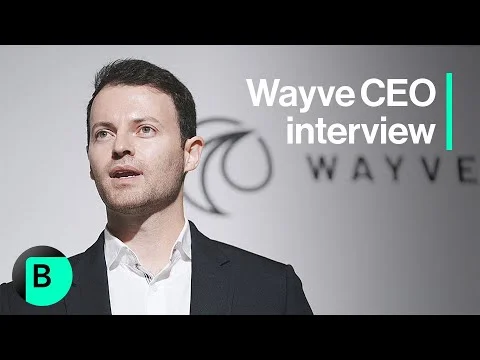
The future of self-driving cars is being reshaped by artificial intelligence, according to Alex Kendall, CEO of Wayve. In a recent discussion, Kendall highlighted how his company's approach to autonomous driving technology differs significantly from conventional methods, emphasizing the power of AI in creating a more adaptable and scalable solution. Wayve is building an end-to-end AI model that learns to drive directly from sensor data, enabling it to navigate complex and diverse environments.
The Wayve Approach: End-to-End AI
Kendall explained that Wayve's core strategy is to develop a single, unified AI model that can learn to drive any vehicle, anywhere. This contrasts with traditional approaches that often rely on heavily engineered systems with pre-defined rules and detailed maps. "We've built an end-to-end AI system for driving," Kendall stated. "It requires a completely different approach to thinking about safety, to thinking about infrastructure, simulation, data, and the embedded architecture that you put on the car." This decade-long development process has focused on creating a system that can generalize and adapt to new situations rather than relying on explicit programming for every scenario.
The full discussion can be found on Bloomberg Technology's YouTube channel.

Three Business Models in Autonomous Driving
The conversation touched upon the various business models emerging in the autonomous driving sector. Kendall identified three main approaches: selling cars with autonomous capabilities directly to consumers, building a fleet of autonomous vehicles for ride-hailing services, and licensing the technology to fleets and manufacturers. Wayve has chosen the third model, licensing its AI technology to fleets and manufacturers. Kendall believes this approach allows them to scale more effectively, stating, "We've chosen a third business model, which is to license this technology to fleets and manufacturers out there."
The London Advantage: A Complex Proving Ground
Kendall highlighted London as a particularly challenging yet beneficial environment for testing and developing Wayve's AI. "There is something unique to London's pretty ancient road system that almost forces us to take a scalable approach," he noted. London's intricate network of narrow streets, diverse traffic patterns, and frequent roadworks present a far greater challenge than the more predictable environments often seen in Silicon Valley. "London is a 2,000-year-old city, so you've got, you know, 20 times more roadworks than you have in San Francisco, and you've got 10 times more cyclists and pedestrians, and you've got, you know, traffic lights, merging, roundabouts, all of these things," Kendall elaborated. This complexity necessitates an AI that can learn and adapt, rather than one that relies on pre-programmed responses.