
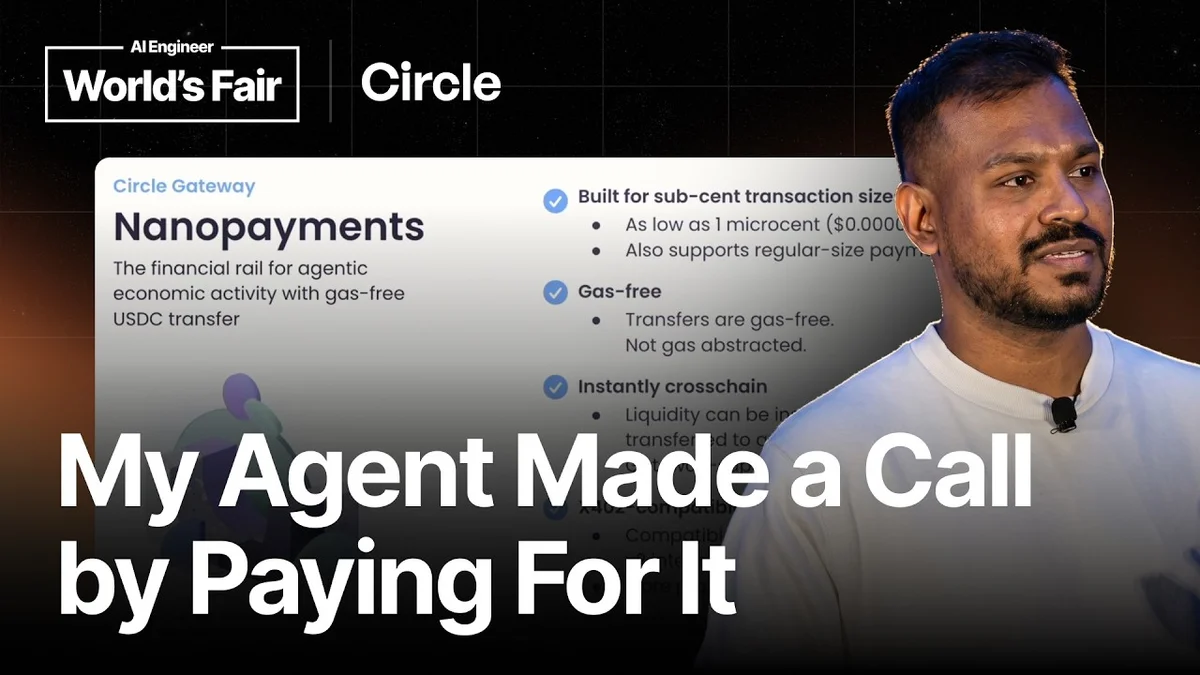
$24 million in 30 days, 99% settled in USDC. That is the volume Circle engineer Harshal Bhangale cited at AI Engineer for agents paying API endpoints via x402, and why he pitched the AI agent wallet as the fix for agents that stall at paywalls.
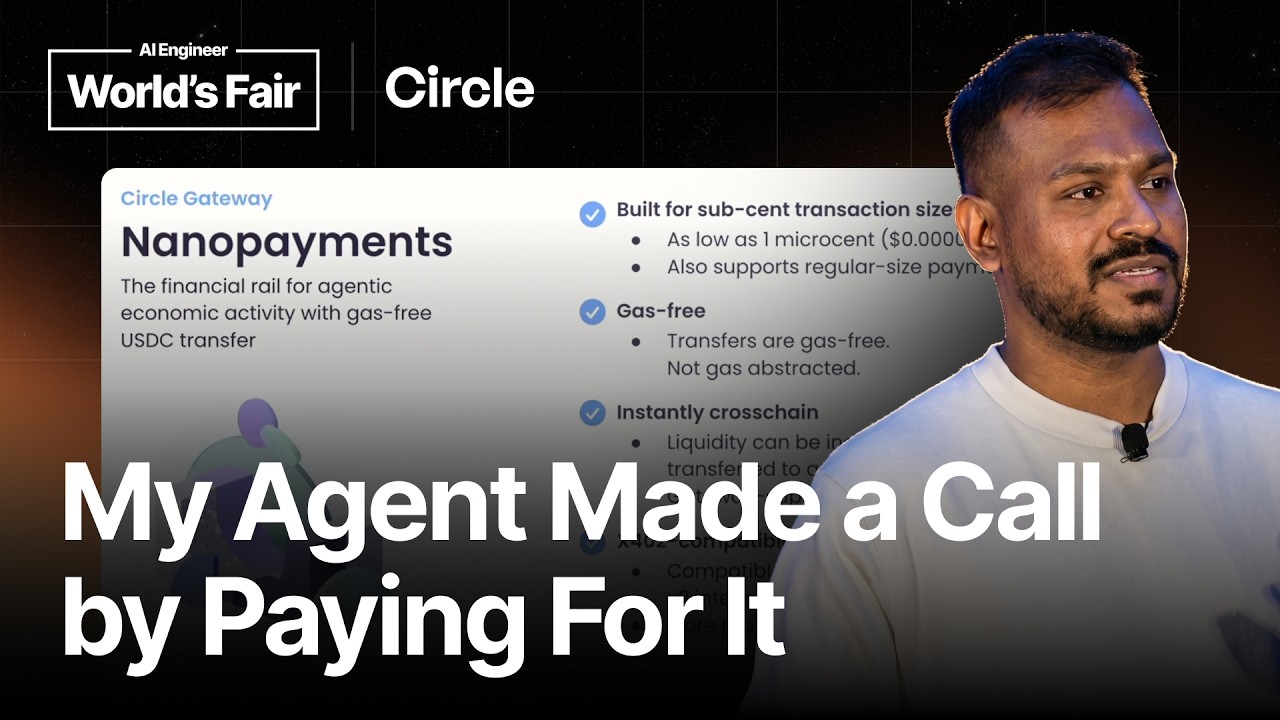
The demo venue was Polymarket, queried live via Block Run for Argentina reaching the World Cup final. The specific odds were not disclosed on stage.
What moved is not the odds. It is the payment rail itself.
Why traders are pricing it this way
Traders are pricing a world where agents consume data in tiny, high frequency slices. Bhangale argued sellers now shard paywalls into 10 cent chunks because agents want one dataset, not a subscription.
Credit cards can't clear a one cent call with a 3% fee. USDC can, if settlement is instant and cheap. That is the bet embedded in the $24 million.
What an AI agent wallet means for founders
Circle frames 2026 as the year agents start paying. 2023 was prompts, 2024 was workflows, 2025 was MCPs and orchestration.
The Circle agent stack is wallets plus nanopayments plus merchant SDKs. You fund in USDC via Circle on-ramps, deposit to a smart contract, then the agent signs off-chain authorizations.
The server relays to Circle and releases the resource in a few hundred milliseconds. No gas for the seller, no on-chain wait per call.
Nanopayments is built on Gateway, Circle's infra layer. It targets as low as one micro cent, gas free for sellers, instantly cross-chain.
Bhangale showed why. Two Claude Code sessions planned the same FIFA final trip. The vanilla agent spun sub-agents, hit paywalls, left a Gmail draft and admitted it could not call.
The wallet equipped agent paid Block Run for Polymarket data, paid providers for email and phone, all under a 15 cent guardrail. It sent the email and placed the call.
This inverts the last 30 years of checkout design. The internet was built for humans with signups and API keys. Agents just want to grab compute, inference or data and move on.
For builders, the implication is clear. Wrap any endpoint with a few lines of SDK and charge per call instead of per seat.
That pattern is not new. Crypto bets on AI agents for the next billion users tracked the same thesis in August. Circle is now productizing it.
The gap a careful reader will spot: Circle did not detail relay fees, final chain settlement timing, or dispute handling if an authorization fails. Throughput limits were acknowledged as shared blockspace with unpredictable latency under load.
The startup angle others miss is guardrails as product. The wallet enforces per session and per day caps, so you don't approve 1,000 five cent calls. That is the control plane enterprises need before they let agents spend.
Liquidity is the near term limiter. A binary market or a thin x402 endpoint resolves cleanly but pays little. Scale needs many sellers pricing micro slices and many agents funded in USDC.
Not financial advice. Markets move fast.



