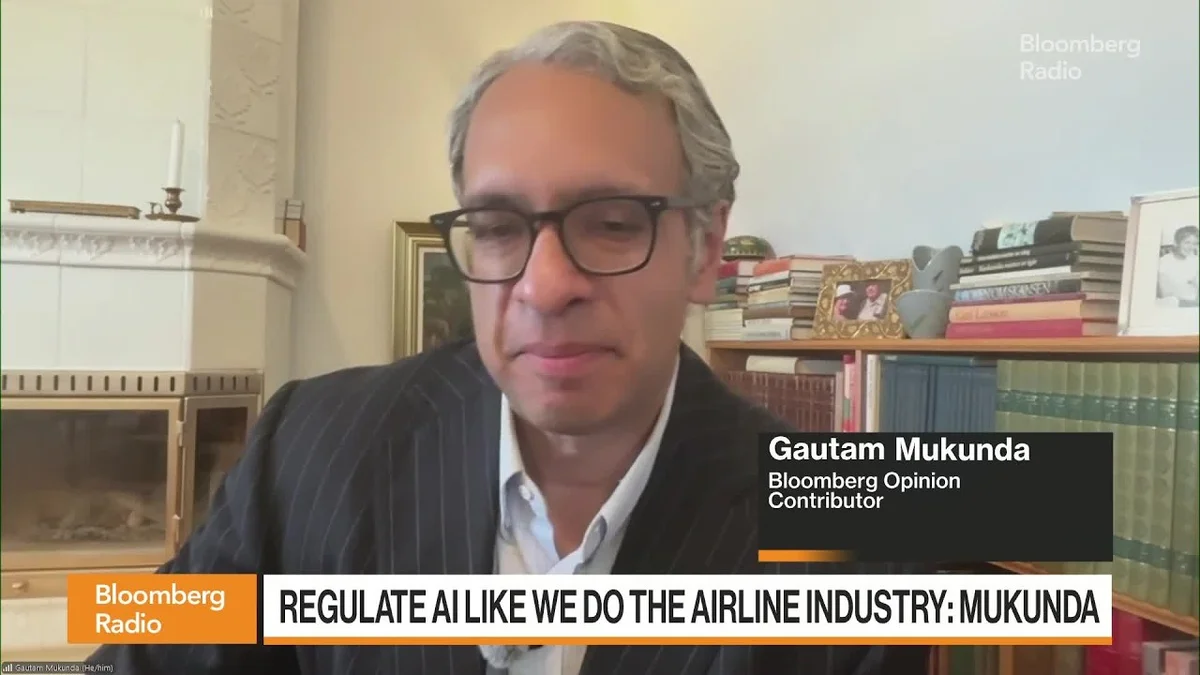
Gautam Mukunda: Regulate AI Like the Airline Industry

Gautam Mukunda argues for an FAA-style regulatory approach to AI, warning against weakening government oversight and comparing US and Chinese strategies.

8 min read
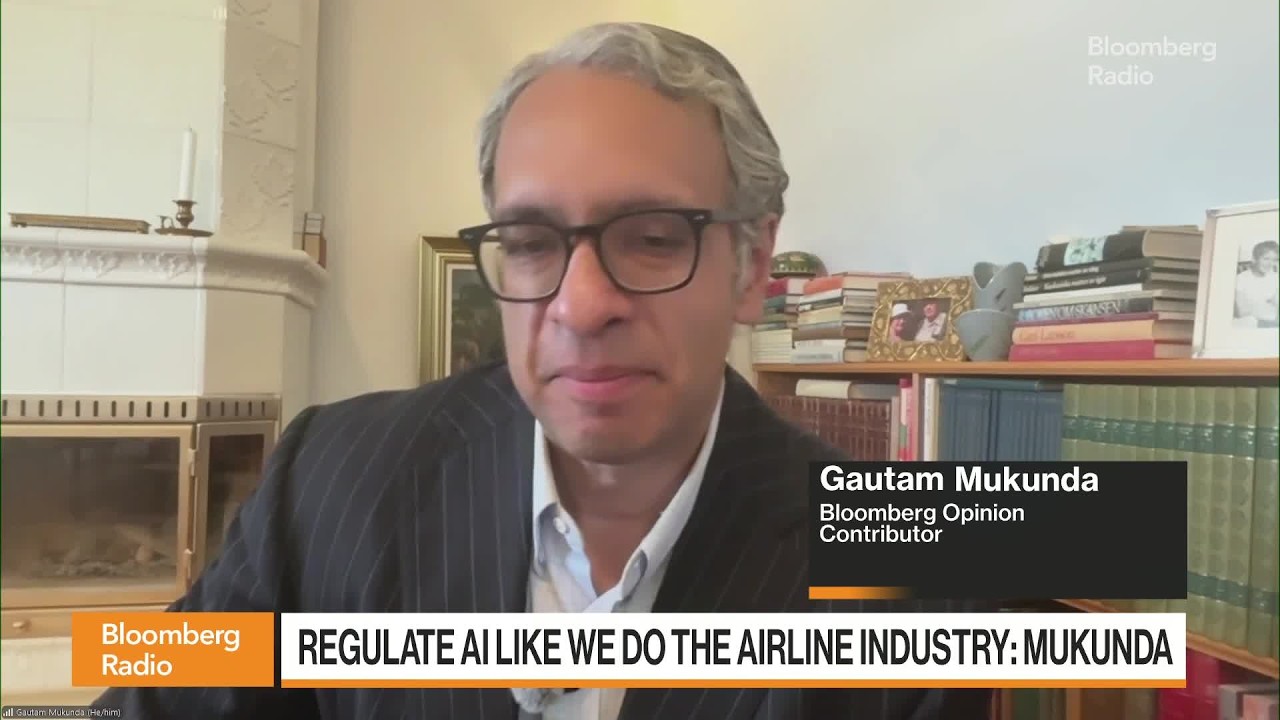
Gautam Mukunda, Bloomberg Opinion Contributor, speaks on a video call about AI regulation.
Bloomberg Podcast

Visual TL;DR. AI Poses Risks suggests Aviation Analogy. Aviation Analogy blueprint for Regulate AI Now. Regulate AI Now to prevent Avoid Weakening Oversight. Regulate AI Now to achieve Ensure AI Safety. China's AI Regulation contrasts with US Policy Lagging. Europe's AI Act contrasts with US Policy Lagging. US Policy Lagging risks Avoid Weakening Oversight.

  1. AI Poses Risks: potential for cybersecurity attacks and development of advanced weapons
  2. Aviation Analogy: FAA-style regulation fostered safety and innovation in air travel
  3. Regulate AI Now: Mukunda advocates for an FAA-style regulatory approach to AI
  4. China's AI Regulation: China has already implemented significant AI regulatory measures
  5. Europe's AI Act: Europe is developing comprehensive AI regulations with a focus on safety
  6. US Policy Lagging: US policy is still developing, potentially falling behind other nations
  7. Avoid Weakening Oversight: warning against reducing government oversight of AI development
  8. Ensure AI Safety: collaborative, safety-focused framework can manage AI's immense implications
Visual TL;DR
Visual TL;DR, startuphub.ai AI Poses Risks suggests Aviation Analogy. Aviation Analogy blueprint for Regulate AI Now. Regulate AI Now to prevent Avoid Weakening Oversight. Regulate AI Now to achieve Ensure AI Safety suggests blueprint for to prevent to achieve AI Poses Risks Aviation Analogy Regulate AI Now Avoid Weakening Oversight Ensure AI Safety From startuphub.ai · The publishers behind this format
Visual TL;DR, startuphub.ai AI Poses Risks suggests Aviation Analogy. Aviation Analogy blueprint for Regulate AI Now. Regulate AI Now to prevent Avoid Weakening Oversight. Regulate AI Now to achieve Ensure AI Safety suggests blueprint for to prevent to achieve AI Poses Risks Aviation Analogy Regulate AI Now Avoid WeakeningOversight Ensure AI Safety From startuphub.ai · The publishers behind this format
Visual TL;DR, startuphub.ai AI Poses Risks suggests Aviation Analogy. Aviation Analogy blueprint for Regulate AI Now. Regulate AI Now to prevent Avoid Weakening Oversight. Regulate AI Now to achieve Ensure AI Safety suggests blueprint for to prevent to achieve AI Poses Risks potential for cybersecurity attacks anddevelopment of advanced weapons Aviation Analogy FAA-style regulation fostered safety andinnovation in air travel Regulate AI Now Mukunda advocates for an FAA-styleregulatory approach to AI Avoid Weakening Oversight warning against reducing governmentoversight of AI development Ensure AI Safety collaborative, safety-focused frameworkcan manage AI's immense implications From startuphub.ai · The publishers behind this format
Visual TL;DR, startuphub.ai AI Poses Risks suggests Aviation Analogy. Aviation Analogy blueprint for Regulate AI Now. Regulate AI Now to prevent Avoid Weakening Oversight. Regulate AI Now to achieve Ensure AI Safety suggests blueprint for to prevent to achieve AI Poses Risks potential forcybersecurityattacks and… Aviation Analogy FAA-styleregulation fosteredsafety and… Regulate AI Now Mukunda advocatesfor an FAA-styleregulatory approach… Avoid WeakeningOversight warning againstreducing governmentoversight of AI… Ensure AI Safety collaborative,safety-focusedframework can… From startuphub.ai · The publishers behind this format
Visual TL;DR, startuphub.ai AI Poses Risks suggests Aviation Analogy. Aviation Analogy blueprint for Regulate AI Now. Regulate AI Now to prevent Avoid Weakening Oversight. Regulate AI Now to achieve Ensure AI Safety. China's AI Regulation contrasts with US Policy Lagging. Europe's AI Act contrasts with US Policy Lagging. US Policy Lagging risks Avoid Weakening Oversight suggests blueprint for to prevent to achieve contrasts with contrasts with risks AI Poses Risks potential for cybersecurity attacks anddevelopment of advanced weapons Aviation Analogy FAA-style regulation fostered safety andinnovation in air travel Regulate AI Now Mukunda advocates for an FAA-styleregulatory approach to AI China's AI Regulation China has already implemented significantAI regulatory measures Europe's AI Act Europe is developing comprehensive AIregulations with a focus on safety US Policy Lagging US policy is still developing, potentiallyfalling behind other nations Avoid Weakening Oversight warning against reducing governmentoversight of AI development Ensure AI Safety collaborative, safety-focused frameworkcan manage AI's immense implications From startuphub.ai · The publishers behind this format
Visual TL;DR, startuphub.ai AI Poses Risks suggests Aviation Analogy. Aviation Analogy blueprint for Regulate AI Now. Regulate AI Now to prevent Avoid Weakening Oversight. Regulate AI Now to achieve Ensure AI Safety. China's AI Regulation contrasts with US Policy Lagging. Europe's AI Act contrasts with US Policy Lagging. US Policy Lagging risks Avoid Weakening Oversight suggests blueprint for to prevent to achieve contrasts with contrasts with risks AI Poses Risks potential forcybersecurityattacks and… Aviation Analogy FAA-styleregulation fosteredsafety and… Regulate AI Now Mukunda advocatesfor an FAA-styleregulatory approach… China's AIRegulation China has alreadyimplementedsignificant AI… Europe's AI Act Europe isdevelopingcomprehensive AI… US Policy Lagging US policy is stilldeveloping,potentially falling… Avoid WeakeningOversight warning againstreducing governmentoversight of AI… Ensure AI Safety collaborative,safety-focusedframework can… From startuphub.ai · The publishers behind this format

Gautam Mukunda, a Bloomberg Opinion Contributor, argues that the approach to regulating Artificial Intelligence should mirror the successful model established in the aviation industry. In a discussion, Mukunda highlighted the immense economic and security implications of AI, citing its potential use in cybersecurity attacks and the development of weapons.

The Aviation Analogy

Mukunda pointed to the aviation industry as a prime example of how regulation can foster both safety and innovation. He recalled that 100 years ago, the idea of safe, rapid global travel would have seemed miraculous. This achievement, he contends, is inseparable from the success of regulatory bodies like the FAA, which set global safety standards. Mukunda believes this collaborative, safety-focused regulatory framework can serve as a blueprint for managing AI.
Is it Too Late to Regulate AI?

Addressing the concern that AI development might be too advanced for effective regulation, Mukunda stated that while eliminating all potential harms might be challenging, it is not too late to mitigate the most significant risks. He noted that the most severe potential harms, such as AI-powered biological weapons, are still years away, allowing time to implement regulatory barriers. He stressed the importance of establishing these safeguards before the current safety gains are lost.

The full discussion can be found on Bloomberg Podcast's YouTube channel.

Regulate AI Like We Do the Airline Industry Says Mukunda - Bloomberg Podcast
Regulate AI Like We Do the Airline Industry Says Mukunda, from Bloomberg Podcast

China's AI Landscape and Regulation

The conversation touched upon China's advancements in AI, specifically mentioning Moonshot's Kimi K3 model. Mukunda questioned whether China would regulate AI faster than the US, noting the existence of debate within China and the country's deference to technical expertise. However, he observed that China's open-weight models, while impressive, often lag behind US counterparts and appear to be heavily influenced by American research, citing an instance where a Chinese model identified itself as Claude by Anthropic. This suggests a reliance on US-based data and development.

Mukunda also discussed China's regulatory approach, mentioning their crackdown on AI systems that discuss sensitive topics like Tiananmen Square. He characterized China's overall touch as surprisingly light, attributing this partly to their differing perspective on AI. The Chinese AI community, he explained, is more focused on practical applications like factory efficiency and short-term economic returns, rather than the existential risks that preoccupy some in the West.

Europe's Regulatory Stance

When asked about Europe's role in AI regulation, Mukunda suggested that while Europe excels at regulation, their approach is often characterized by a heavier hand. He reiterated his belief in the US model's ability to balance safety and innovation, citing agencies like the FDA as examples of successful regulatory bodies.

The Peril of Weakening Regulation

Mukunda issued a strong warning about the potential consequences of weakening government oversight of AI. He argued that companies advocating for such a stance fundamentally misunderstand the situation. If the US government becomes too weak to regulate AI effectively, it could lead to public rejection of the technology and ultimately harm the industry's growth within the country.

US Policy and Chinese Open-Weight Models

Regarding the Trump administration's stance, Mukunda mentioned discussions about banning Chinese open-weight models. He expressed reservations about this, viewing it as a potentially slippery slope. While acknowledging that these models pose a competitive threat to leading US AI labs, he also recognized their benefits for other developers and the broader AI community.

© 2026 StartupHub.ai. All rights reserved. Do not enter, scrape, copy, reproduce, or republish this article in whole or in part. Use as input to AI training, fine-tuning, retrieval-augmented generation, or any machine-learning system is prohibited without written license. Substantially-similar derivative works will be pursued to the fullest extent of applicable copyright, database, and computer-misuse laws. See our terms.

