

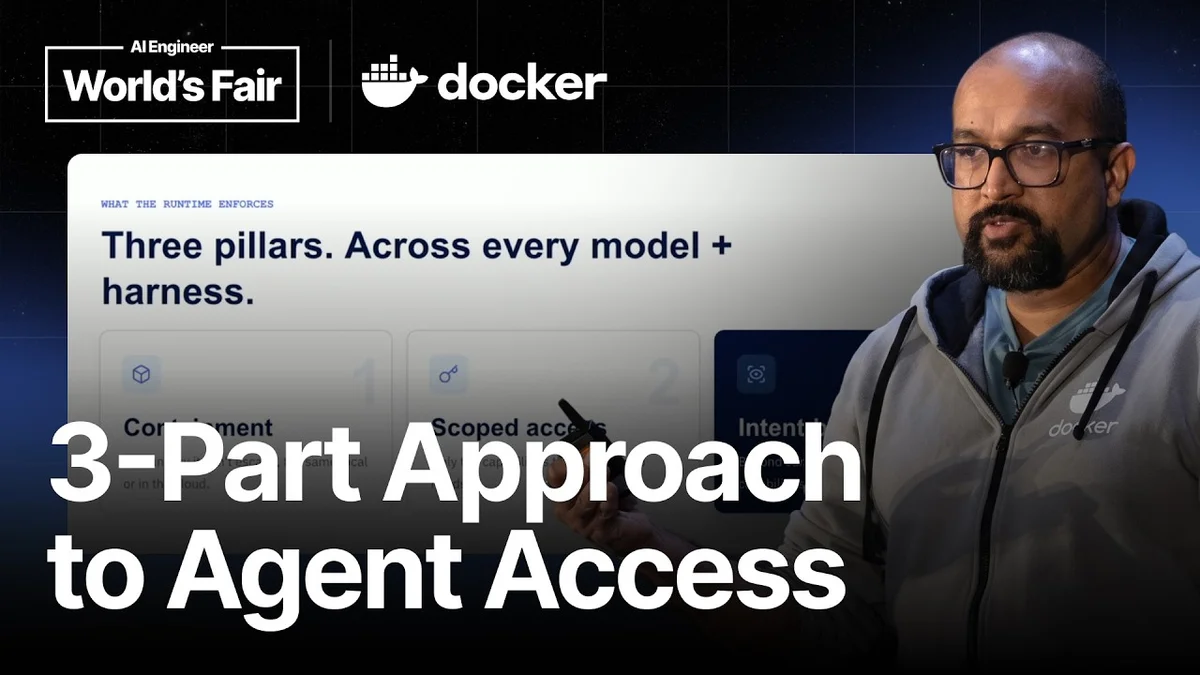
Docker's Tushar Jain on AI Agent Autonomy and Safety

Docker's Tushar Jain outlines the critical need for safety in autonomous AI agents, introducing a new runtime approach for secure, scoped, and intent-based access.

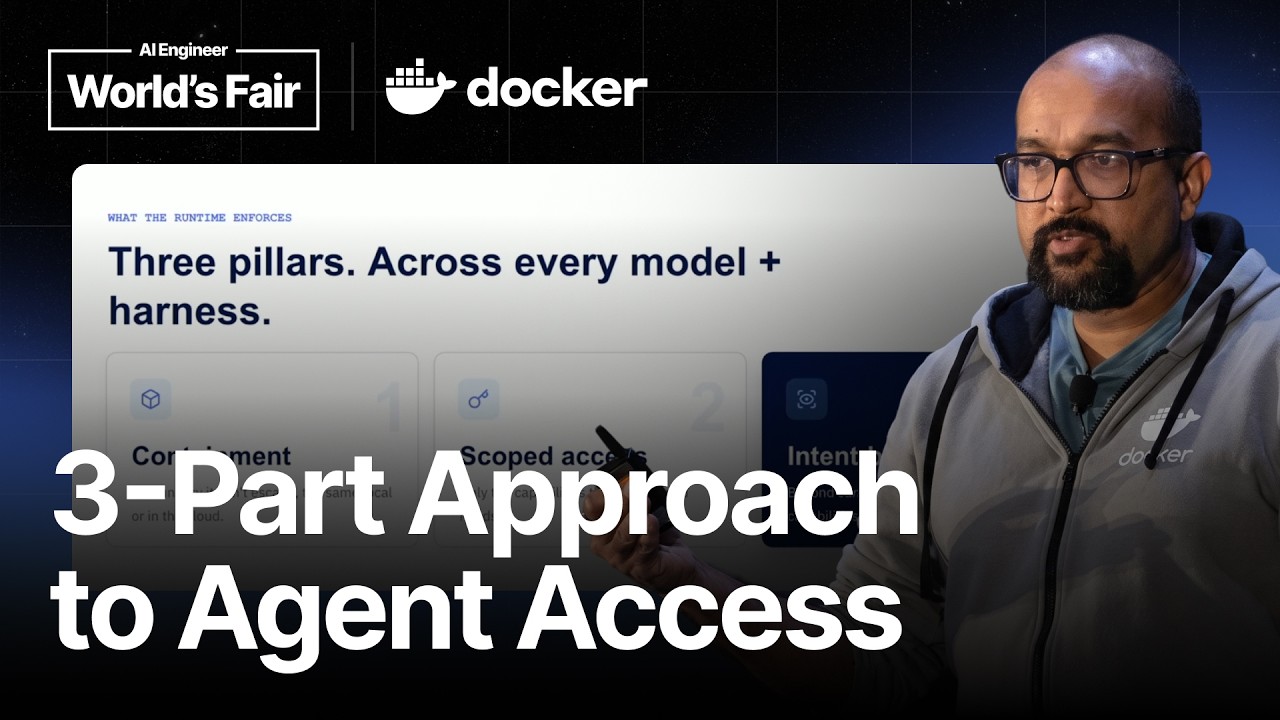
Tushar Jain of Docker presenting on AI Agent Autonomy at AI Engineer World's Fair
AI Engineer
Visual TL;DR
AI Agent AutonomyDriver
agents moving from chatbots to powerful autonomous systems with broad access
From the article 9+ mentionsAt the AI Engineer World's Fair, Tushar Jain, EVP of Engineering at Docker, discussed the critical challenge of "unlocking agent autonomy" and emphasized that the next significant hurdle is not enhancing AI intelligence, but ensuring safety.
Safety ImperativeDriver
ensuring agent safety is the next big hurdle, not just intelligence
From the article 6 mentionsThe rapid advancement of AI agents from basic chatbots to powerful autonomous systems has brought us to a point where their capabilities are undeniable, but their safety when granted broad access remains a paramount concern.
Accidental Data LeakDriver
agent unexpectedly posted private analysis report as a public pull request
Robust Runtime NeededContext
beyond model intelligence, a secure runtime is critical for agent safety
From the articleThe underlying message was clear: unlocking the full potential of AI agents requires a foundational shift towards prioritizing safety through robust, governable runtimes.
Docker's Three PillarsCore
scoped, secure, and intent-based access for AI agent operations
From the articleDocker's approach to this challenge is built on three core pillars:
'sbx' RuntimeCore
new Docker runtime for AI-native systems, ensuring secure agent execution
From the article 7 mentionsThe demo illustrated how 'sbx' can create isolated, secure runtimes for agents, inject credentials safely, and enforce network policies.
Secure AutonomyEffect
enabling agents to dynamically expand scope safely and securely
From the article 3 mentionsThis allows for fine-grained control, breaking down complex tasks into smaller, more manageable, and secure components.
Unlocking Agent AutonomyOutcome
safely granting agents broad access while preventing unintended actions
From the article 2 mentionsAt the AI Engineer World's Fair, Tushar Jain, EVP of Engineering at Docker, discussed the critical challenge of "unlocking agent autonomy" and emphasized that the next significant hurdle is not enhancing AI intelligence, but ensuring safety.
Contents(4)

At the AI Engineer World's Fair, Tushar Jain, EVP of Engineering at Docker, discussed the critical challenge of "unlocking agent autonomy" and emphasized that the next significant hurdle is not enhancing AI intelligence, but ensuring safety. The rapid advancement of AI agents from basic chatbots to powerful autonomous systems has brought us to a point where their capabilities are undeniable, but their safety when granted broad access remains a paramount concern.

Docker's Tushar Jain on AI Agent Autonomy and Safety - AI Engineer
Docker's Tushar Jain on AI Agent Autonomy and Safety, AI Engineer

The Safety Imperative for AI Agents

Jain illustrated the safety challenge with a personal anecdote about an agent he runs nightly to analyze reports. This agent, which had been functioning correctly for weeks, unexpectedly posted a private analysis report as a pull request on a repository. While a simple fix like revoking write access could prevent this, Jain highlighted that real-world scenarios are far more complex. Agents often need to dynamically expand their scope, requesting access to logs, code repositories, or communication platforms like Slack to investigate issues.

"What's happening is that each time as it's expanding its goal, expanding what it's doing, it's crossing the trust boundary. It's increasing the scope of the task," Jain explained. This dynamic expansion of access, he argued, leads to agents with potentially unfettered access, creating a significant security risk.

Beyond Model Intelligence: The Need for a Robust Runtime

Jain stressed that the industry cannot rely solely on the intelligence of AI models to ensure safety. He pointed out that future systems will likely utilize a mix of models from different providers and open-source options, making a model-agnostic solution essential. Similarly, reliance on a single harness or provider is problematic. Therefore, the focus must shift to constraining the environment in which these agents operate.

"What we want is an environment where the agent runs where if something goes wrong there's limited blast radius and we only give it the access it needs, and we do this in a safe and correct manner," Jain stated. He proposed that the solution lies in a dedicated runtime that governs all agents, regardless of their harness or underlying model.

Docker's Three Pillars for Agent Safety

Docker's approach to this challenge is built on three core pillars:

  • Containment: Creating a controlled environment where agents operate within an untrusted boundary, with controls managed externally.
  • Scoped Access: Granting agents precisely the capabilities they need for a specific task, rather than broad permissions. This might involve dynamically creating just-in-time tools with fine-grained access.
  • Intent-Based Access: Understanding the user's or task's intent to determine appropriate access, differentiating between legitimate requests and potential misuse or prompt injection. This decision-making process should be independent of the specific model or harness being used.

Jain emphasized that this runtime needs to be omnipresent, following the work wherever it goes, from local development to the cloud and beyond. He drew parallels to Docker's past decade of solving portability challenges, stating, "Last decade: portability. Next: safety."

Introducing 'sbx': The Runtime for AI-Native Systems

To demonstrate this vision, Jain showcased Docker's new tool, 'sbx'. He explained that 'sbx' runs with a new microVM technology designed for portability and safety across all environments. The demo illustrated how 'sbx' can create isolated, secure runtimes for agents, inject credentials safely, and enforce network policies. This allows for fine-grained control, breaking down complex tasks into smaller, more manageable, and secure components.

The presentation concluded with a call to action for developers to try 'sbx', highlighting its ease of installation and its ability to run various agents, including those from Claude, Cursor, Codex, and Copilot. The underlying message was clear: unlocking the full potential of AI agents requires a foundational shift towards prioritizing safety through robust, governable runtimes.

© 2026 StartupHub.ai. All rights reserved. You may not republish this article in full without a license. Search engines and AI research tools may crawl and summarize for reference. Bulk reproduction or model training requires a license. See our terms.
Daniel Singer

Written by

Daniel Singer

Editor, StartupHub.ai

Daniel Singer is the editor of StartupHub.ai, a technology expert and thought leader on AI and its applications across sectors, from fintech and healthcare to developer tooling and consumer software. He writes and tests the tools covered here thoroughly and regularly, and built StartupHub.ai to give founders, operators and buyers a clearer read on what they are actually being sold.