


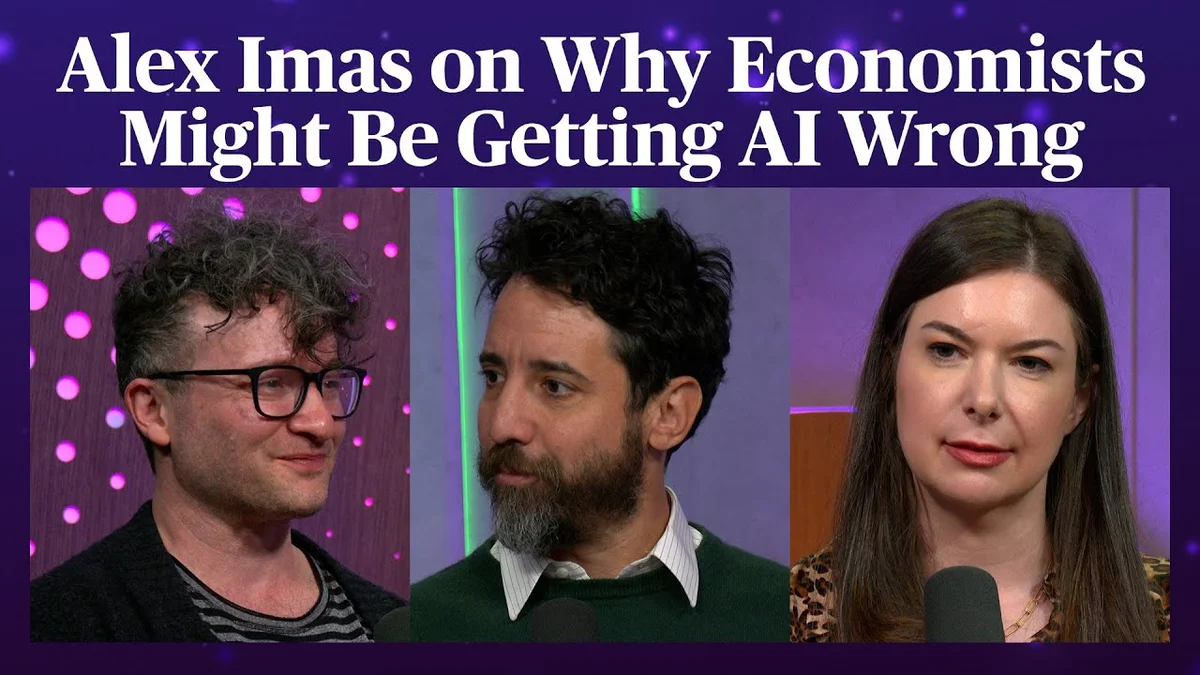
In a recent discussion on the Bloomberg "Odd Lots" podcast, hosts Joe Weisenthal and Tracy Alloway explored the intricate relationship between artificial intelligence and productivity. They questioned how much AI truly boosts output and what that means for the labor market and the broader economy. The conversation featured insights from Alex Iontas, a professor of behavioral science, economics, and applied AI at the University of Chicago, who shared his research on how AI is impacting work and the economy.
Understanding AI's Productivity Impact
Iontas began by highlighting the difficulty in precisely measuring AI's productivity gains. He noted that while AI models like ChatGPT can perform tasks efficiently, the real-world impact on overall economic productivity is not always straightforward. He referred to the concept of the "productivity paradox," where technological advancements don't always translate into immediate, measurable increases in economic output.
Iontas explained that AI's impact is often task-specific. While AI can automate certain tasks, it also creates new ones and enhances human capabilities. The challenge lies in quantifying these indirect effects and the time it takes for these new efficiencies to ripple through the economy. He pointed out that historical technological shifts, like the introduction of electricity, also faced similar measurement challenges.
The full discussion can be found on Bloomberg Podcast's YouTube channel.
The Role of Complementary Tasks
A key theme of the discussion was the idea of "complementarity." Iontas argued that AI's true value comes not just from automating existing tasks, but from augmenting human skills and enabling new forms of work. He highlighted that AI can perform tasks that are either too simple or too complex for humans to do efficiently, thereby freeing up human workers to focus on more strategic or creative aspects of their jobs.