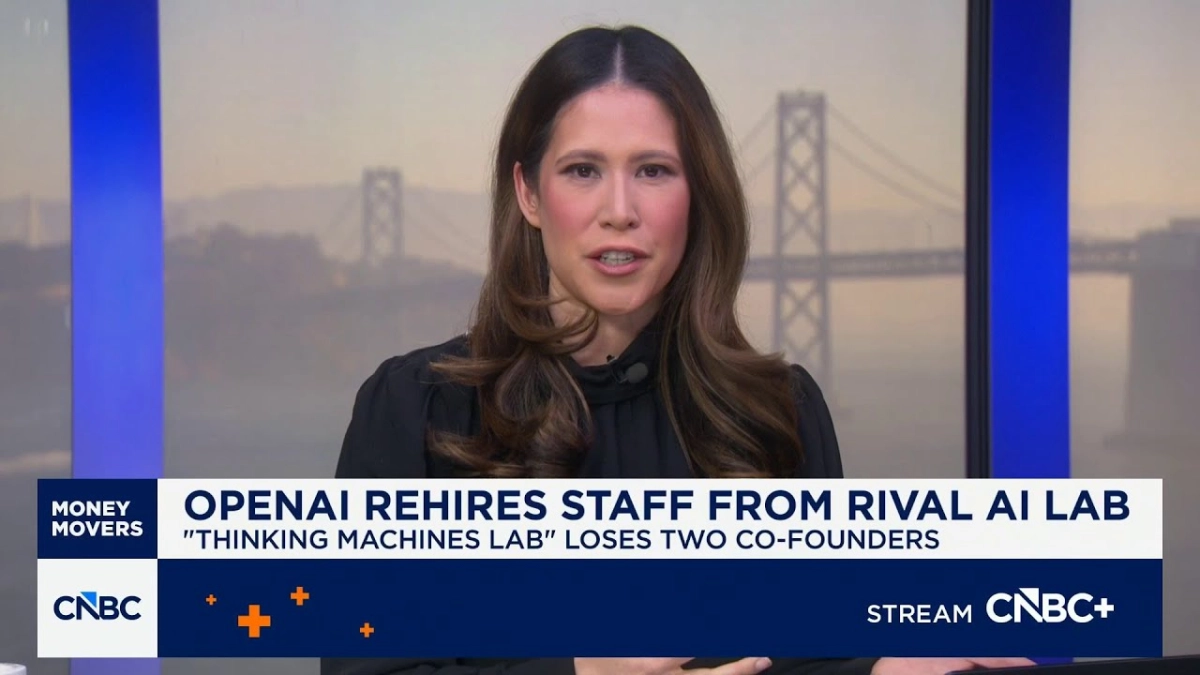
The AI talent war has moved past mere poaching; it is now an urgent, high-stakes raid where traditional corporate ethics are negotiable. The recent, highly publicized re-hiring of senior research staff by OpenAI from a rival lab, despite serious allegations surrounding their departure, underscores the acute desperation defining the frontier of generative AI development. This episode reveals a market where technical expertise is the only currency that matters, and loyalty, along with corporate conduct standards, can be readily sacrificed for a competitive edge.
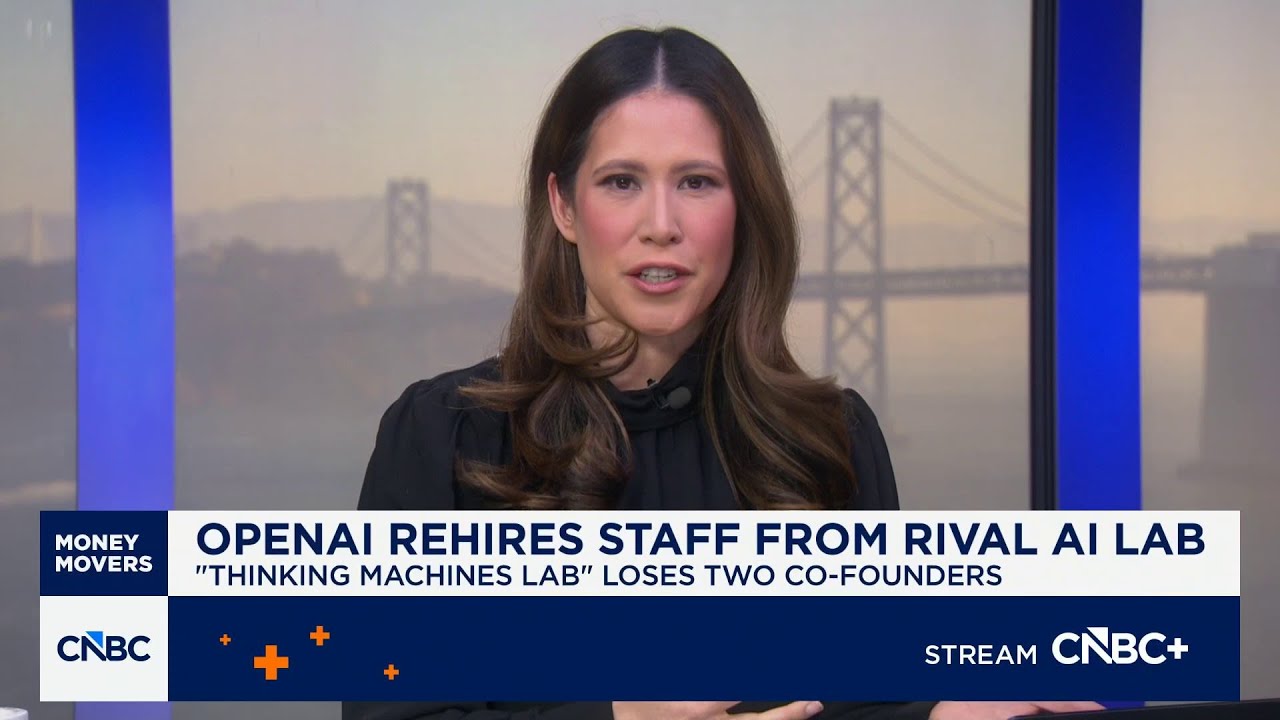
On CNBC’s TechCheck, anchor Deirdre Bosa provided sharp commentary on the intensifying battle for AI expertise, detailing OpenAI’s decision to bring back former employees who had co-founded the competing venture, Thinking Machines Lab (TML). The core of the drama centered on Barret Zoph, TML’s co-founder and CTO, who was reportedly terminated by his own company due to "unethical conduct," including allegations of sharing confidential information with competitors. Yet, rather than shunning the controversy, OpenAI welcomed Zoph, Luke Metz, and Sam Schoenholz back with open arms, prompting a celebratory public post from OpenAI’s Application CEO, stating the move had "been in the works for several weeks."
Bosa noted that in any other sector, a founder fired for such reasons "would likely be radioactive, but not here." This immediate public embrace suggests that the immense value of specialized knowledge in the race for artificial general intelligence (AGI) far outweighs standard corporate governance concerns. OpenAI’s internal memo, which reportedly stated that the company "do not share those concerns" regarding Zoph’s previous conduct, functions less as an ethical exoneration and more as a declaration that securing this critical talent is an existential necessity, regardless of the baggage.
This urgency is directly tied to the tightening competitive landscape. OpenAI’s early dominance with ChatGPT is facing challenges from well-funded rivals who are rapidly gaining traction. Bosa highlighted the momentum of the incumbents, noting that Google has "found real momentum with Gemini 3," with third-party data suggesting the product "is closing the traffic and usage gap with ChatGPT." This chart-based evidence reinforces the idea that the lead OpenAI once enjoyed is eroding, placing intense pressure on leadership to secure every available advantage.
Beyond Google, Anthropic is also cited as having a significant moment with Claude Code, which Bosa personally attested "feels like a genuine ChatGPT-style inflection point." The implication is clear: the AI race has entered a phase where model parity is achievable, and the margin for error is shrinking. The willingness to re-absorb boomerang employees, even those with high-profile ethical controversies, is a reflection of how intense this phase of the AI race has become, and "how narrow the lead really is." For venture capitalists and founders watching this drama, the takeaway is stark: specialized AI talent is the most constrained resource in the global economy, and the rules of engagement are being rewritten in real time to accommodate them.