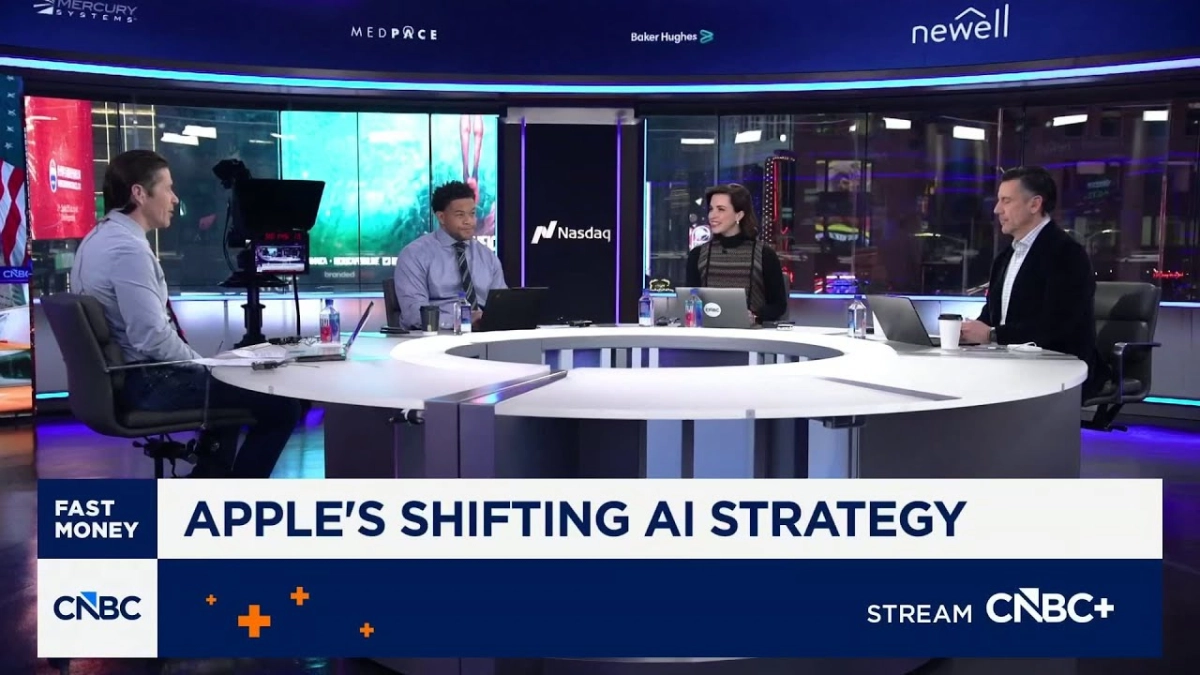
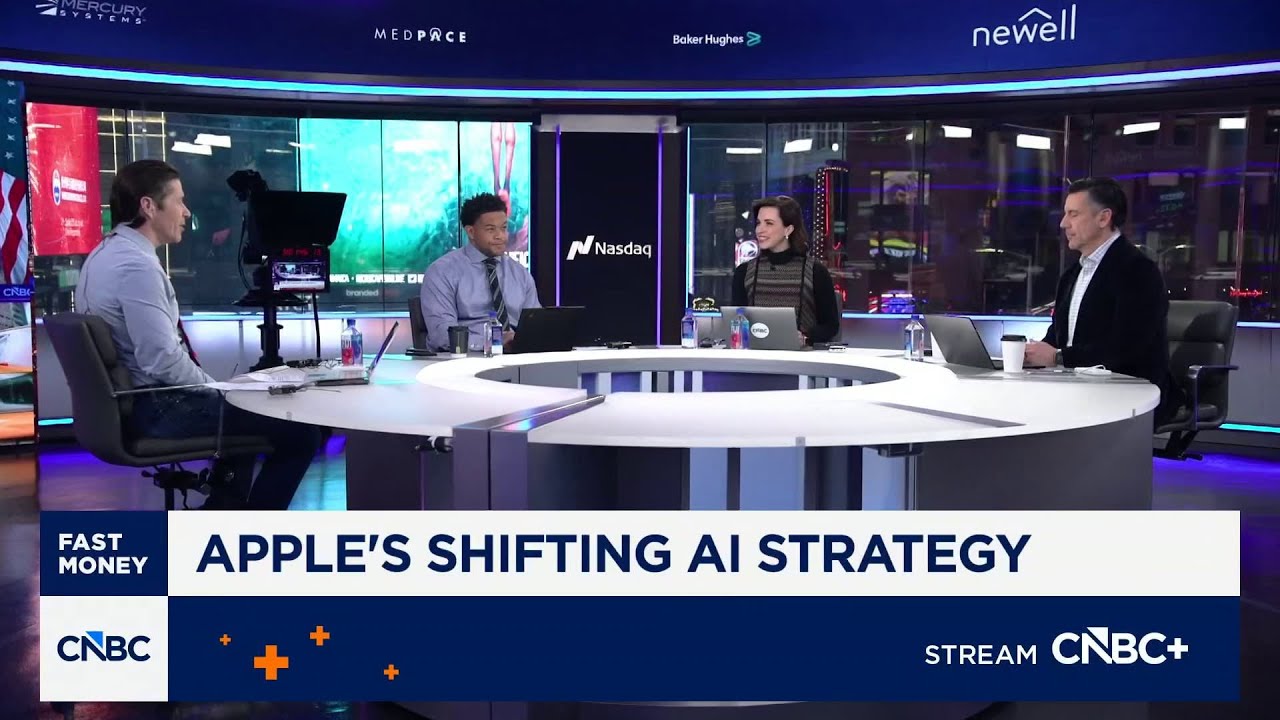
"I don't think you can help but actually have that boat be risen along with the others." This quote by Bonawyn Eison, referring to Apple’s inevitable correlation with Big Tech despite its current AI deficit, encapsulates the central dilemma debated by the CNBC Fast Money traders. The panel, including Tim Seymour, Bonawyn Eison, Steve Grasso, and Mike Khouw, convened to discuss Apple’s shifting AI strategy, particularly in light of its recent stock underperformance relative to its Magnificent 7 peers. The immediate context is stark: Apple and Meta were tied as the worst performers among the Mag 7 this year, a massive divergence from high-flyers like Alphabet and Nvidia, whose valuations are soaring on generative AI excitement.
Tim Seymour quickly identified the core issue during the discussion: Apple’s recent seven-week losing streak in the market is symptomatic of a broader perception problem. He noted that on an extraordinary week for tech, "Apple's just kind of like an afterthought. And that's kind of the problem here." Seymour argued that while Apple remains the primary device through which much of the world is going to "live their AI better life," that reality has "yet to happen" for investors. The market is currently rewarding companies with immediate, tangible AI catalysts, those making massive capital expenditure commitments or demonstrating clear, scalable generative AI capabilities. Apple, by contrast, is being valued as a stable, high-quality incumbent rather than an aggressive innovator in the frontier technology space.
This valuation discrepancy is critical for founders and venture capitalists assessing where real growth premiums are being assigned. Apple’s stock performance, up only 11.95% over the last year, pales dramatically against Alphabet’s 71.06% gain, a gap entirely attributable to the market's enthusiasm for Google’s deep AI integration and capabilities, such as the Gemini model. For Apple, the lack of a proprietary, fully fleshed-out generative AI offering means it is being left behind in the trading frenzy, even though its underlying fundamentals remain robust. Bonawyn Eison reinforced this sentiment, stating that until a true catalyst emerges, he doesn't see much upside in the near term. The story of 2025 and 2026 has been a rotation away from the AI-adjacent Big Tech names into more economically cyclical names, leaving Apple in a holding pattern.
The strongest defense for Apple, and the reason many long-term investors tolerate the current trading stagnation, lies in its foundational financial strength, particularly the Services segment. Steve Grasso highlighted Apple’s massive cash hoard, estimated to be upwards of $40 billion to $60 billion, which grants the company immense operational and strategic flexibility. This cash balance allows Apple to take a "tortoise mentality" regarding AI development, prioritizing safety and quality over the speed demanded by the current arms race. Grasso argued that Apple will ultimately be "rewarded for not chasing the AI dollars."
Mike Khouw elaborated on the protective value of the Services division. Services revenue, which constitutes roughly 22% of Apple’s total business, is growing at an impressive 14% with high gross margins in the 70% range. This contrasts sharply with the hardware segment, which is seeing growth closer to 4%. Khouw views this service-based monetization of the existing installed base as a powerful demonstrator of the company's long-term stability and high-quality earnings, even if it doesn't scream "AI hypergrowth." The Services business provides a defensive moat and a predictable revenue stream that few other tech giants can match, insulating Apple from the volatility inherent in purely hardware- or AI-driven businesses.