AI Optimism Creates a Risk of Its Own MetLife Strategist Warns

4 min read
AI Optimism Creates a Risk of Its Own MetLife Strategist Warns

"People are very optimistic on AI, maybe too optimistic, and that creates a risk on its own." This sharp assessment, delivered by Drew Matus, Chief Market Strategist at MetLife Investment Management, cuts through the prevailing euphoria that has dominated technology and capital markets. Speaking on CNBC’s Money Movers, Matus linked the outsized enthusiasm surrounding artificial intelligence directly to broader macroeconomic risks, arguing that the speculative fervor in the tech sector may be masking deeper vulnerabilities in the U.S. labor market and inflation dynamics. For founders and investors navigating the current economic cycle, Matus's cautious perspective serves as a vital counterweight to the often-unquestioned narrative of perpetual growth fueled solely by generative AI.

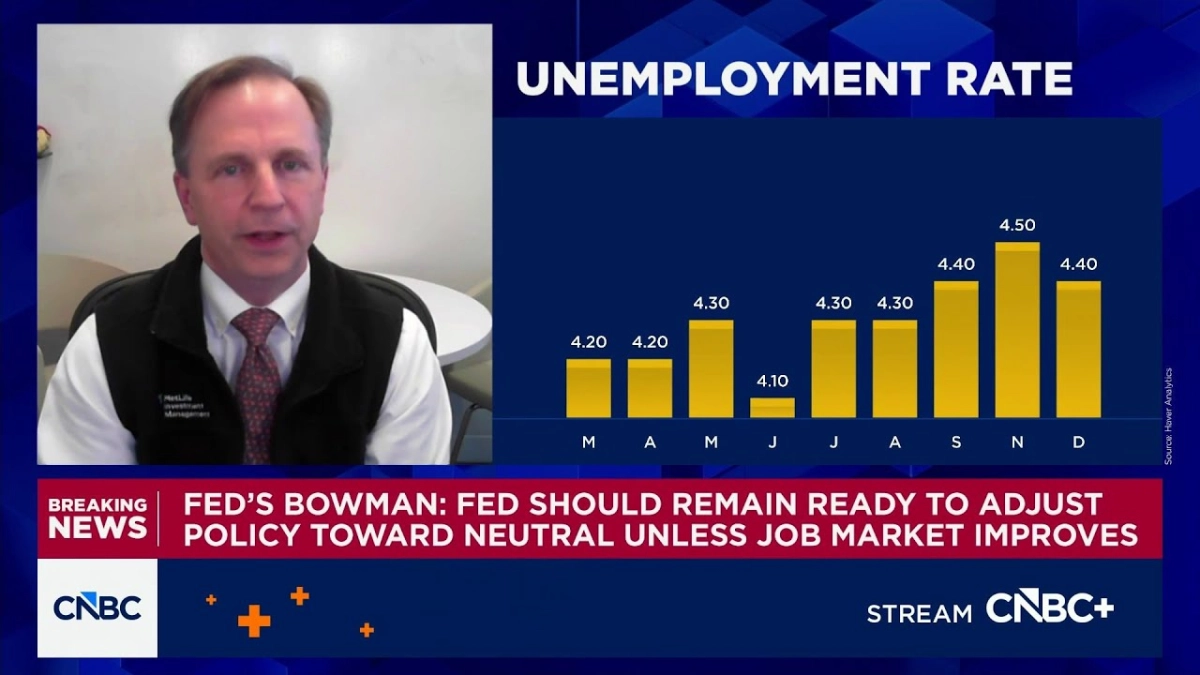
Matus’s commentary came in the context of discussing recent remarks by Fed Governor Michelle Bowman regarding the job market, a topic where Matus found significant alignment. He noted that while the official unemployment rate might appear low, the underlying data suggests a labor market far weaker than commonly perceived. This fragility, coupled with the massive valuation expansion driven by AI, creates an unbalanced risk profile for the economy. The conversation quickly moved beyond mere monetary policy predictions to scrutinize structural issues, particularly the interplay between employment data, inflation, and corporate planning capabilities.


Related startups

The strategist expressed strong skepticism regarding the perceived strength of the current employment landscape. He pointed out that the three-month average on job growth is currently negative, a metric often overlooked when focusing on headline unemployment figures. This trend suggests that while the official jobless rate might tick down temporarily, the overall direction of labor market health is deteriorating. Matus did not mince words when challenging the widespread narrative of robust hiring: “Anyone who thinks the labor market is strong hasn’t tried to find a job recently, I suspect.” This statement highlights a key insight for tech leaders: even as certain skilled sectors (like AI development) boom, broader hiring activity is slowing, creating a bifurcation that could strain consumer demand.

The discussion also touched upon whether the current hiring slowdown is a result of structural changes, such as reduced immigration or companies pausing hiring as they integrate AI tools. While acknowledging these factors, Matus emphasized that the weakness is primarily driven by labor demand, not just supply constraints. Companies are simply pulling back, a trend that is not fully captured by static unemployment figures but is evident in the declining job creation rate. This dynamic is crucial for venture capital firms and startups who rely on strong economic momentum and corporate spending to scale their products. If labor demand continues to weaken, the market’s ability to absorb new technologies and maintain high growth rates will be severely tested, regardless of AI’s long-term potential.

Matus then pivoted to inflation, offering a nuanced view that challenges the typical focus on the Consumer Price Index (CPI) headline number. He argued that the danger to corporate decision-making lies not merely in the elevated level of inflation, but in its volatility. If inflation settles at a steady three percent, for example, corporations can adapt their pricing and planning accordingly. The real damage occurs when inflation numbers swing wildly, making long-term capital allocation and investment planning nearly impossible. “If inflation is elevated but it’s not really volatile, then it doesn't really affect corporate planning,” Matus explained. “It might change some of the economics and things, but it doesn't change planning capability, and that's what actually is damaging about inflation.”

This distinction between level and volatility is critical for the tech ecosystem, where major infrastructure investments (like those required for AI training and deployment) require stable, predictable economic conditions. High volatility introduces uncertainty into capital expenditure forecasts, potentially slowing the massive infrastructure buildout currently supporting the AI boom.

Ultimately, Matus’s analysis serves as a sober warning to the highly optimistic tech sector. The market’s infatuation with AI has created asset bubbles and concentrated risk, while fundamental economic indicators—especially in the labor market—are flashing red. For VCs and founders, the takeaway is clear: the current environment demands prudence. The enthusiasm surrounding AI must be tempered by recognition of the macroeconomic headwinds, particularly declining labor demand and the persistent threat of inflationary instability, which together form a precarious foundation for continued market success.

© 2026 StartupHub.ai. All rights reserved. Do not enter, scrape, copy, reproduce, or republish this article in whole or in part. Use as input to AI training, fine-tuning, retrieval-augmented generation, or any machine-learning system is prohibited without written license. Substantially-similar derivative works will be pursued to the fullest extent of applicable copyright, database, and computer-misuse laws. See our terms.