

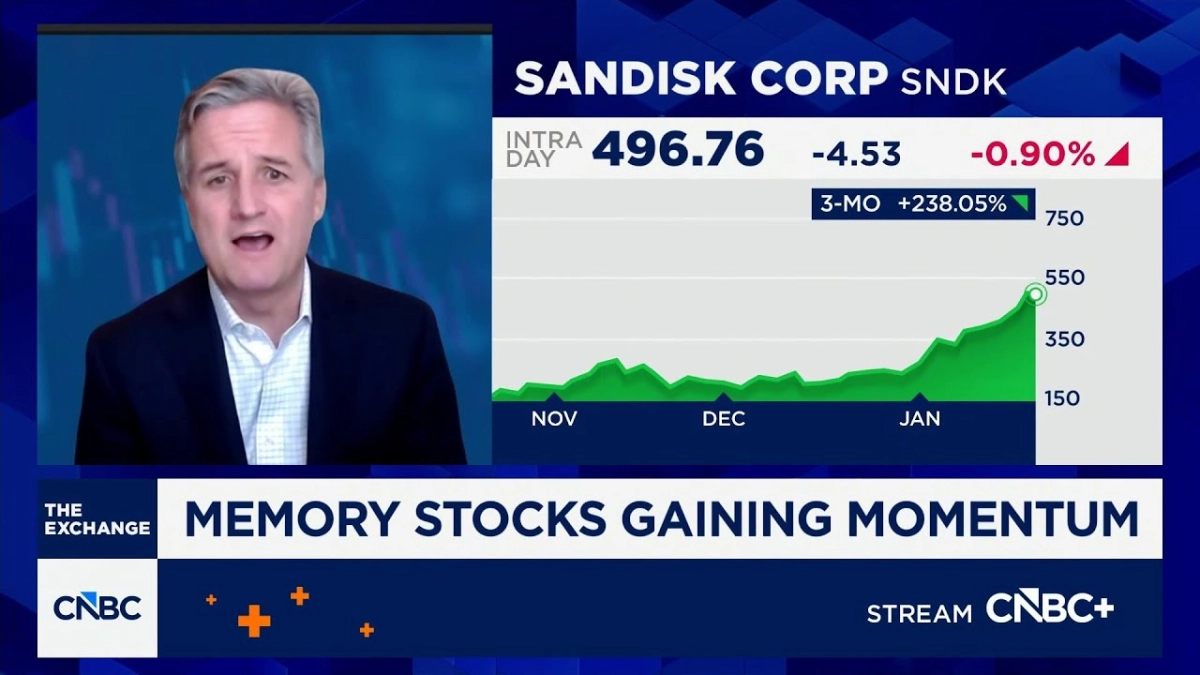
The explosive demand generated by artificial intelligence is creating a supply crunch for memory chips so severe that it is predicted to last through 2027, fundamentally reshaping the semiconductor landscape and stock valuations. This scarcity is not merely a transient market swing but a deep structural shift that promises tremendous earnings power for memory producers while simultaneously causing significant pain for downstream manufacturers of consumer electronics.
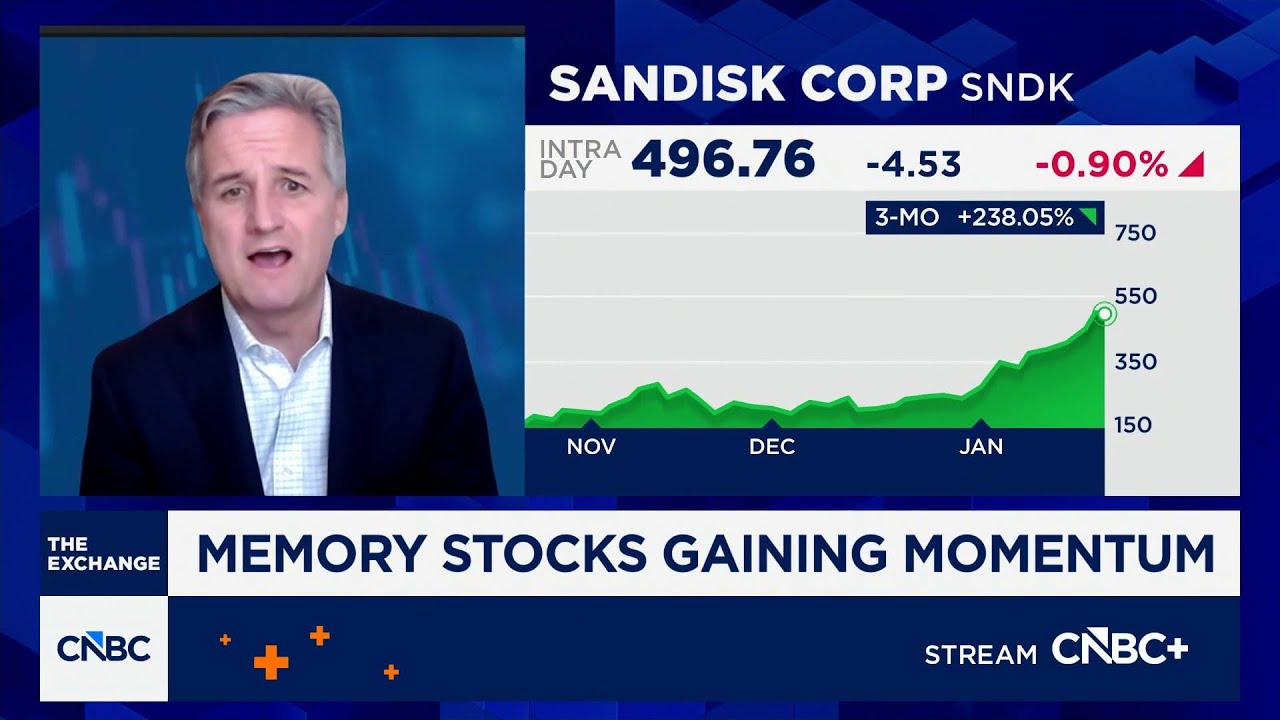
CJ Muse, Senior Analyst at Cantor Fitzgerald, recently joined CNBC’s The Exchange to discuss the unprecedented momentum in memory stocks, emphasizing that the current dynamics are not merely cyclical but represent a structural, multi-year super-cycle driven entirely by AI adoption and capacity constraints in DRAM and NAND production. Muse dismisses concerns that the recent surge in memory stock valuations, like the over 230% jump seen in Sandisk Corp (SNDK) over three months, is a temporary, cyclical blip. He argues that traditional memory cycles, often tied to PC refresh rates, are being superseded by the insatiable appetite of AI infrastructure.
The analyst pointed out that the NAND space, where Sandisk operates, has been in "essentially a seven-year down cycle," meaning there has been no urgency among players to add capacity. This historical underinvestment now collides directly with the massive, sustained demand for high-bandwidth memory (HBM) required by AI servers. Muse stated plainly: “I do believe that this cycle is different… I think we’re going to be undersupplied for all of 26 and 27.” This projected deficit stems from the combination of robust content growth (the amount of memory per device) and inherent limitations in capacity expansion, setting the stage for a prolonged seller's market.
This supply imbalance signals profound financial implications for manufacturers like Micron, Sandisk, Seagate, and Western Digital. For these companies, the scarcity promises "tremendous earnings power." Muse highlighted that the street is modeling about $4 of earnings for the March quarter for Sandisk, but if the "crazy pricing" they are hearing for Q1 materializes, they could "earn as much as $10 or $12" per share. This expectation of a seismic beat, reminiscent of early Nvidia and Micron surges, underpins the bullish outlook for the entire memory trade. Muse noted that Cantor Fitzgerald has "buys across Seagate, WDC, Sandisk, Micron," believing the entire group will continue to move higher, driven by the structural demand shifts.
The consequence of this server-driven demand is a direct squeeze on downstream markets. When asked if everyday consumers would face shortages or price doubling for devices like laptops, Muse confirmed the expectation of severe pressure. His working assumption is that PC unit volumes will decline 10% this year, and smartphone unit volumes will drop at least 5%, not due to lack of consumer demand for the finished product, but due to a lack of memory availability. The analyst revealed that memory producers like Micron recently indicated they were "unable to provide 30 to 50 percent of what those customers want." This constraint will force device manufacturers to choose between two unpalatable options: raising prices significantly for high-end devices or "de-spec'ing of memory" in lower-end models to conserve constrained supply.