


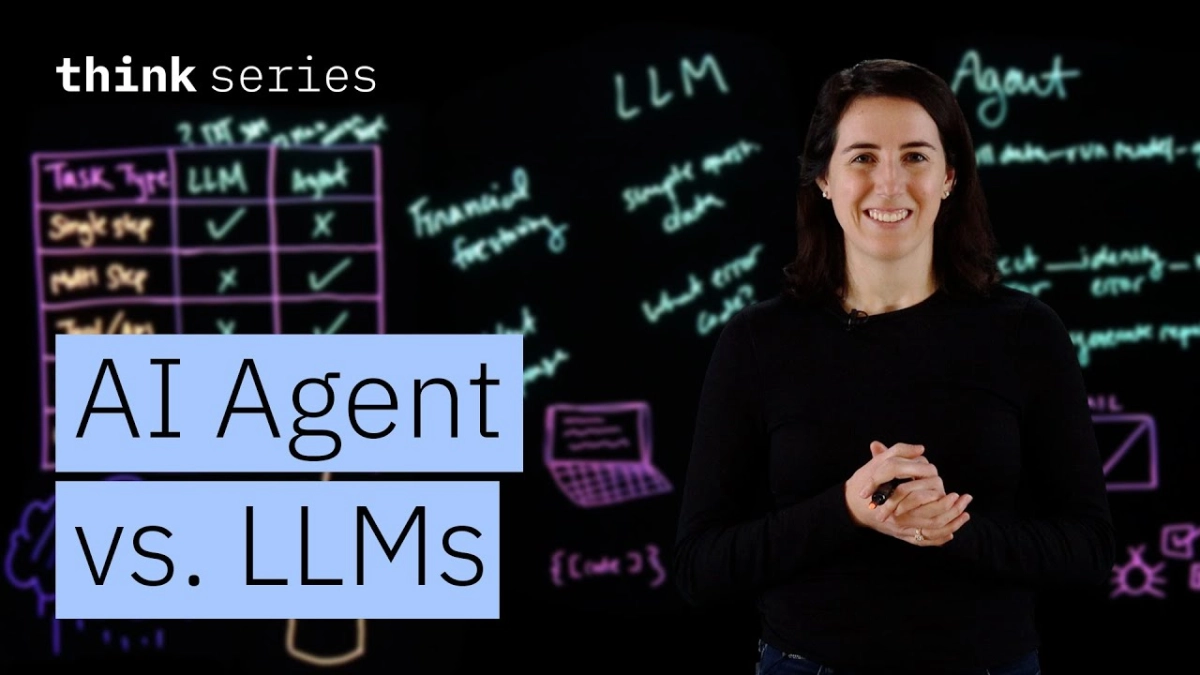
The central challenge in modern enterprise AI development is often not capability, but selection: determining the optimal architecture for a given task. As Brianne Zavala, Sr. Data & AI Technical Specialist at IBM, explained in her recent presentation, the distinction between a bare Large Language Model (LLM) and a fully configured AI Agent is critical to efficient workflow automation and resource allocation. The difference, she posits, can be understood simply: an LLM is optimized for speed and simplicity, while an Agent is built for complexity and autonomous orchestration.
Zavala frames this core concept using a relatable analogy: ordering a coffee. An LLM approach is like telling the barista, "I'd like something warm, not too sweet, and good for a rainy day." The LLM (the barista) instantly suggests a Chai Latte, completing the task in a single step based on inference and generalized knowledge. An agent, however, is the barista who asks a series of detailed, multi-step questions, Do you want dairy? What size? What temperature?, before arriving at a specific, customized solution. As Zavala noted, "We sometimes build these elaborate agents... when a simple LLM prompt would have done the job faster and cleaner. Sometimes, simple is better." This highlights the first core insight for AI professionals: unnecessary complexity introduces latency and overhead.