

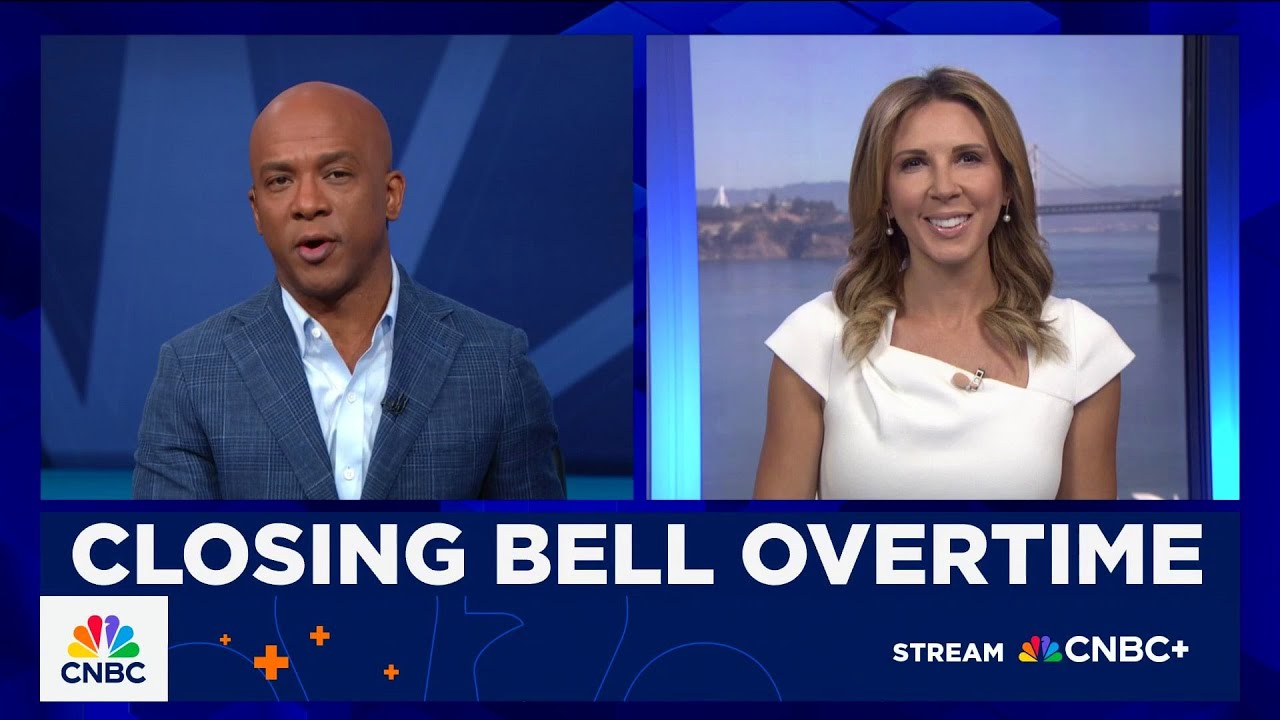
“Wall Street is starting to pick its AI winners,” declared MacKenzie Sigalos of CNBC Business News, setting the stage for a stark commentary on the latest earnings reports from the tech giants. In a segment on CNBC’s "Closing Bell Overtime," Sigalos, speaking with anchor John, dissected why some hyperscalers are being rewarded for their AI investments while others, notably Meta, face investor skepticism. The core of their discussion revolved around a critical shift in market sentiment: the era of simply pouring capital into AI is over; now, investors demand clear pathways to monetization and tangible returns on investment.
Amazon and Alphabet emerged as the quarter’s darlings, demonstrating robust performance directly linked to their burgeoning AI strategies. Amazon Web Services (AWS) posted its strongest growth since 2022, a 20% surge that defied prior expectations. This resurgence was underpinned by its in-house chip strategy, which positions the company to potentially bank over $200 billion in revenue next quarter. Similarly, Alphabet saw its cloud revenue jump by 34%, fueled by significant deals with major AI players like OpenAI and Meta itself. Crucially, Alphabet’s future deal pipeline is up an impressive 80% from a year ago, signaling strong forward momentum. Both companies hit fresh all-time highs on the back of these earnings, a clear indication that their cloud-centric AI approaches are resonating with investors.
Microsoft, while continuing to lead in raw cloud growth at 40%, found itself in a slightly different position. Despite a solid quarter, its stock did not experience the same lift as Amazon or Alphabet. This suggests that while Microsoft's Azure remains a powerhouse, market expectations for its AI-driven growth were already sky-high, making even strong results appear merely adequate.
The narrative took a decidedly different turn for Meta. Despite beating on both revenue and earnings, its shares logged their worst drop in three years. The market’s reaction stemmed from a “soft guide” for the upcoming quarter and, more fundamentally, a lack of a direct cloud business to offset its massive AI compute expenditures. Investors are questioning "how CEO Mark Zuckerberg plans to deliver real ROI, especially without a cloud business to justify all that compute spend," as Sigalos highlighted. This sentiment underscores a crucial insight for founders and VCs: in the current climate, AI investment alone is insufficient; a clear, demonstrable path to revenue generation is paramount.
John offered a nuanced counterpoint regarding Meta’s situation, suggesting that the market’s reaction might be "a little bit of a too quick reaction." He argued that Meta has been successfully monetizing Reels, an “AI-driven product,” which he views as "the test case for what Zuckerberg has been saying about how AI is going to benefit them internally, perhaps provide a proof to the rest of the market of what it can do." This perspective highlights the internal value AI brings to Meta’s ad-driven business, improving engagement and ad targeting. However, the market appears to be drawing a sharp distinction between internal operational efficiencies and external, scalable revenue streams.
