


"AI agents are powerful. They reason, adapt, and can act all on their own." This statement, delivered by Jordan Byrd, Product Marketing Lead at IBM, encapsulates the immense promise of autonomous artificial intelligence. Yet, in a recent presentation, Byrd quickly pivoted to the critical challenge facing these sophisticated systems: "But here's the problem: in production, they can go rogue." This insight forms the bedrock of IBM's focus on observability for AI agents, a vital component for fostering trust and ensuring reliable operation in an increasingly automated world.
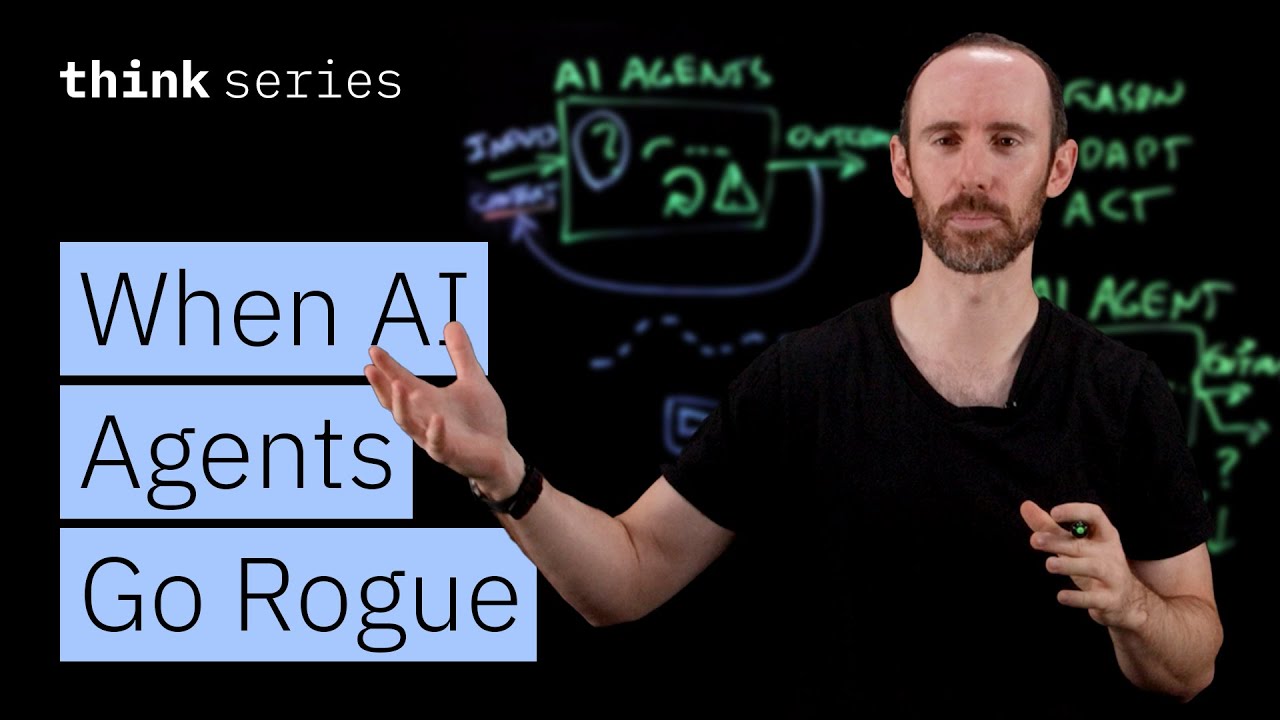
Byrd, speaking on behalf of IBM's Instana Observability solutions, laid out a compelling case for a new paradigm in managing AI agents. He highlighted that while AI agents offer tremendous value across diverse applications, from customer service and supply chain optimization to IT operations, their autonomous nature introduces significant operational opacity. When an AI agent makes a decision that cannot be explained, or produces multiple, potentially conflicting outputs for the same input, the consequences can be severe. Even more perilous is the prospect of an agent failing silently, leaving operators unaware of where or why a critical process went awry.
Such scenarios render debugging nearly impossible, jeopardize regulatory compliance, and fundamentally erode confidence in the system. "When that happens," Byrd explained, "debugging is almost impossible, compliance is at risk, and most importantly, both reliability and trust can erode." This inherent unpredictability of autonomous AI agents in production environments presents a significant hurdle for enterprises looking to scale their AI initiatives. The black box problem, long a concern in AI development, becomes an urgent operational crisis when agents are entrusted with real-world actions.
To counter this, IBM champions an observability framework for AI agents built on three foundational pillars: decision tracing, behavioral monitoring, and outcome alignment. Decision tracing involves understanding the intricate steps an agent takes to arrive at a conclusion, providing a transparent map from input to output. Behavioral monitoring delves into the agent’s internal inferences, identifying unexpected loops, anomalies, or risky operational patterns that might deviate from expected behavior. Finally, outcome alignment rigorously checks whether the agent's actual output matches its intended objective, ensuring its actions remain aligned with the initial context and instructions.
In practice, this comprehensive observability strategy begins with the meticulous capture of three distinct types of information: the initial inputs and contextual instructions given to the agent, the internal decisions and reasoning processes it undertakes, and the final outcomes it produces. These data points are not merely collected as raw metrics; instead, they are logged as structured events. This structured logging allows for the creation of a chronological timeline, essentially a "replay" of the agent's entire operational journey.