Unlocking Action: How LLMs Master Real-World Operations Through Tool Orchestration

4 min read
Unlocking Action: How LLMs Master Real-World Operations Through Tool Orchestration

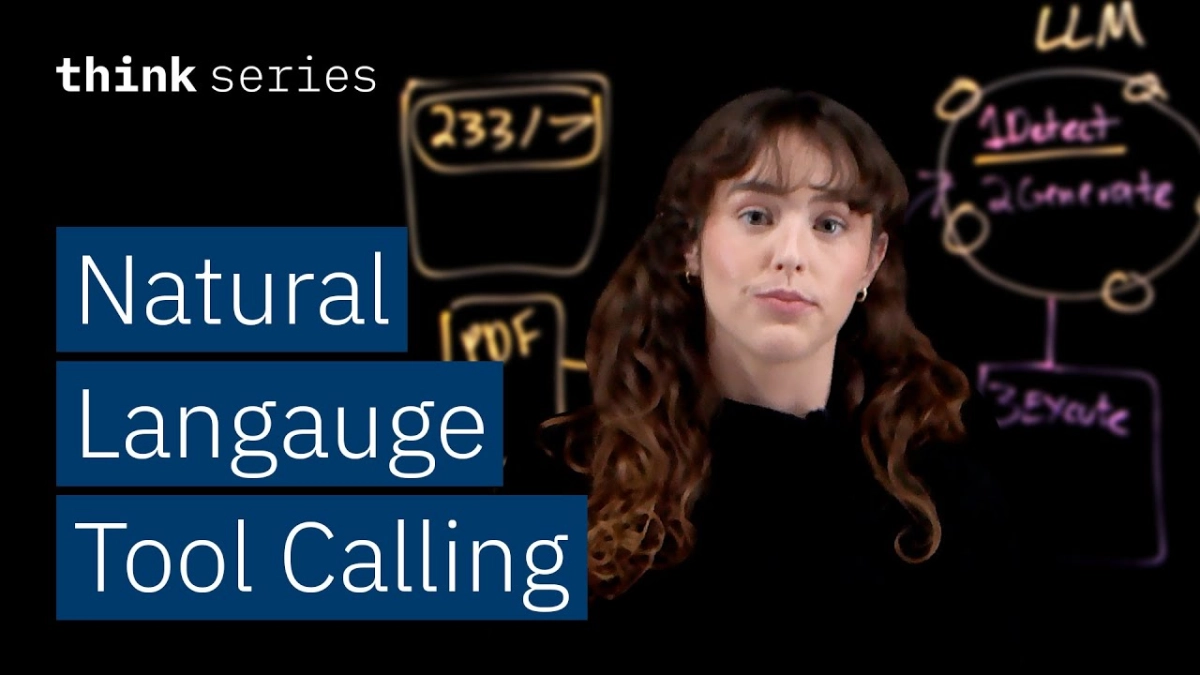
The transformative power of large language models (LLMs) extends far beyond mere conversation, moving into the realm of tangible action within our digital world. This pivotal shift, termed "tool calling," was meticulously detailed by Legare Kerrison, an AI Developer Advocate at Red Hat, who outlined the architectural blueprint enabling LLMs to execute complex tasks safely and reliably. This evolution is not just incremental; it fundamentally redefines the utility of AI, pushing it from predictive text generation to active participation in operational workflows.

Kerrison’s presentation clarified that while LLMs excel as "probabilistic maps of language," adept at understanding and generating human-like text based on learned patterns, they inherently lack computational or real-world interaction capabilities. Asking an LLM to solve a mathematical problem like "233 divided by 7" would typically result in a guess, not a precise calculation. This limitation underscores the critical need for a mechanism that allows these powerful language models to tap into external, specialized tools.


Related startups

The solution lies in a sophisticated tool orchestration system. This architecture empowers an LLM-powered assistant to call upon any microservice, database, cloud storage API, or document summarizer, simply by interpreting a natural language intent as a requirement for an external tool. Imagine instructing an AI to "summarize this PDF and store the results in an S3 bucket," and having the system seamlessly wire together the necessary extraction, summarization, and storage tools behind the scenes. This capability transforms the LLM from a passive responder into an active agent, capable of executing multi-step processes across diverse digital environments.

The orchestration process unfolds in four distinct stages. First, the LLM must detect that a user's request necessitates external action. This detection is honed through fine-tuning the model on synthetic examples, where semantic cues—words like "calculate," "translate," "fetch," or "upload"—explicitly signal that a tool should be engaged. This initial step is crucial for the AI to correctly identify when its internal linguistic capabilities are insufficient and an external resource is required.

Once a tool call is detected, the LLM proceeds to generate a structured function call. This is facilitated by a "function registry," which Kerrison aptly described as "something you can think of like a phonebook that stores what tools exist and the metadata that they require." This registry, potentially implemented as a YAML or JSON manifest in a Git repository, a microservice catalog, or a Kubernetes custom resource, provides the LLM with the necessary details—such as API endpoint URLs, authentication methods, and input/output schemas—to formulate the correct request. The LLM leverages this information to construct a precise, schema-compliant call tailored to the chosen tool's specific needs.

The third stage involves the execution of this structured function call. This is handled by a dedicated execution layer, which isolates the tool's operation for enhanced security and reliability. "Each tool will run inside of an isolated container for safety," Kerrison emphasized, referencing technologies like Podman, Docker, or Kubernetes jobs. This containerized approach ensures that external tools operate in a sandboxed environment, protecting the core LLM from potential vulnerabilities or failures in the external service. Furthermore, this isolation enables robust error handling, retries for transient issues, and efficient scaling across various tool types, all without exposing the LLM directly to the internet.

Finally, the tool's response is serialized and re-inserted into the LLM as contextual information for the ongoing conversation, a process termed "return injection." This crucial step allows the AI assistant to reason about the outcome of the external action and seamlessly integrate it back into the user's dialogue. Whether it's delivering the exact result of a complex calculation or confirming the successful upload of a document, this feedback loop ensures that the conversation flow remains unbroken and intelligent, transforming raw data into meaningful, actionable insights for the user. This advanced orchestration capability empowers LLMs to transcend their linguistic boundaries, becoming truly intelligent assistants that can perform a vast array of real-world operations with precision and security.

© 2025 StartupHub.ai. All rights reserved. Do not enter, scrape, copy, reproduce, or republish this article in whole or in part. Use as input to AI training, fine-tuning, retrieval-augmented generation, or any machine-learning system is prohibited without written license. Substantially-similar derivative works will be pursued to the fullest extent of applicable copyright, database, and computer-misuse laws. See our terms.