

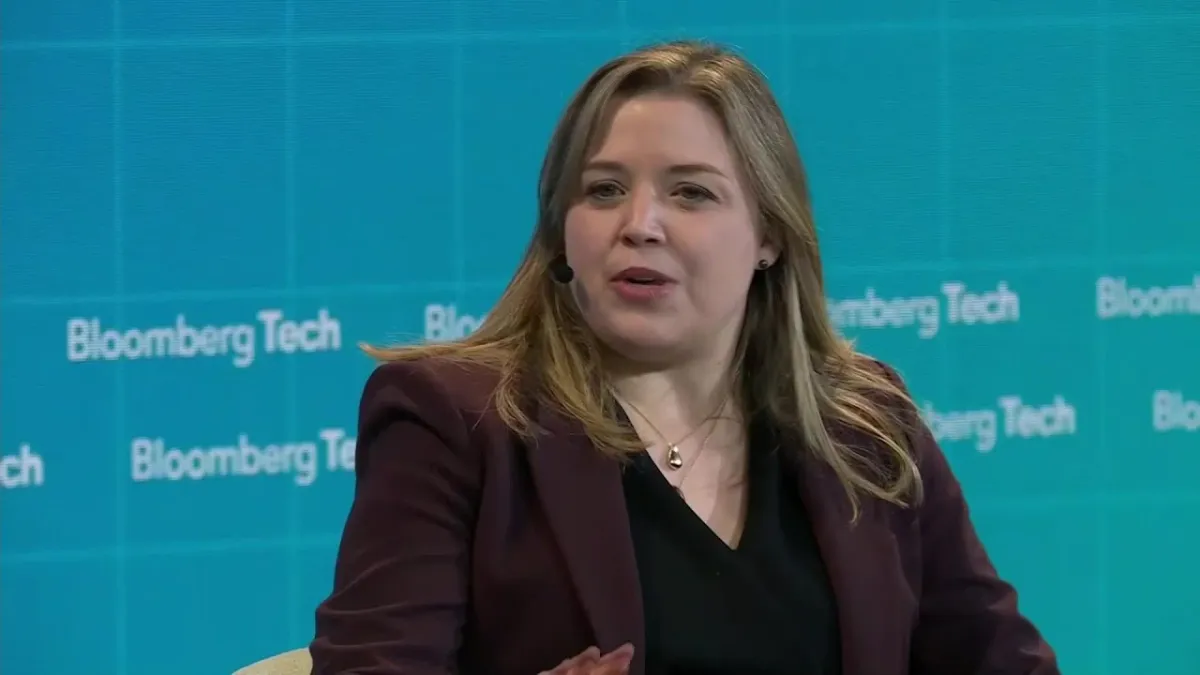
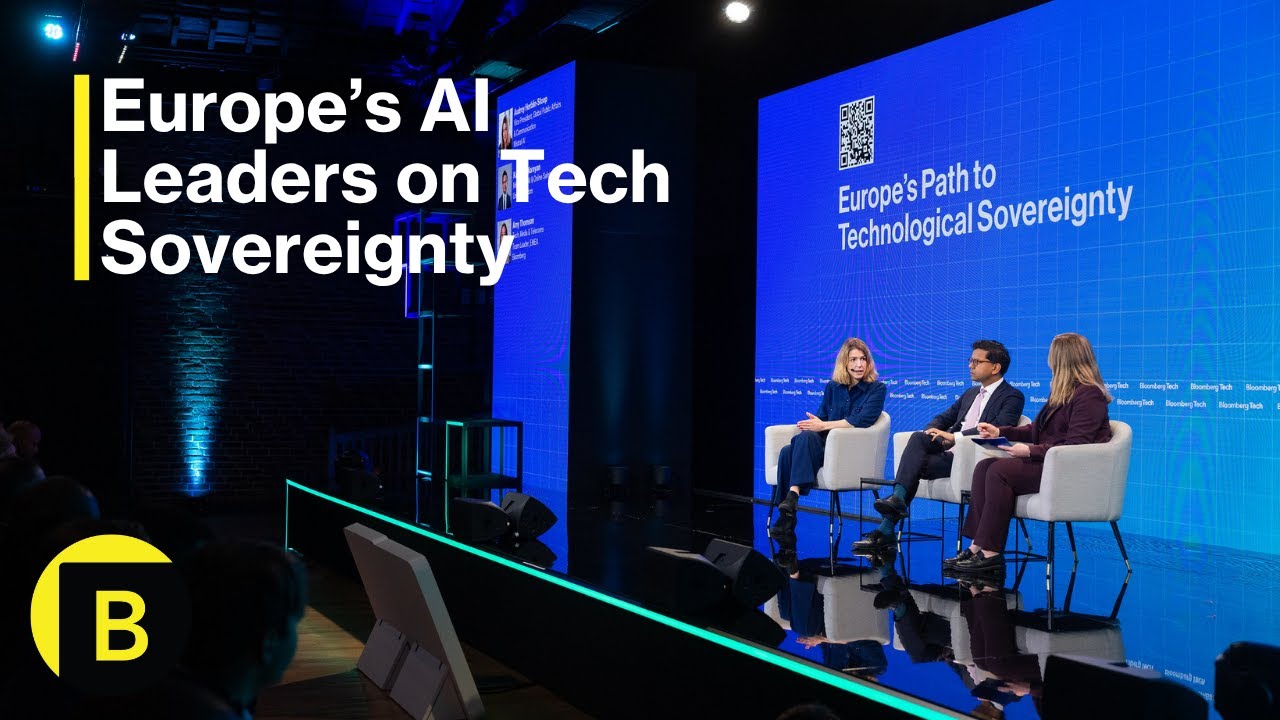
Europe’s pursuit of technological sovereignty in Artificial Intelligence is not merely a political slogan, but a critical imperative, balancing the ambition to innovate with the need for strategic independence. This complex challenge was unpacked at Bloomberg Tech in London, where Amy Thomson, Bloomberg’s Tech, Media & Telecoms Team Leader for EMEA, moderated a discussion between Audrey Herblin-Stoop, Vice President of Global Public Affairs & Communication at Mistral AI, and Kanishka Narayan, the United Kingdom’s Minister for AI & Online Safety. Their exchange highlighted both the shared aspirations and nuanced approaches across the continent, particularly in the face of dominant US and Chinese tech ecosystems.
Kanishka Narayan articulated the UK’s vision of AI sovereignty through a dual lens: first, ensuring “resilient access to critical parts of the supply chain for a fundamental, transformative technology like Artificial Intelligence.” Second, he emphasized an ambitious goal to ensure that "a lot of the economic value that AI will create and generate will be both created and generated in the UK and captured in the UK as well." This suggests a desire not just for access, but for indigenous development and economic benefit. Audrey Herblin-Stoop, while expressing less enthusiasm for the term "sovereignty" itself, echoed the underlying sentiment, defining it as independence, control over data and technology, and the crucial element of choice, advocating for robust European alternatives to global providers.
Mistral AI

Mistral AI provides frontier AI models, assistants, and agents with compute infrastructure and services.
- Founded
- 2023
- Location
- Paris, France
- Valuation
- $20.0B
The discussion quickly pivoted to the structural gaps hindering Europe's competitive edge. Both speakers acknowledged the sheer scale advantage held by the US and China, particularly in capital and market size. Herblin-Stoop pointed out that while Europe boasts "a lot of talent" and "some of the best researchers in AI in the world," many are drawn to Silicon Valley. This brain drain represents a significant challenge, undermining the continent’s capacity to build its own AI powerhouses.
A core insight emerging from the conversation was the critical need to foster demand for AI within Europe. Herblin-Stoop highlighted a lagging adoption of AI in European enterprises and public sectors compared to other regions. "Without this demand, without the revenue, you can't find investors," she stated, underscoring the interconnectedness of market adoption and capital attraction. This isn't just about attracting external investment; it's about cultivating an internal market that nurtures and sustains local innovation.
Narayan stressed the importance of a "risk-on" approach across government, private sector, and civil society. He views the recent crisis of productivity in the UK as an impetus to tackle this head-on with an ambitious, yet responsible, risk posture. This involves fostering state capacity, which he illustrated with the announcement of an AI Sandbox and Growth Lab, designed to provide regulatory clarity for businesses deploying AI at scale.