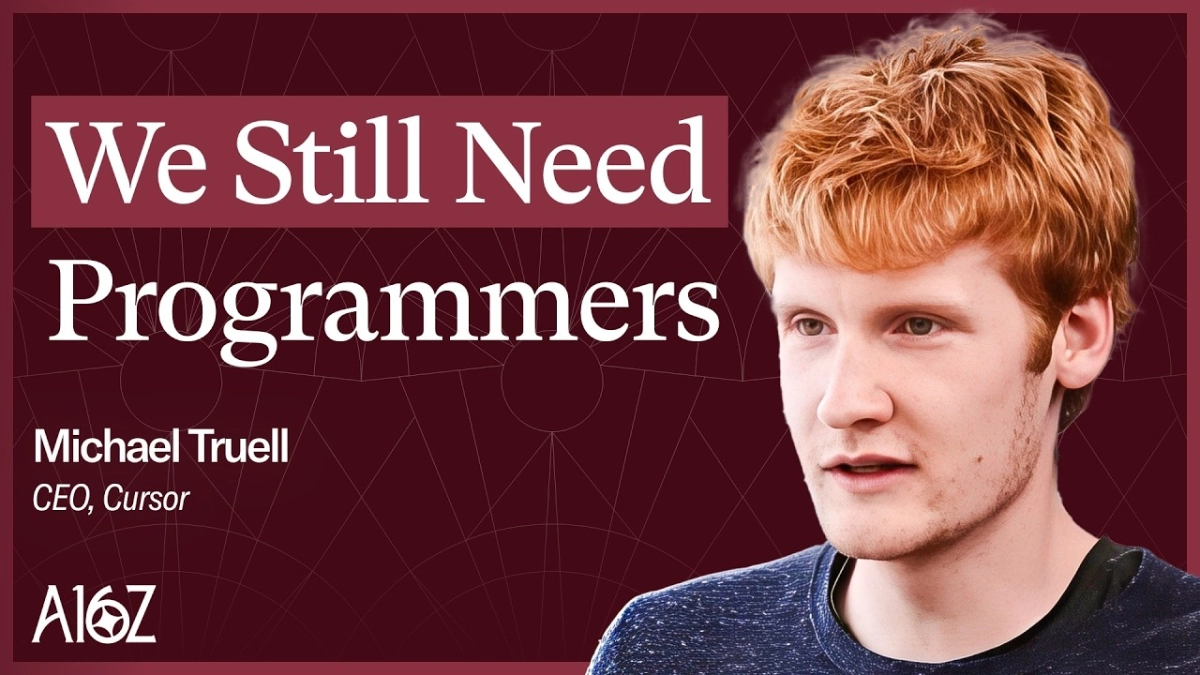
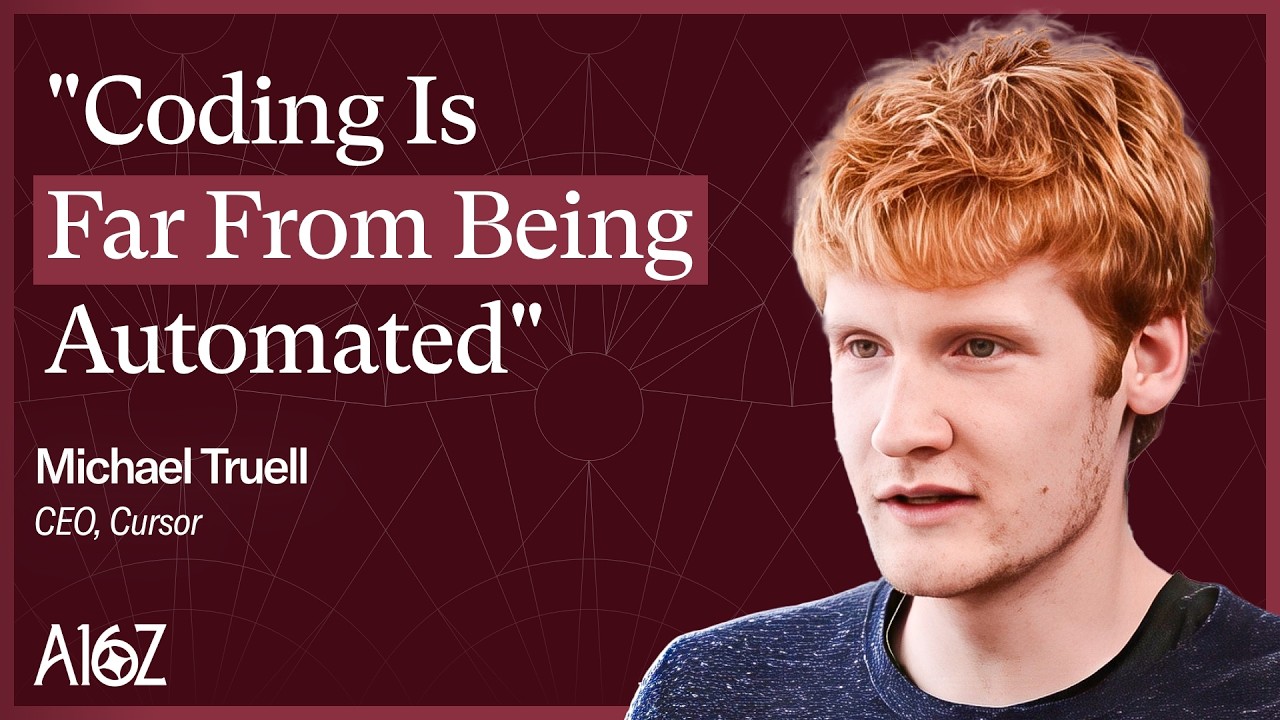
Michael Truell, CEO of Cursor, joined Martin Casado, General Partner at a16z, at the a16z Runtime event to dissect Cursor's explosive growth and unconventional strategies in the burgeoning AI-powered developer tools market. Their discussion illuminated how deliberate constraints and a contrarian mindset propelled a small team of MIT graduates to create one of the fastest-growing developer tools ever built, challenging established norms from product development to talent acquisition.
Cursor's journey began with a pivotal realization: while many were building AI agents in abstract labs, the real opportunity lay in crafting genuinely useful AI products integrated into daily workflows. Truell articulated this shift, stating, "This was the first existence proof of, you know, AI, that, you know, it's we shouldn't be working on AI in a lab, it's time to actually build systems out in the real world and there's real useful things that you could be doing." This pragmatic approach, born partly from a collective "PTSD from modeling work" that emphasized expediency over science fiction, steered them away from grand, unproven AI agents towards a tangible tool: an AI-native code editor.
Their initial "whiteboard exercise" explored a "Cursor for X" framework across various knowledge work verticals, including mechanical engineering CAD systems. However, they soon discovered a "blind man and the elephant problem" in these fields, struggling to gain intuitive understanding of user needs. This led them back to their core competency: programming. The decision to build a full editor, rather than a mere extension, was a bold move against prevailing wisdom. "At the time, people just thought it was very weird to do an editor," Truell explained. "They said you can't get people to switch their code editor, they're too tied to it, which we knew was wrong." This conviction stemmed from their own experience switching to VS Code due to GitHub Copilot's utility, proving that a truly superior product could overcome ingrained user habits.
Their focus was laser-sharp on power users, eschewing the "democratization" narrative. They believed that by solving the most complex problems for the most demanding users, they would naturally create a product that eventually appealed to a broader audience. This deep immersion into the developer workflow enabled them to define what the "actual act of that knowledge work looks like" as AI matured.
The company's operational speed matched its product vision. Truell recounted how they quickly moved from concept to a daily-driver IDE in a couple of weeks, then to external beta in a few months. This rapid iteration was fueled by a lean team and a commitment to monthly investor updates that served as a powerful "commitment device."