


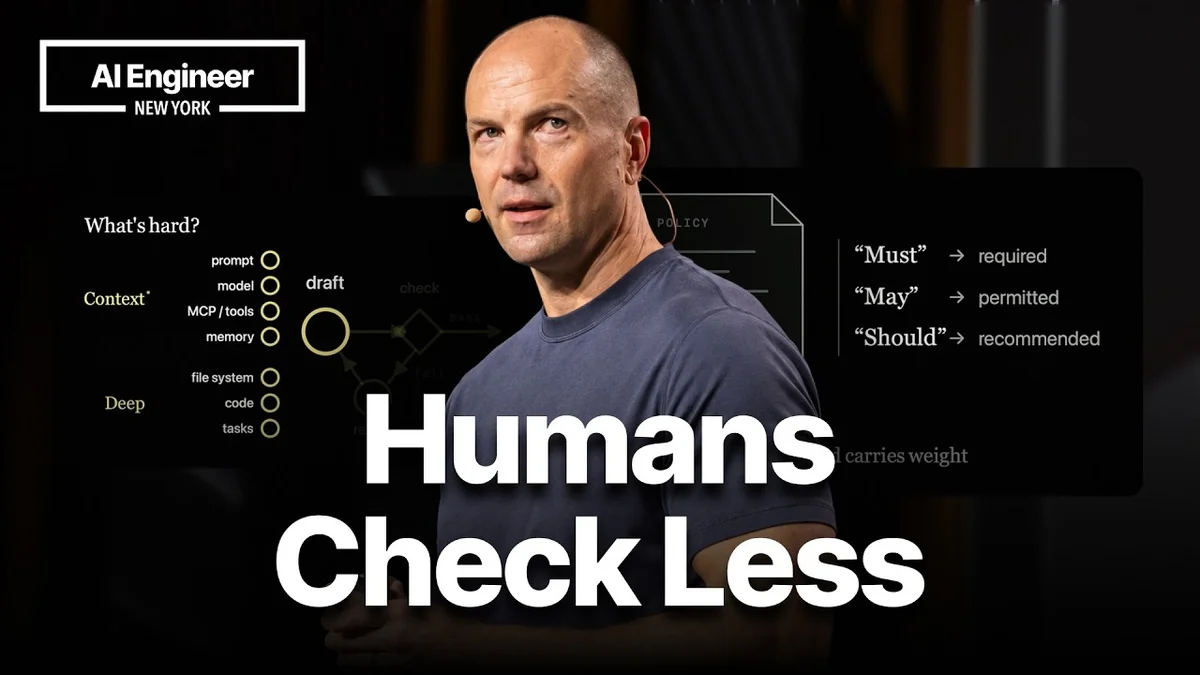
Evan Kormos, player coach at Coinbase, told AI Engineer that an agent earns unsupervised work only after it clears a measured policy threshold, not after a demo. Kormos, who said he has spent 20 years building software and 15 in enterprise financial services, framed policy as the original system prompt.
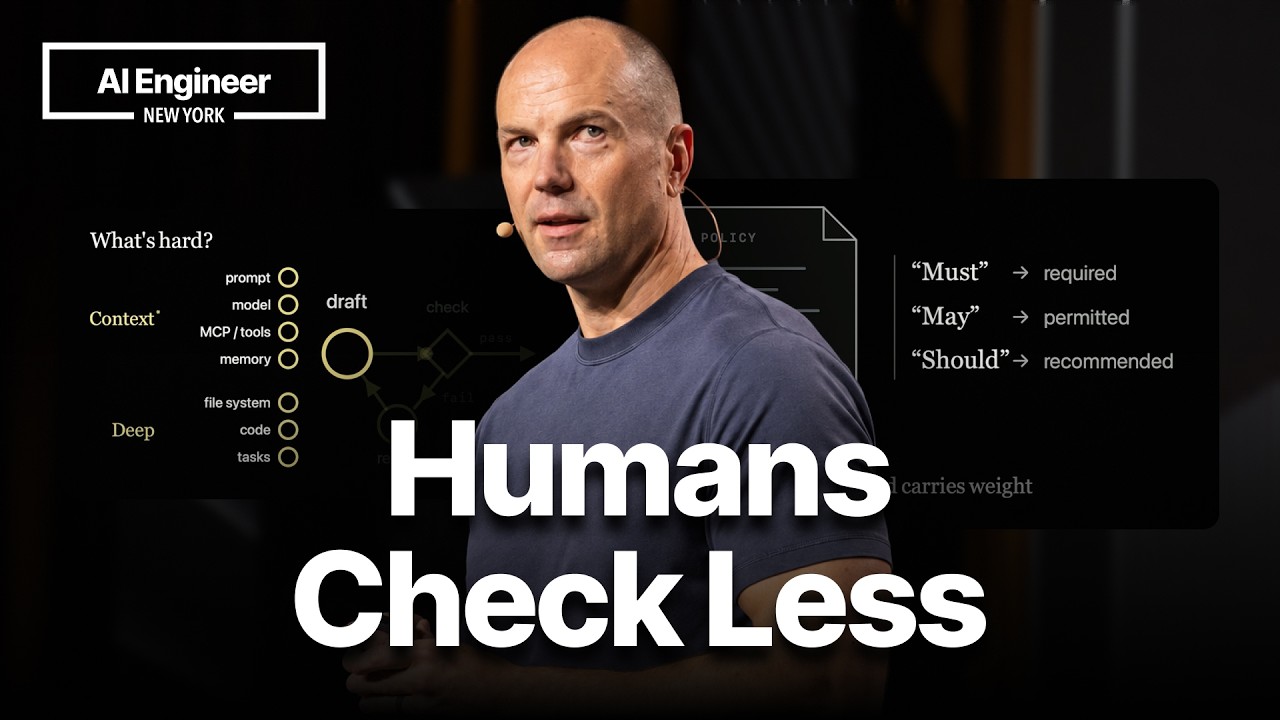
He separated the work into two moments in time, Kormos said. Policy defines how work must, may and should happen for risk and compliance, while the running system evolves constantly with product changes. A compilation event binds the two, but build state and run state stay distinct, so everything expected to remain roughly bound by policy can still be checked in operation.
Agents, in his model, cut across people, process and technology, Kormos said, but the talk focused where agents meet process. Workflows should be mapped as a directed acyclic graph, or DAG, that moves forward without looping. He cited Apache Airflow as open source software that represents those dependencies in Python, and listed policy-driven examples including commercial lending, listing a token in a specific region, and regulated software delivery.
The hard part lives inside the node.
Inside each node the flow is cyclic, Kormos said. Work is done, checked, and refined until it is good enough to pass, a directed cyclic graph or DCG that he said is best managed with state tools like LangChain LangGraph. The outer flow stays deterministic and bounded by policy, while the inner loop is adaptive. He warned that exception flows must exist so work does not get stuck, and that adding agents shifts volume across the DAG, which demands operational visibility more than better authoring tools.


