


The latest demonstration from Claude.ai introduces its "Research" feature, a significant advancement poised to reshape how high-stakes information gathering and analysis are conducted across industries. This new capability transforms what was once an arduous, multi-hour manual task into a streamlined, automated process, offering comprehensive, multi-source reports with remarkable speed and depth. The video tutorial effectively showcases this tool, highlighting its potential to empower founders, venture capitalists, and AI professionals with unparalleled efficiency and analytical rigor.
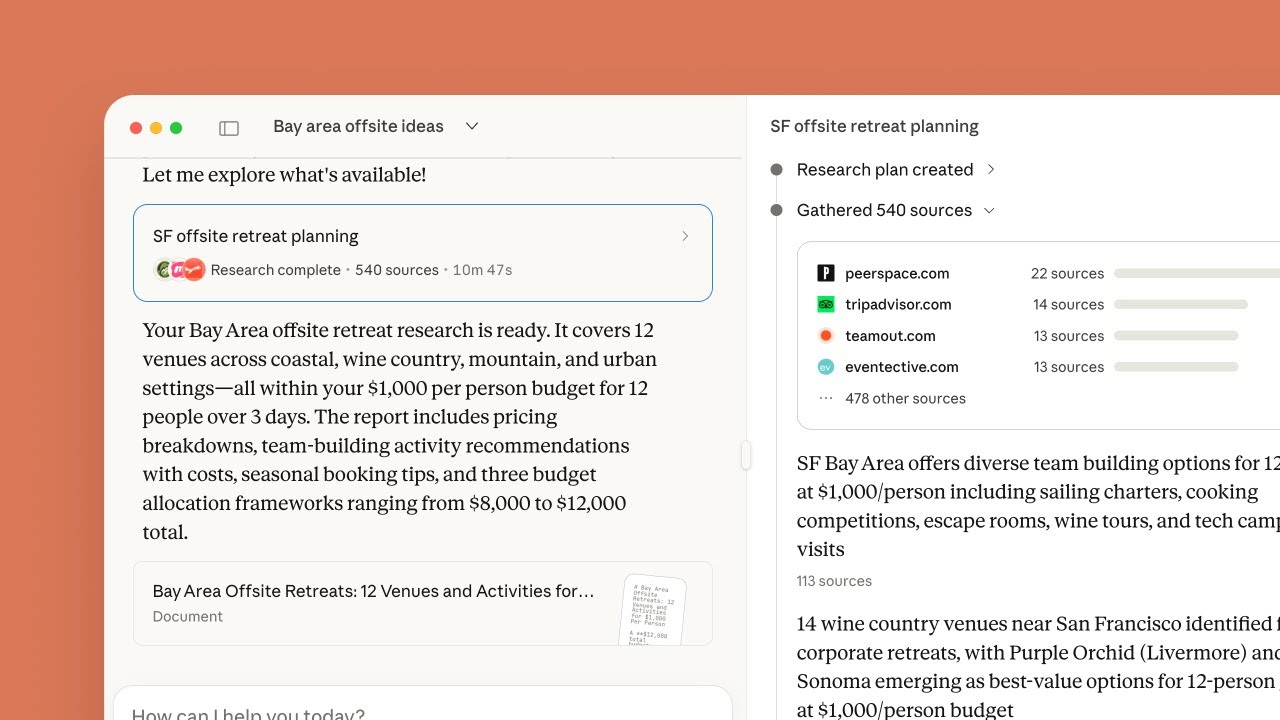
The video serves as a practical walkthrough, illustrating how Claude’s Research feature, powered by its Opus 4.1 model, fundamentally alters the information discovery landscape. It posits Claude not merely as a conversational AI, but as an advanced research partner capable of generating detailed reports from diverse sources, complete with in-depth analysis. This capability directly addresses the critical need for rapid, reliable intelligence in fast-paced strategic environments.
At its core, the Research feature begins with a prompt, much like any other interaction with Claude. However, the emphasis here is on crafting a detailed prompt, which the narrator articulates through a three-step process: setting the stage, defining the task, and specifying rules. This meticulous approach ensures Claude has sufficient context to deliver precise and relevant outputs. For instance, the demonstration illustrates planning a two-day Bay Area team offsite for 15 marketing professionals, specifying budget, venue requirements (indoor/outdoor, accessibility), creative team activities, catering, and even seasonal pricing factors. This level of detail, while seemingly demanding upfront, is crucial for maximizing the AI's efficacy. If the prompt is too vague, Claude will proactively ask follow-up questions to refine the task, ensuring a robust foundation for its investigative process.
Once the Research feature is enabled and the prompt submitted, Claude initiates an autonomous, iterative process. As the video explains, "Research in Claude operates independently, conducting multiple searches that build on each other, while deciding what to investigate next." This means the AI isn't performing a single, static search, but rather dynamically exploring different angles of the query and pursuing related questions in real-time. This iterative discovery mirrors the thought process of a human researcher, but at an exponentially faster pace and across a vast array of sources. The system gathers hundreds of sources, synthesizing them into a coherent, actionable report. A key insight for tech insiders and analysts is the inherent verifiability: the reports are delivered "complete with easy-to-check citations," allowing users to audit Claude’s findings and ensure accuracy.
This blend of speed and verifiable depth makes Claude’s Research feature ideal for projects that traditionally consume significant human capital. Use cases highlighted in the tutorial include market analysis, where identifying trends and competitive landscapes often requires sifting through mountains of data; technical documentation synthesis, streamlining the creation of complex manuals or whitepapers; and product development roadmapping, offering rapid insights into feasibility, resource allocation, and strategic direction. Any endeavor demanding hours of manual information gathering and cross-referencing stands to benefit immensely.