

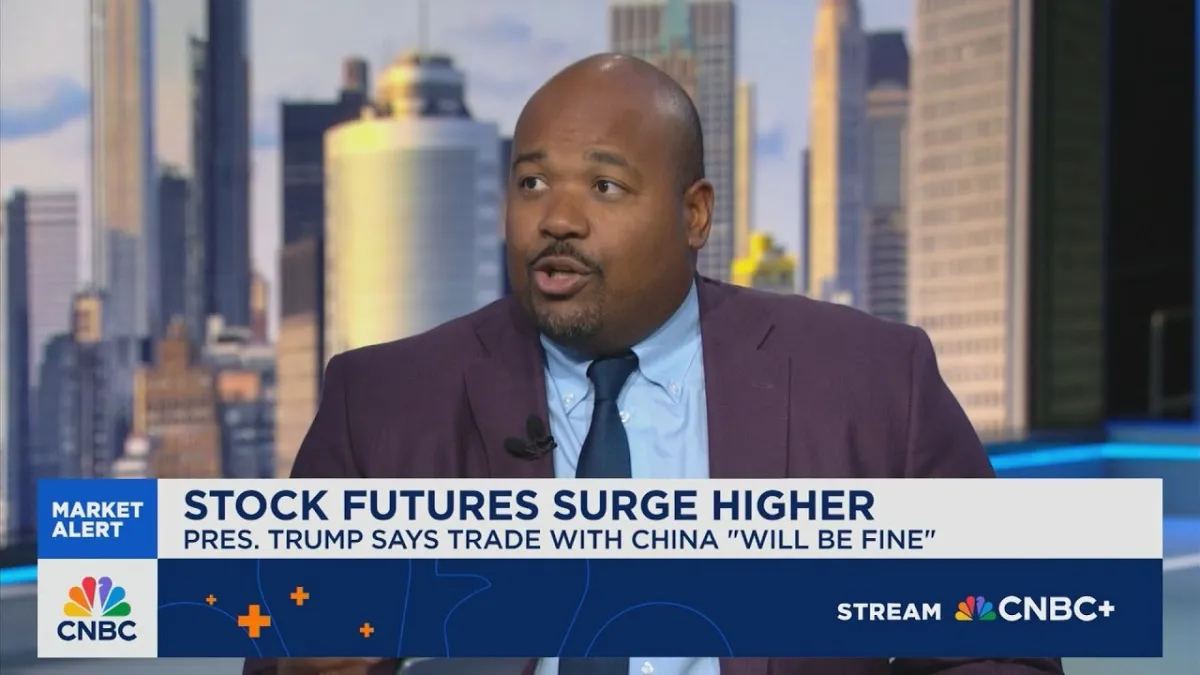
Mark Smith, Senior Vice President and Portfolio Manager at Wells Fargo Advisors, recently offered a sobering yet strategic perspective on the global economic landscape, emphasizing China's undeniable influence on the future of artificial intelligence and quantum computing. Speaking with CNBC's Frank Holland, Smith outlined critical concerns for investors, ranging from potential market bubbles to geopolitical tensions, and offered a diversified approach to navigate these turbulent waters. His commentary underscored the profound interconnectedness of technological advancement, economic stability, and international relations, a nexus of particular relevance to founders, venture capitalists, and AI professionals.
A central tenet of Smith's analysis is the escalating importance of China, not merely as a market, but as a defining force in the next wave of technological innovation. He highlighted that "China really is going to determine what happens also with AI because AI works with chips," stressing the nation's critical role in the supply chain for essential minerals and components. This dependence, coupled with ongoing trade tensions, creates a delicate balance for global tech players and investors alike. The potential for a "black swan event" stemming from US-China relations looms large, prompting investors to re-evaluate their exposure and strategy.
Smith’s clients, he noted, are particularly concerned about a market downturn akin to the earlier months of the year, fearing a potential "biggest bubble in American history" in the AI and tech sectors. This apprehension is not unfounded; the rapid ascent of quantum computing and AI stocks has generated unprecedented returns, yet also whispers of unsustainable growth. For Smith, managing this risk is paramount, leading him to advocate for robust portfolio diversification.
One of his key recommendations for mitigating risk is investing in gold. Having seen a 50% increase over the past year, gold is positioned as a critical safe haven. "Gold... is one of those diversifiers that clients are looking for to de-risk portfolios," Smith explained, noting its ability to hedge against both international instability and domestic issues like government deficits. This strategy reflects a cautious stance in an environment where traditional fixed-income investments offer little yield, forcing investors to seek alternative de-risking mechanisms.
Despite the prevailing concerns about China, Smith does not advise complete divestment. On the contrary, he sees opportunities, particularly in Chinese companies that have experienced pullbacks. Recognizing China as a "major trading partner," he recommends dollar-cost averaging into the country's market, citing its sheer population and sustained demand over two decades as compelling growth drivers. Such a nuanced approach acknowledges the inherent risks while tapping into long-term potential.