

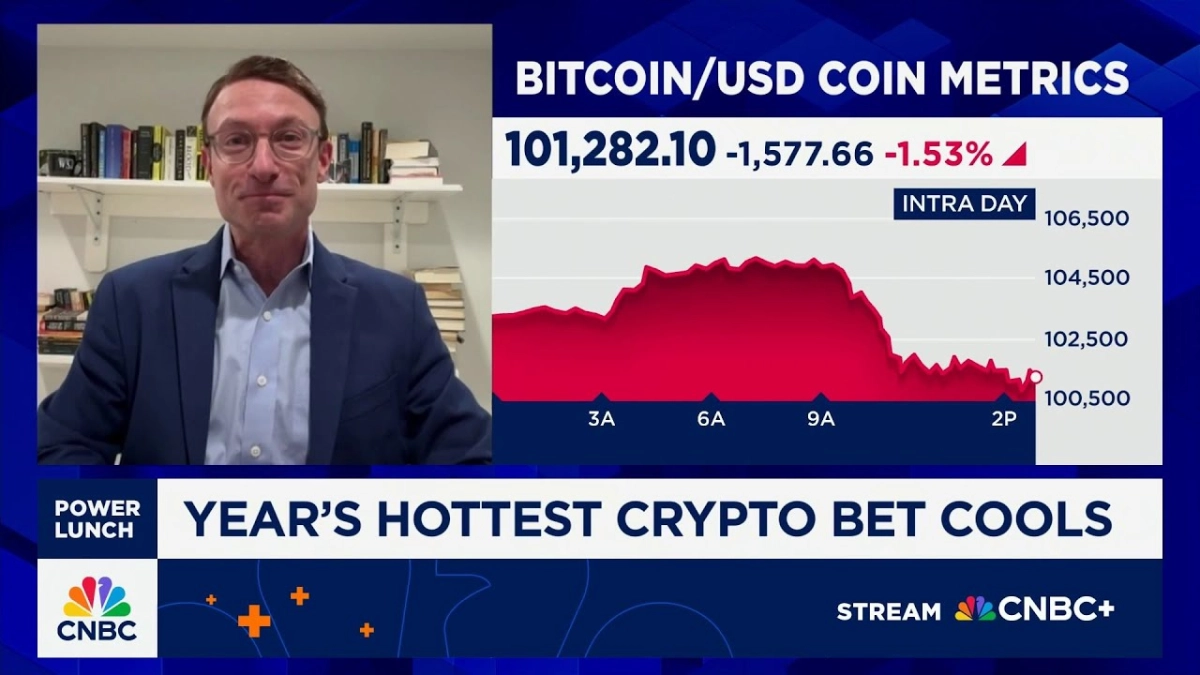
The Year's Hottest Crypto Trade Is Crumbling
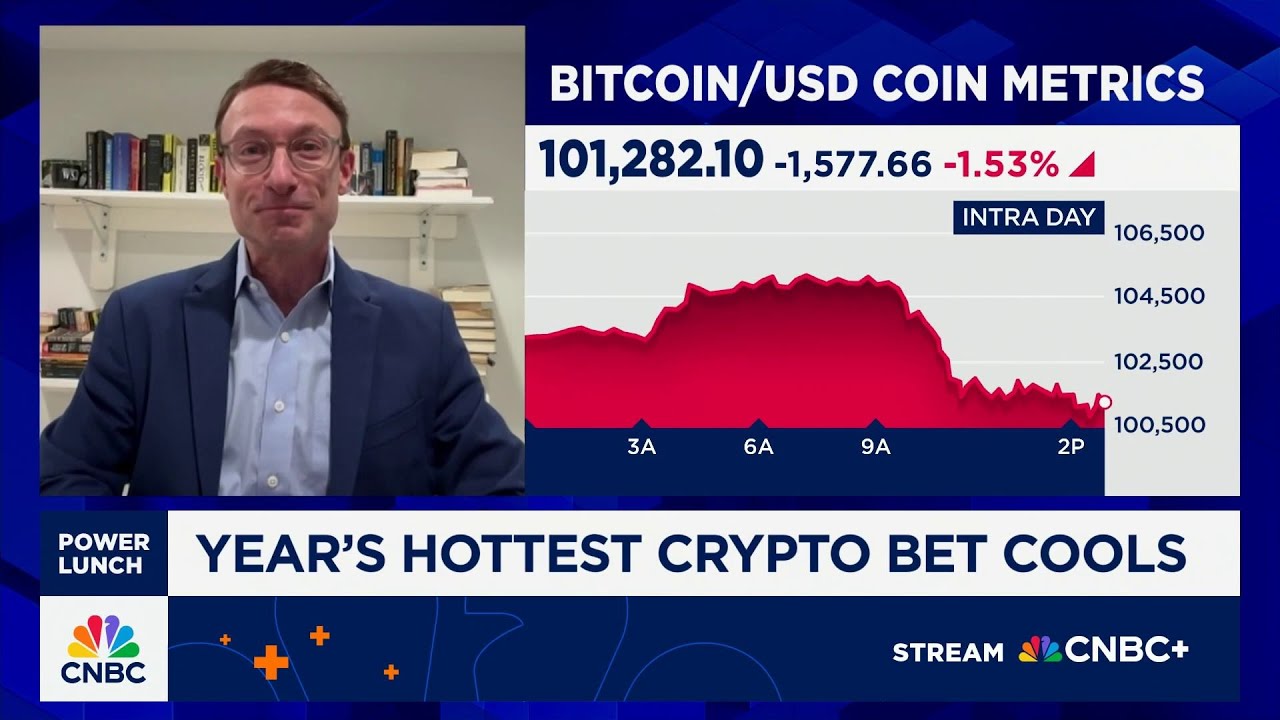
"Bitcoin is the most interesting market trade apart from AI out there." This assertion by Gregory Zuckerman, a special writer for The Wall Street Journal, sets a provocative tone for his discussion on the current state of the cryptocurrency market. Zuckerman spoke with CNBC's 'Power Lunch' to delve into the recent performance of Bitcoin, the emergence of crypto treasury strategies, and the broader implications for investors.
Zuckerman's statement immediately positions Bitcoin not just as a speculative asset, but as a market phenomenon that warrants close attention, comparable in its intrigue to the burgeoning field of artificial intelligence. This framing is significant, as it elevates Bitcoin beyond the typical discourse of volatile digital currencies and into the realm of major economic and technological trends. The implication is that understanding Bitcoin's trajectory offers insights into market dynamics and investor behavior that are as crucial as grasping the advancements in AI.
The conversation then pivots to the recent performance of specific companies heavily invested in cryptocurrency, such as Bitmine and Strategy. Zuckerman highlights that these companies, which often act as proxies for Bitcoin's performance, have experienced significant declines. "Bitmine, Strategy fall 20% 1-month," the on-screen chyron declared, underscoring the immediate impact of Bitcoin's volatility on related equities. This suggests a correlation that is becoming increasingly difficult to ignore for traditional market participants.
A key insight emerging from the discussion is the concept of "crypto treasury strategies." Zuckerman explains that companies are increasingly holding Bitcoin as a treasury asset, a departure from traditional reserves. He elaborates on how some companies, like Michael Saylor's MicroStrategy, have pivoted their business models to leverage this strategy. "He took a software company, basically became a crypto repository with the price of crypto going up," Zuckerman states, illustrating the aggressive bet these firms are making. This approach, while potentially lucrative during bull markets, exposes these companies to substantial risk when the underlying asset depreciates.
