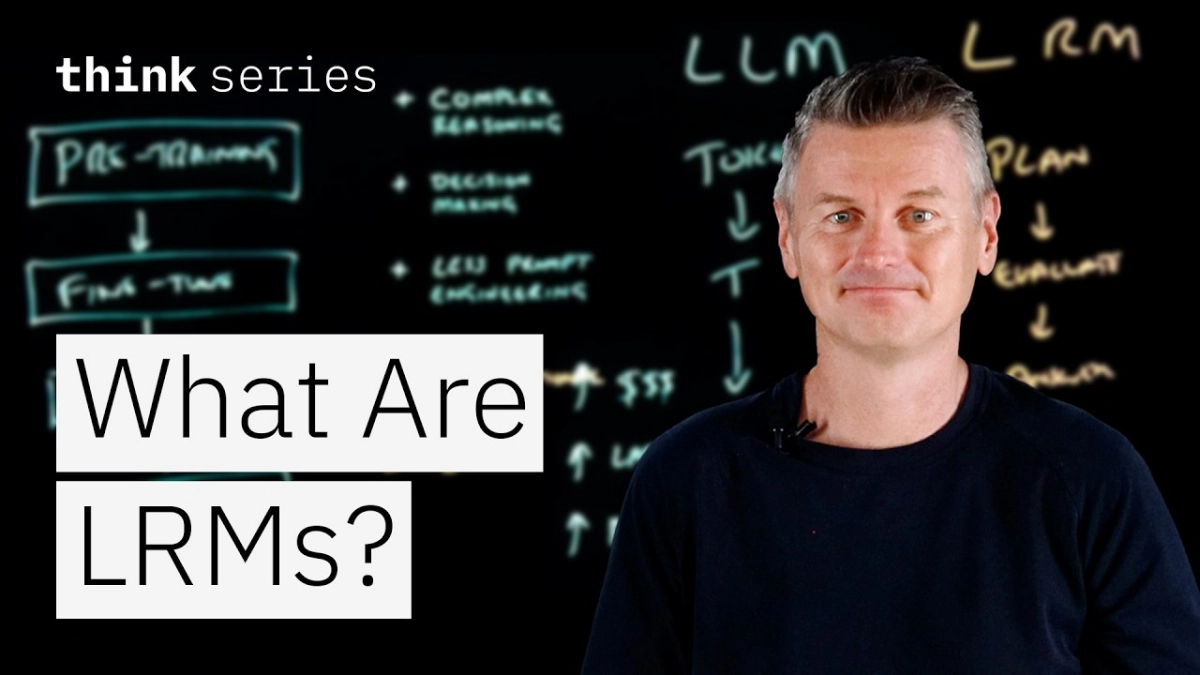
“AI models are no longer just spewing language out at you as fast as they can predict the next word in a sentence, they are taking time to think through responses,” explained Martin Keen, a Master Inventor at IBM, in a recent presentation. This compelling insight underscored a pivotal shift in the artificial intelligence landscape, moving beyond the statistical pattern-matching of Large Language Models (LLMs) towards the more deliberative capabilities of Large Reasoning Models (LRMs). Keen’s articulate explanation, delivered in a visually engaging style, provided a crucial distinction for founders, venture capitalists, and AI professionals seeking to understand the next frontier of AI development.
Keen precisely articulated the fundamental difference between these two paradigms. While LLMs generate human-like text by predicting the most statistically probable next token in a sequence, LRMs introduce an internal deliberative process. They "think before they talk," engaging in a multi-step cognitive journey that involves planning, evaluating options, and double-checking calculations within a "sandbox" before producing an answer. This reflective approach stands in stark contrast to the reflexive nature of traditional LLMs, which operate primarily on associative patterns learned from vast datasets.