
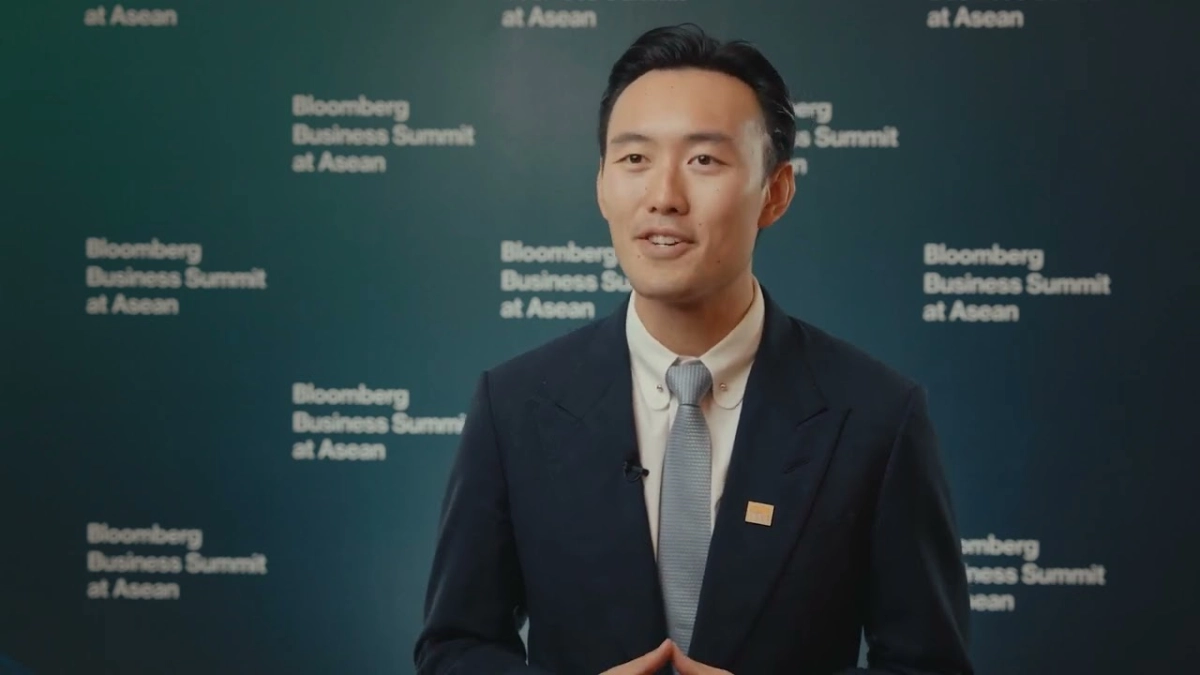
The digital future, for nations and regions alike, hinges on a fundamental choice: to build or to buy. This critical strategic imperative was underscored by Yeoh Keong Yeen, Executive Director of YTL Construction, during his commentary at the Bloomberg Business Summit at ASEAN. His insights illuminate a pivotal moment for the Southeast Asian bloc, advocating for a profound shift from being a mere consumer of technology to becoming a robust producer, especially in the burgeoning fields of artificial intelligence, digital infrastructure, and green transitions.
Yeoh Keong Yeen, representing YTL Construction, spoke at the Bloomberg Business Summit at ASEAN about the region's vast potential and the strategic importance of developing indigenous AI capabilities. His perspective offers a clear roadmap for how ASEAN, with its significant population and rapid digitization, can leverage its unique position to foster resilience and independence in the global technology landscape. The discussion revolved around the necessity of investing in foundational AI infrastructure, from data centers to large language models, to secure a competitive edge and safeguard national interests.

ASEAN stands at a unique confluence of demographic advantage and global supply chain realignment. With a population of 680 million, one of the youngest and fastest digitizing in the world, the region offers an unparalleled testbed for scalable, localized technology. Yeoh articulated this opportunity with precision, stating, "ASEAN's biggest opportunities is the shift from being a consumer market to becoming a producer of technologies, especially in AI, digital infrastructure, and green transitions." This isn't merely an economic aspiration; it's a strategic imperative for long-term growth and self-determination. For founders and VCs, this signals a fertile ground for investment in deep tech, where local solutions for local problems, built on sovereign infrastructure, can yield substantial returns and create enduring value.
The core of Yeoh's argument centers on the concept of "sovereign AI." This philosophy transcends mere technological adoption, delving into the very fabric of national security, economic resilience, and cultural preservation. He posits that true independence in the digital age requires control over the underlying intelligence systems that will power future economies and societies. Relying solely on foreign-built AI models, data centers, and compute infrastructure creates dependencies that can be strategically vulnerable. The implications for defense and AI analysts are clear: digital sovereignty is increasingly intertwined with national security, making the development of localized AI capabilities a matter of strategic defense.
YTL Construction, under Yeoh's leadership, is actively demonstrating this "build, not buy" philosophy in Malaysia. The company is investing in a full-stack sovereign AI ecosystem, a comprehensive approach that spans the entire technological spectrum. This includes developing green-powered data centers, establishing AI cloud infrastructure in partnership with NVIDIA utilizing their latest GB200 chips, and critically, creating Malaysia's own sovereign large language model (LLM) called Ilmu. Ilmu is not designed to compete directly with global AI giants but rather to serve the specific linguistic, cultural, and national interests of Malaysia, ensuring that the intelligence powering its society is contextually relevant and securely managed.
This integrated approach to AI development is a blueprint for other ASEAN nations. By owning the entire stack—from the physical infrastructure and compute power to the data and the trained models—nations can mitigate risks associated with data privacy, algorithmic bias, and potential foreign interference. Such independence fosters a vibrant local innovation ecosystem, creating high-value jobs and nurturing a talent pool that understands the unique nuances of the region. It ensures that the benefits of AI development accrue domestically, strengthening national economies and preventing capital flight.
Related Reading
- Epoch AI Unveils Frontier Data Centers Hub: Mapping AI's Monumental Infrastructure
- AI's Insatiable Power Hunger Redefines Data Center Infrastructure
The strategic importance of this endeavor cannot be overstated. "The economies that build, not just buy, will lead," Yeoh declared, encapsulating the competitive edge gained through self-reliance. This is a call to action for regional leaders and investors to prioritize indigenous development over passive consumption. It's about cultivating an environment where local talent can thrive, where data remains within national borders, and where the intelligence that drives progress is tailored to local needs and values.
This paradigm shift unlocks not just innovation but also profound economic competitiveness. It fosters digital independence, moving beyond reliance on external systems that may not align with national priorities. Ultimately, this leads to long-term strategic resilience for the entire ASEAN region, allowing member states to navigate future geopolitical and technological shifts with greater autonomy and confidence. The vision presented is one where ASEAN nations collectively forge their own digital destiny, building a shared foundation of technological strength and sovereignty.