

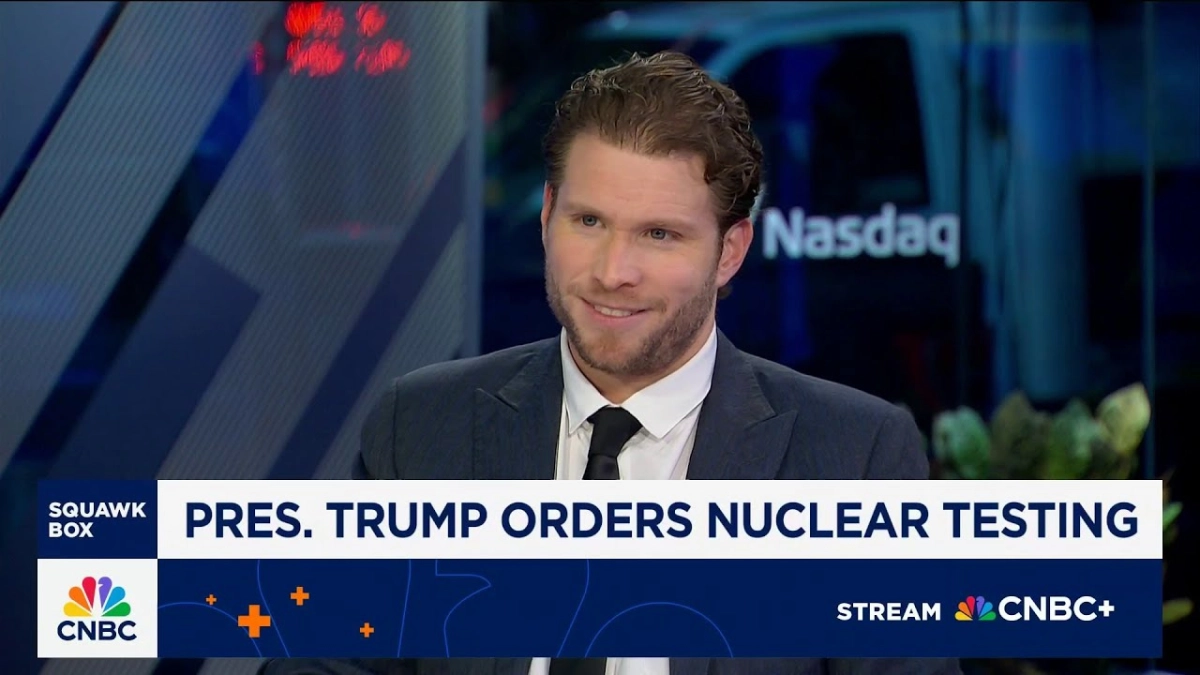
The age of artificial intelligence, often shrouded in speculative hype, is now demonstrably "actually working," according to Joe Lonsdale, Palantir co-founder and 8VC founding partner. This tangible progress, he asserts, heralds not just a technological revolution but a fundamental reindustrialization of the United States, demanding unprecedented capital and reshaping global power dynamics. Lonsdale shared these sharp insights on CNBC's Squawk Box, discussing President Trump's nuclear weapons testing order, 8VC's recent partnership with Apollo, and the true state of the AI boom and its perceived bubble.
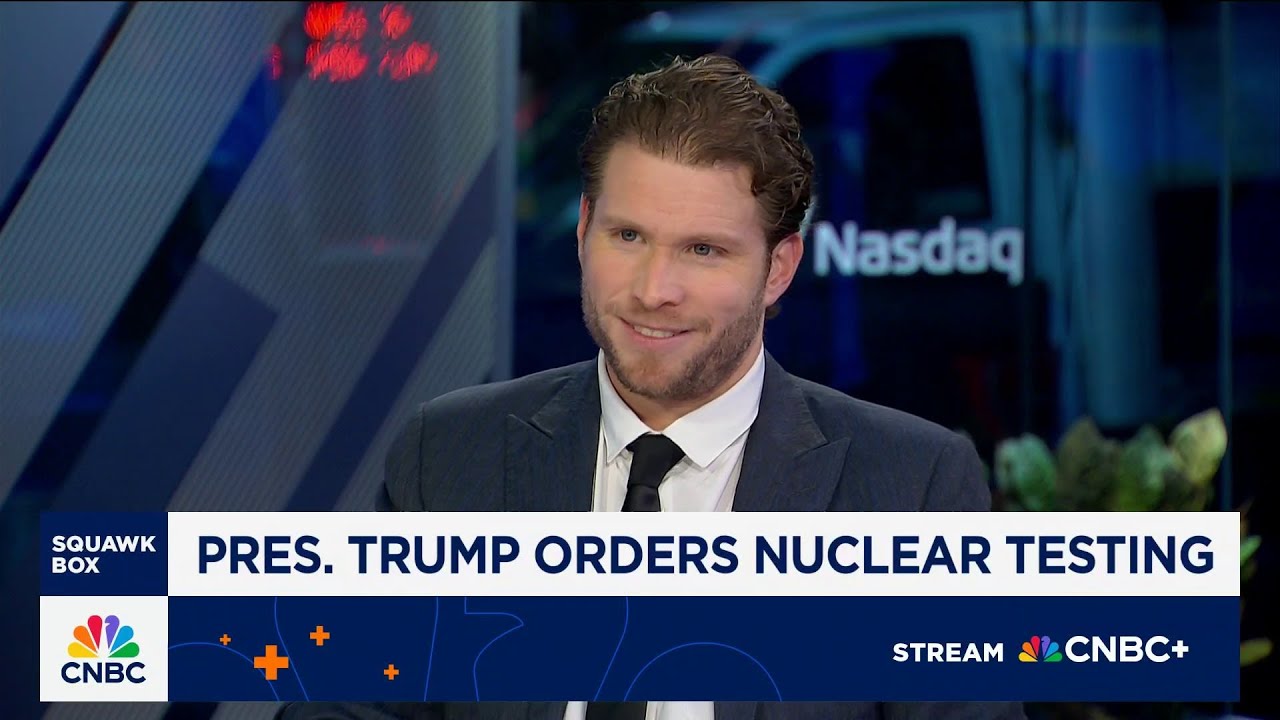
Lonsdale offered a striking perspective on the geopolitical landscape, particularly concerning President Trump's directive to restart nuclear weapons testing, following Russia's successful test of its Poseidon nuclear-capable super torpedo. He described Russia's new weapon as akin to "the self-driving car of nuclear weapon," capable of taking out cities. While acknowledging the U.S. already possesses a formidable nuclear triad, Lonsdale emphasized the critical need for America to project strength in a world where adversaries like China’s President Xi perceive U.S. decline. "We're showing him that's not true," Lonsdale stated, highlighting how advancements in defense, coupled with such demonstrations of resolve, serve as a potent deterrent, signaling that the U.S. will not "just fade away and be an easy target." This strategic flexing, he argued, is a necessary component of international relations in an increasingly multipolar world.
The conversation then pivoted to the domestic economic transformation, spurred by AI. Lonsdale laid out an ambitious vision for the next decade: "We're going to reindustrialize the US." This reindustrialization, encompassing advanced manufacturing in sectors like bio and aerospace, will require trillions of dollars in investment. He explained that 8VC's partnership with Apollo Global Management is precisely designed to channel this scale of capital into companies that are not just asset-light tech startups but those transforming tangible assets.
This shift involves leveraging AI to make traditional industries vastly more efficient. For instance, he cited a company utilizing "autonomous excavators" in construction. Such innovation, by reducing labor costs and increasing operational efficiency, makes previously unfeasible projects economically viable. Lonsdale invoked "Jevons Paradox" to explain that increased efficiency doesn't necessarily lead to reduced demand or job losses; rather, by making things cheaper and more accessible, it can spur greater overall activity and, consequently, more jobs in the long run.
The discussion then tackled the pervasive question of whether the current AI boom is an unsustainable bubble. Lonsdale, drawing from conversations with leaders at OpenAI and Anthropic, revealed a fascinating dynamic: these foundational model companies often "are afraid to scare their investors, and so they're telling them they need a lot less capital, a lot less energy than they know they actually do." This implies an understated, rather than overstated, need for capital. He predicted a recurring cycle where, every few months, the industry will realize it requires "a lot more energy" and "a lot more capital in data centers."