


AI's Resurgent Momentum: Hardware, Hyperscalers, and the Quest for Sustainable Growth

4 min read
AI's Resurgent Momentum: Hardware, Hyperscalers, and the Quest for Sustainable Growth

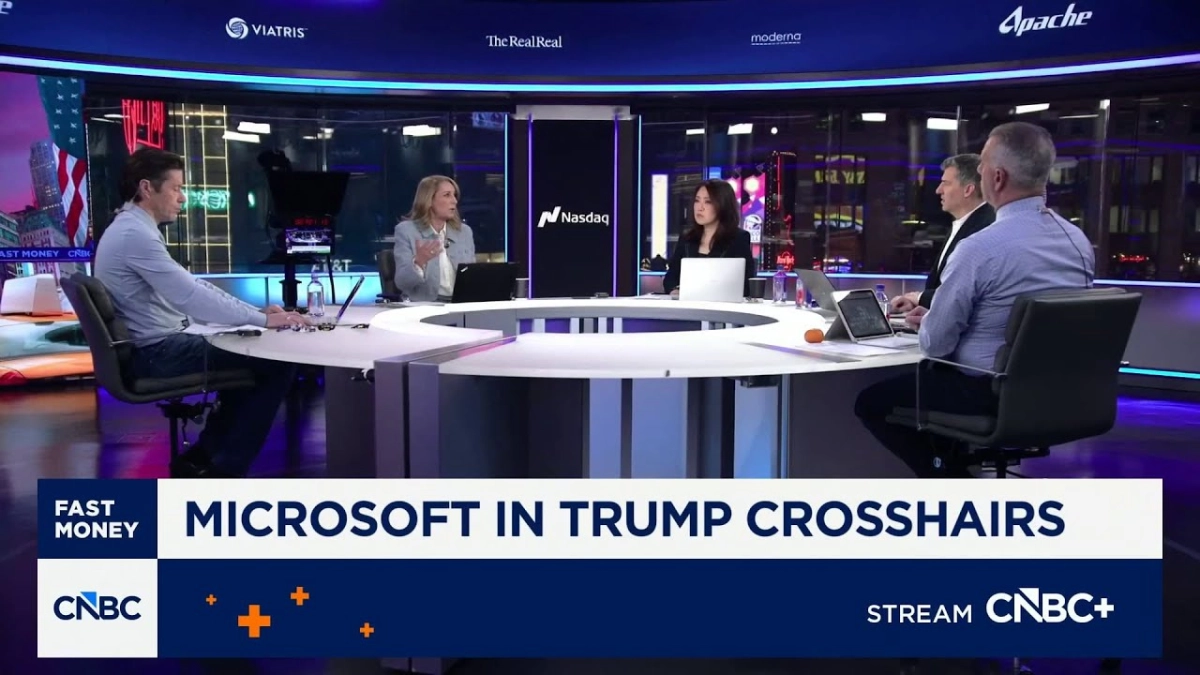
The recent resurgence in the artificial intelligence trade underscores a critical shift in investor sentiment: while the promise of AI remains undeniable, the market is maturing, demanding robust fundamentals and clear long-term visibility. On a recent segment of CNBC's "Fast Money," Melissa Lee moderated a discussion with market strategists Tim Seymour, Mike Khouw, Steve Grasso, and Courtney Garcia, delving into the resilience and evolving landscape of the artificial intelligence trade, particularly the interplay between hardware providers and hyperscalers amid a week of notable market movements. The conversation highlighted that the AI narrative is far from over, but the focus is sharpening on financially sound companies capable of supporting the immense infrastructure build-out required for sustained growth.

A key insight emerging from the discussion was the palpable demand for AI-enabling hardware, particularly semiconductors. Tim Seymour emphasized this point, noting that Micron, a bellwether in the memory chip sector, has provided exceptional forward guidance. "They told us that they were actually seeing spot prices that which they could price out two, three, four quarters, that kind of visibility," Seymour stated, highlighting the firm order books that extend well into the future. This long-term demand signal from a foundational hardware provider suggests that the AI revolution is not merely speculative but is translating into tangible, multi-year commitments for essential components.

Related startups

The market's recent activity, including a significant quadruple witching event, also played a role in shaping the current landscape. Mike Khouw explained that while pre-holiday weekends typically see reduced trading volumes, the expiration of numerous options and futures contracts often triggers a surge in activity as positions are rolled over. This technical dynamic, he observed, "tends to fuel a big uptick in volume." Such events, combined with a broader market "reset," as Steve Grasso put it, have effectively squeezed out some of the more speculative "fluff" from the market. This cleansing allows for a clearer view of underlying value, enabling investors to gravitate back towards established names they understand and trust.

Steve Grasso further articulated this sentiment, noting that "if you're expecting the market to go up, it's not going up without technology." Given that technology constitutes a substantial portion, around 40%, of the overall market, its performance is inextricably linked to the broader indices. This reliance means that any sustained rally necessitates strength in tech, leading investors to reinvest in familiar, widely held names that have demonstrated resilience and are central to the AI thesis. The removal of market froth, coupled with a renewed appetite for investment, creates fertile ground for companies with clear value propositions within the AI ecosystem.

However, the panel also underscored a growing discernment among investors regarding the financial health of AI-related companies. Courtney Garcia highlighted that while the demand for AI infrastructure is robust, "people are really starting to question the companies who don't have the cash flow to support all of this build-out that's going on." This indicates a shift from a purely growth-at-any-cost mentality to one that prioritizes strong balance sheets and the ability to self-fund expansion. The ability to pay down debt and maintain healthy cash flows is becoming a crucial differentiator, especially as the industry moves beyond early-stage hype.

The concentration risk within the tech sector also factored into the discussion. Courtney Garcia pointed out that "when you look at tech and information services, that's over 45% of the S&P 500 now. There's a lot of concentration risk." This over-representation means that while tech's performance can lift the entire market, it also exposes investors to significant systemic risk should the sector face headwinds. This realization is prompting a strategic re-evaluation, encouraging investors to seek diversification beyond the most heavily weighted tech giants, potentially benefiting niche hardware providers or innovative software firms with solid fundamentals. The AI trade is evolving beyond a singular, monolithic entity into a complex web of interconnected sub-sectors, each with unique financial requirements and risk profiles.

© 2025 StartupHub.ai. All rights reserved. Do not enter, scrape, copy, reproduce, or republish this article in whole or in part. Use as input to AI training, fine-tuning, retrieval-augmented generation, or any machine-learning system is prohibited without written license. Substantially-similar derivative works will be pursued to the fullest extent of applicable copyright, database, and computer-misuse laws. See our terms.