


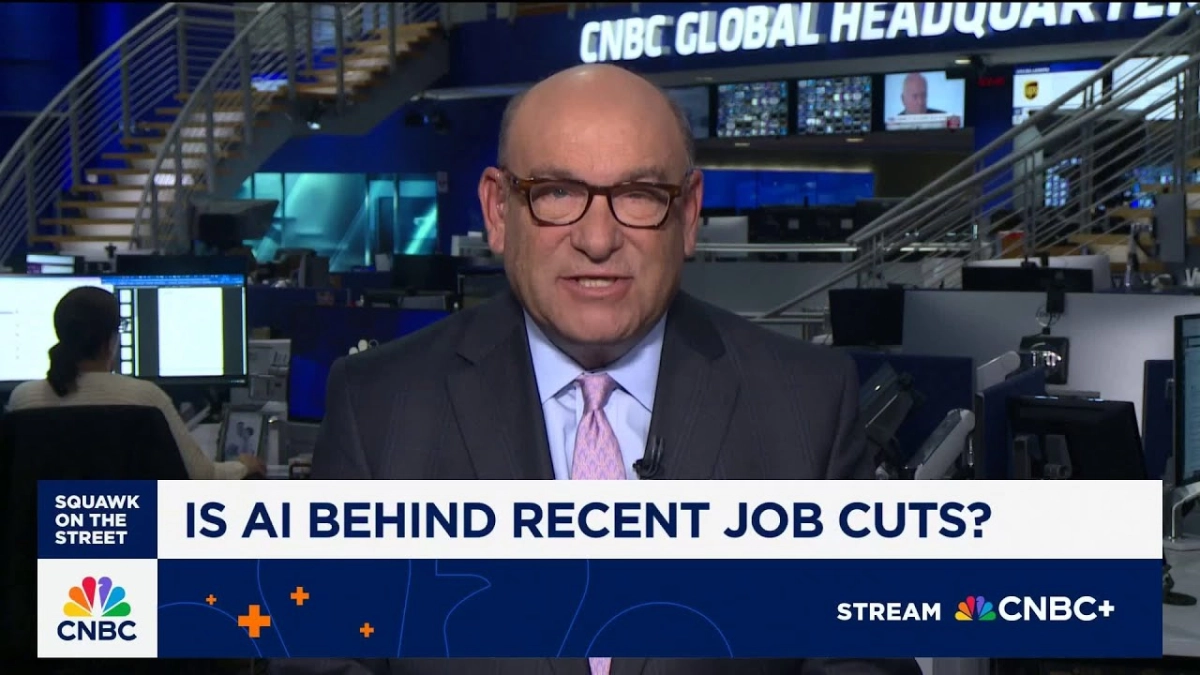
The narrative of artificial intelligence as the primary driver behind recent corporate layoffs is, for the moment, a convenient oversimplification. While fear circulates that AI is already displacing workers en masse, a recent discussion on CNBC's 'Squawk on the Street' featuring Senior Economics Reporter Steve Liesman, alongside anchors David Faber and Sara Eisen, brought much-needed skepticism to this burgeoning belief. The consensus emerging from the conversation suggests that many recent job cuts, while significant, are more likely rooted in traditional business dynamics, with AI often serving as a modern, albeit misleading, justification.
David Faber spoke with Steve Liesman on CNBC's 'Squawk on the Street' about the underlying causes of recent corporate layoff announcements, specifically addressing whether artificial intelligence is truly to blame. Liesman, joined later by Peter Cappelli, a Professor of Management at the Wharton School, offered a nuanced perspective, urging caution against attributing widespread job losses solely to AI’s immediate impact. Their analysis delved into the complex interplay of economic cycles, post-pandemic adjustments, and corporate messaging, revealing that the picture is far more intricate than a simple AI-driven displacement.
Liesman began by listing several high-profile layoff announcements—48,000 at UPS, 14,000 at Amazon, 1,800 at Target—acknowledging the immediate concern these numbers generate regarding AI's influence. However, he quickly introduced the concept of "AI washing," suggesting that companies might be leveraging the buzz around artificial intelligence to mask more conventional business challenges, such as economic downturns or necessary restructurings. This initial insight challenges the prevailing media narrative, prompting a deeper look into corporate transparency and the true motivations behind workforce reductions.



