


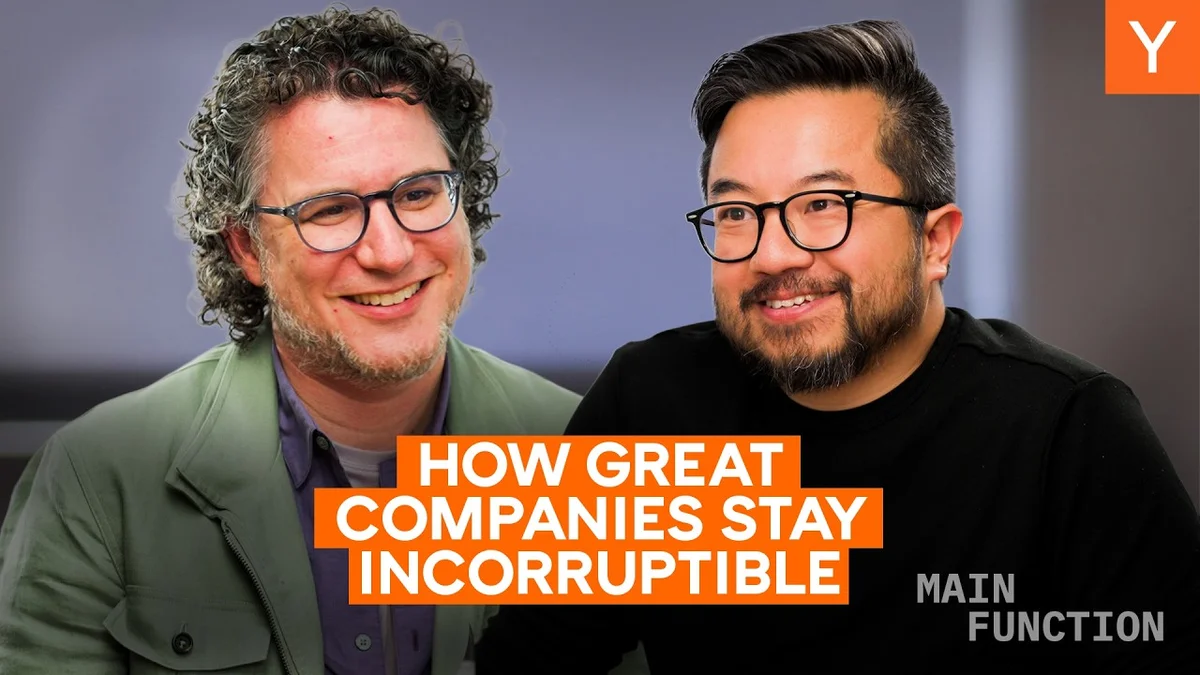
Why Good Companies Go Bad: Ries on Incorruptibility

Eric Ries discusses why good companies go bad and how founders can build mission-driven organizations that last.

8 min read
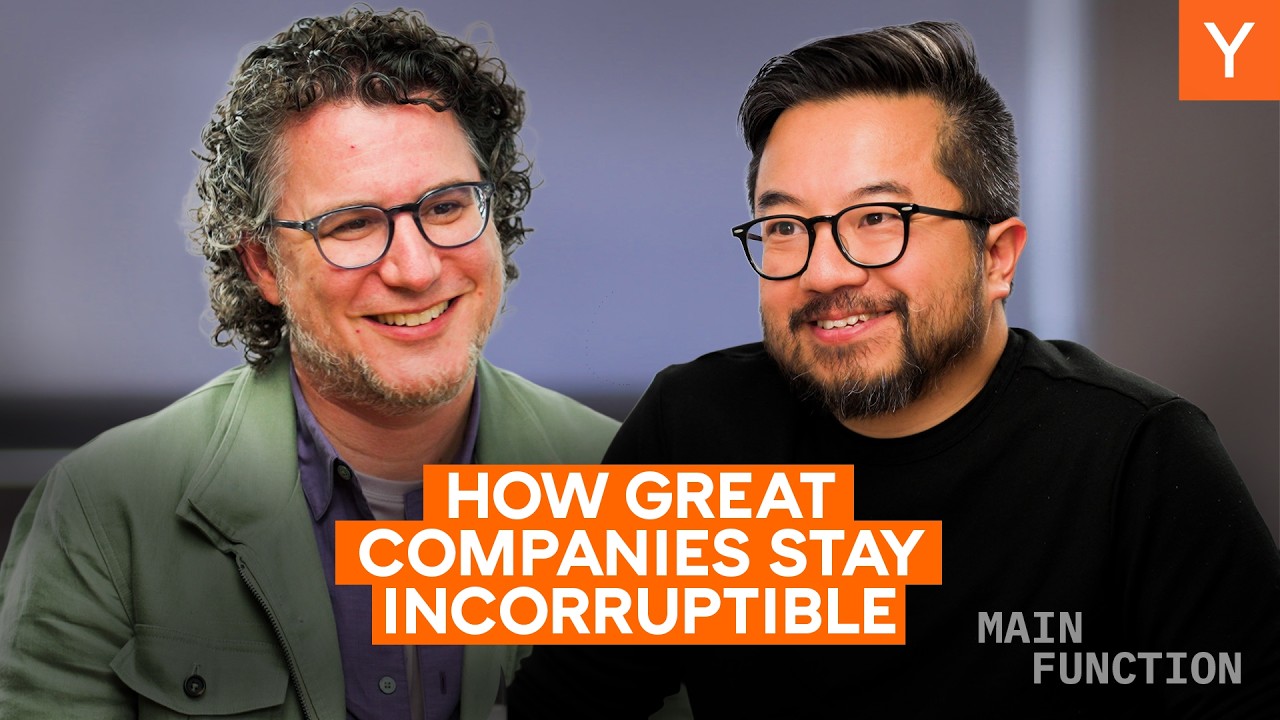
Eric Ries and Garry Tan in conversation
Eric Ries, author of 'The Lean Startup,' in conversation with Garry Tan, President & CEO of Y Combinator.· YC

In a candid conversation that delves into the pitfalls of corporate decline, Eric Ries, author of the bestselling book "The Lean Startup," shares insights on why even good companies can falter and how to prevent it. Speaking with Garry Tan, President & CEO of Y Combinator, Ries draws parallels between the startup world and the long-term survival of corporations, emphasizing the critical role of mission and founder control in maintaining integrity.

Visual TL;DR. Short-termism corrupts leads to Unseen costs of success. Founder control vital leads to Mission preservation. Legal structures matter leads to Mission preservation. Unseen costs of success leads to Companies stay great. Long game strategy leads to Companies stay great. Mission preservation leads to Companies stay great.

  1. Short-termism corrupts: prioritizing immediate profit over long-term customer value and purpose
  2. Founder control vital: maintaining mission integrity and preventing mission drift over time
  3. Legal structures matter: aligning company's legal framework with its core mission and values
  4. Long game strategy: building for longevity requires focus beyond quarterly financial results
  5. Unseen costs of success: apparent success can mask underlying mission erosion and corruption
  6. Learn from history: understanding past corporate failures to avoid repeating them
  7. Companies stay great: strategies to ensure enduring mission and integrity in business
  8. Mission preservation: keeping the original purpose central to all business decisions
Visual TL;DR
Visual TL;DR — startuphub.ai Founder control vital leads to Mission preservation. Long game strategy leads to Companies stay great. Mission preservation leads to Companies stay great Short-termism corrupts Founder control vital Long game strategy Companies stay great Mission preservation From startuphub.ai · The publishers behind this format
Visual TL;DR — startuphub.ai Founder control vital leads to Mission preservation. Long game strategy leads to Companies stay great. Mission preservation leads to Companies stay great Short-termismcorrupts Founder controlvital Long gamestrategy Companies staygreat Missionpreservation From startuphub.ai · The publishers behind this format
Visual TL;DR — startuphub.ai Founder control vital leads to Mission preservation. Long game strategy leads to Companies stay great. Mission preservation leads to Companies stay great Short-termism corrupts prioritizing immediate profit overlong-term customer value and purpose Founder control vital maintaining mission integrity andpreventing mission drift over time Long game strategy building for longevity requires focusbeyond quarterly financial results Companies stay great strategies to ensure enduring mission andintegrity in business Mission preservation keeping the original purpose central toall business decisions From startuphub.ai · The publishers behind this format
Visual TL;DR — startuphub.ai Founder control vital leads to Mission preservation. Long game strategy leads to Companies stay great. Mission preservation leads to Companies stay great Short-termismcorrupts prioritizingimmediate profitover long-term… Founder controlvital maintaining missionintegrity andpreventing mission… Long gamestrategy building forlongevity requiresfocus beyond… Companies staygreat strategies toensure enduringmission and… Missionpreservation keeping theoriginal purposecentral to all… From startuphub.ai · The publishers behind this format
Visual TL;DR — startuphub.ai Short-termism corrupts leads to Unseen costs of success. Founder control vital leads to Mission preservation. Legal structures matter leads to Mission preservation. Unseen costs of success leads to Companies stay great. Long game strategy leads to Companies stay great. Mission preservation leads to Companies stay great Short-termism corrupts prioritizing immediate profit overlong-term customer value and purpose Founder control vital maintaining mission integrity andpreventing mission drift over time Legal structures matter aligning company's legal framework withits core mission and values Long game strategy building for longevity requires focusbeyond quarterly financial results Unseen costs of success apparent success can mask underlyingmission erosion and corruption Learn from history understanding past corporate failures toavoid repeating them Companies stay great strategies to ensure enduring mission andintegrity in business Mission preservation keeping the original purpose central toall business decisions From startuphub.ai · The publishers behind this format
Visual TL;DR — startuphub.ai Short-termism corrupts leads to Unseen costs of success. Founder control vital leads to Mission preservation. Legal structures matter leads to Mission preservation. Unseen costs of success leads to Companies stay great. Long game strategy leads to Companies stay great. Mission preservation leads to Companies stay great Short-termismcorrupts prioritizingimmediate profitover long-term… Founder controlvital maintaining missionintegrity andpreventing mission… Legal structuresmatter aligning company'slegal frameworkwith its core… Long gamestrategy building forlongevity requiresfocus beyond… Unseen costs ofsuccess apparent successcan mask underlyingmission erosion and… Learn fromhistory understanding pastcorporate failuresto avoid repeating… Companies staygreat strategies toensure enduringmission and… Missionpreservation keeping theoriginal purposecentral to all… From startuphub.ai · The publishers behind this format

The Corrupting Influence of Short-Termism

Ries, whose new book "Incorruptible" explores how great companies stay great, highlights a fundamental tension in the business world: the drive for profit versus the preservation of mission. He notes that many companies, even those with strong initial visions, can become corrupted over time by an overemphasis on short-term financial metrics. This can lead to decisions that prioritize immediate shareholder value at the expense of long-term customer value and the company's core purpose.
Related startups

The full discussion can be found on YC's YouTube channel.

Why Good Companies Go Bad (And How to Stop It) - YC
Why Good Companies Go Bad (And How to Stop It) — from YC

Founder Control and Mission Preservation

A key theme Ries explores is the importance of founder control and how it directly impacts a company's ability to remain true to its mission. He argues that when founders lose control, either through dilution of ownership or shifting investor demands, the company's original purpose can easily be eroded. This is particularly relevant in the current tech environment, where rapid growth and the pursuit of significant funding rounds can inadvertently lead to a loss of founder vision.

Legal Structures and Mission Alignment

The discussion touches on the legal frameworks available to companies, such as the traditional C-Corp versus Public Benefit Corporations (PBCs). Ries suggests that the choice of legal structure can play a significant role in a company's ability to embed its mission and resist pressures that might lead it astray. While not advocating for one over the other, he emphasizes that founders must carefully consider how their chosen structure aligns with their long-term goals and values.

The Long Game: Building for Longevity

Ries stresses that building a truly enduring company requires a focus beyond immediate success. The ability to maintain integrity and purpose over decades, not just quarters, is what separates truly great companies from those that fade away. He points to the fact that many companies fail not due to a lack of innovation or market demand, but because they lose sight of their foundational mission.

The Unseen Costs of "Success"

The conversation underscores that while success is often celebrated, it can also bring its own set of challenges. As companies grow, they attract different types of investors and face increasing scrutiny. Ries suggests that without a strong internal compass and a commitment to protecting the core mission, even the most successful companies can find themselves on a path to decline, ultimately becoming unrecognizable from their origins.

Learning from History

Ries draws upon historical examples to illustrate his points, showing how companies that prioritized their mission and founder-led vision often achieved greater long-term success and impact. He encourages founders and leaders to be mindful of the subtle ways in which a company's purpose can be compromised, advocating for proactive measures to ensure that the pursuit of profit does not overshadow the creation of genuine value.

© 2026 StartupHub.ai. All rights reserved. Do not enter, scrape, copy, reproduce, or republish this article in whole or in part. Use as input to AI training, fine-tuning, retrieval-augmented generation, or any machine-learning system is prohibited without written license. Substantially-similar derivative works will be pursued to the fullest extent of applicable copyright, database, and computer-misuse laws. See our terms.