

Vandana Hari on Geopolitical Impact on Oil Markets

Vandana Hari of Vanda Insights discusses the IEA's massive oil reserve release, the shift to information warfare in oil markets, and the geopolitical complexities affecting supply.

Vandana Hari on Geopolitical Impact on Oil Markets
Bloomberg Podcast
Contents(7)

In a recent appearance on Bloomberg's "The Asia Trade," Vandana Hari, founder of Vanda Insights, offered a nuanced perspective on the global oil market and the escalating geopolitical tensions impacting supply and pricing. The discussion centered on the significant proposed release of oil from strategic reserves by the International Energy Agency (IEA) and the broader implications of ongoing conflicts for energy security and market stability.

Vandana Hari: Energy Market Analyst

Vandana Hari is a respected energy market analyst known for her deep understanding of global oil dynamics, geopolitical influences, and the intricacies of energy supply chains. As the founder of Vanda Insights, she provides critical analysis and forecasts to industry leaders and policymakers. Her expertise is particularly valuable in understanding how geopolitical events translate into market movements and impact the global economy.

IEA's Massive Oil Release Proposal

The conversation began with the news that the IEA is proposing the largest-ever release of oil from strategic reserves, amounting to over 182 million barrels. This significant move is aimed at stabilizing oil prices and mitigating supply disruptions caused by geopolitical events. Hari elaborated on the potential impact of such a release, noting that while it could offer some short-term relief, its effectiveness is contingent on several factors, including the duration of the conflict and the market's ability to absorb the additional supply.

The full discussion can be found on Bloomberg Podcast's YouTube channel.
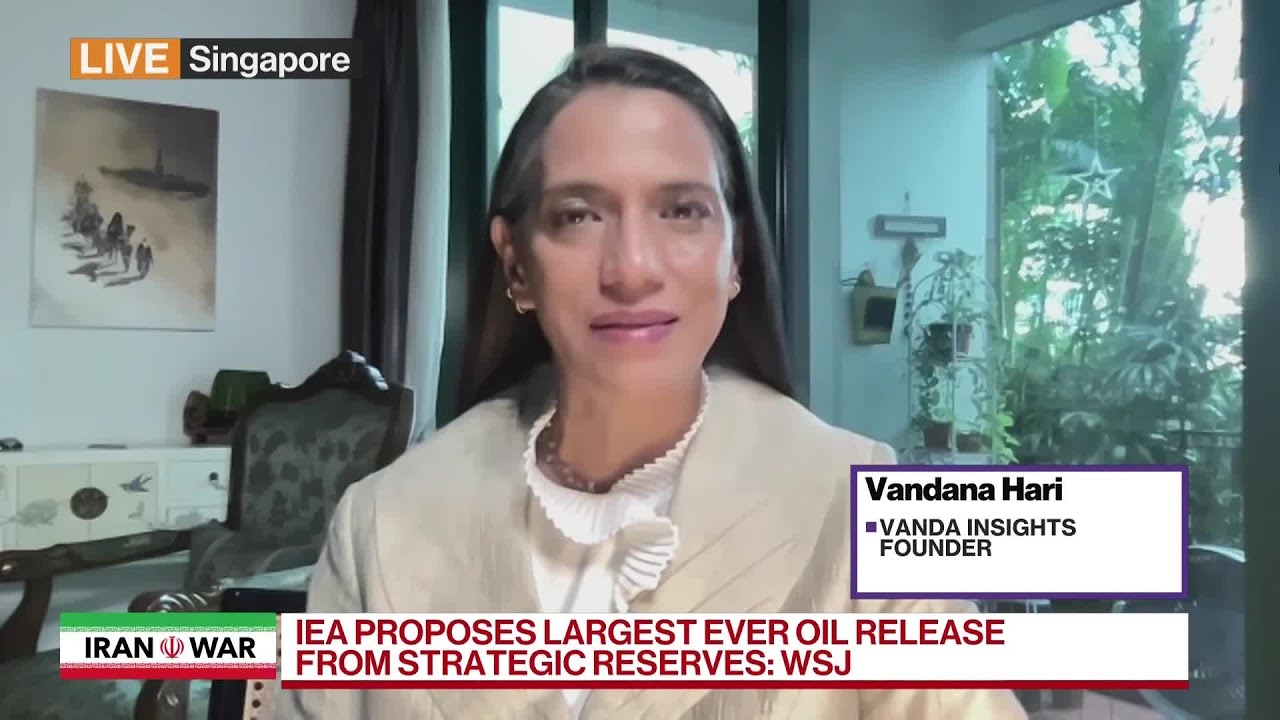
Vandana Hari on Geopolitical Impact on Oil Markets
Strait of Hormuz Shutdown Triggers Potential For Record Oil Release According To Report, from Bloomberg Podcast

The Shifting Landscape of Oil Warfare

Hari highlighted a fundamental shift in how geopolitical conflicts are impacting the oil market. She described the current situation as evolving from a traditional supply-side challenge to a more complex, information-driven warfare. This means that perceptions, narratives, and the psychological impact on market participants are playing an increasingly crucial role in price discovery and supply expectations. Hari suggested that the market is struggling to price in the conflict's true impact because the end game remains uncertain, leading to heightened volatility.

India's Strategic Position in the Oil Market

The discussion also touched upon India's strategic position amidst these global energy shifts. With India being a major oil consumer, its decisions regarding sourcing oil are critical. Hari pointed out that India's continued reliance on Russian oil and its capacity to absorb additional supplies from Russia, despite Western sanctions, presents a complex geopolitical balancing act. This highlights how different nations are navigating the sanctions regime and seeking to secure their energy needs, often with diverging approaches.

The Impact of Sanctions on Iran and Global Supply

A key point raised was the ongoing US sanctions on Iran. Hari emphasized that the United States has not lifted these sanctions, which significantly constrains the global oil supply. The absence of Iranian oil from the market, due to these sanctions, exacerbates supply-side pressures and contributes to the overall tightness of the market. This constraint, coupled with the disruptions from other geopolitical events, creates a challenging environment for global energy security.

The Psychological Dimension of Oil Pricing

Hari further elaborated on the psychological aspects influencing oil prices. She noted that the market's reaction to news and speculation about potential supply disruptions or resolutions can create significant price swings. The uncertainty surrounding the duration and resolution of conflicts means that market participants are constantly trying to factor in potential future scenarios, leading to a disconnect between current physical supply and market pricing. This makes it difficult to predict future oil prices with certainty.

Hari concluded by emphasizing the unprecedented nature of the current situation. The combination of a proposed massive strategic reserve release, the evolving nature of geopolitical conflict impacting oil markets, and the complex web of international sanctions creates a highly uncertain and volatile environment. She suggested that the market is in uncharted territory, making it challenging to forecast future price movements or the long-term stability of oil supply. The focus remains on how these geopolitical forces will continue to shape the global energy landscape.

© 2026 StartupHub.ai. All rights reserved. You may not republish this article in full without a license. Search engines and AI research tools may crawl and summarize for reference. Bulk reproduction or model training requires a license. See our terms.
Daniel Singer

Written by

Daniel Singer

Editor, StartupHub.ai

Daniel Singer is the editor of StartupHub.ai, a technology expert and thought leader on AI and its applications across sectors, from fintech and healthcare to developer tooling and consumer software. He writes and tests the tools covered here thoroughly and regularly, and built StartupHub.ai to give founders, operators and buyers a clearer read on what they are actually being sold.