

The landscape of generative AI is rapidly evolving, with a clear shift towards specialized, high-accuracy models for agentic tasks. At the forefront of this evolution is Unsloth, an open-source framework that significantly streamlines LLM fine-tuning, particularly when paired with NVIDIA GPUs. This combination promises to democratize the creation of highly customized AI, moving beyond generic chatbots to sophisticated, task-specific assistants.
Unsloth distinguishes itself by optimizing the memory and compute-intensive process of LLM fine-tuning, translating complex mathematical operations into efficient, custom GPU kernels. According to the announcement, this optimization results in a substantial 2.5x performance boost over the Hugging Face transformers library on NVIDIA hardware, from consumer-grade GeForce RTX cards to professional RTX PRO workstations and the compact DGX Spark supercomputer. Such efficiency is critical for developers aiming to customize models without incurring prohibitive costs or requiring massive data centers. The framework's ease of use, coupled with its performance gains, makes advanced model customization accessible to a broader developer community, fostering innovation in specialized AI applications.
The choice of fine-tuning method is paramount, dictating the depth of model adjustment and resource requirements. Parameter-efficient fine-tuning (PEFT), like LoRA or QLoRA, offers a pragmatic approach, updating only a small fraction of parameters for faster, lower-cost training, ideal for adding domain knowledge or refining tone with smaller datasets. Full fine-tuning, while more resource-intensive, allows for comprehensive model retraining, essential for strict adherence to specific formats or complex agentic behaviors. Reinforcement learning, the most advanced technique, adjusts model behavior through iterative feedback, enabling the creation of highly accurate domain-specific agents or autonomous systems, though it demands a sophisticated setup including action and reward models. These varied approaches underscore the increasing granularity with which developers can tailor LLMs, moving away from one-size-fits-all solutions.
NVIDIA's Ecosystem for Specialized AI
NVIDIA's recently announced Nemotron 3 family of open models further solidifies this ecosystem, offering a powerful starting point for agentic AI fine-tuning. The Nemotron 3 Nano 30B-A3B, available now, leverages a hybrid latent Mixture-of-Experts (MoE) architecture to deliver exceptional compute efficiency, reducing reasoning tokens by up to 60% and supporting a vast 1 million-token context window. This makes it particularly well-suited for tasks like software debugging, content summarization, and AI assistant workflows at significantly lower inference costs. The fact that Nemotron 3 Nano fine-tuning is directly supported on Unsloth highlights a strategic alignment, providing developers with optimized models and an efficient framework to build next-generation AI agents. Future Nemotron 3 Super and Ultra models, slated for 2026, promise even higher accuracy and complexity for multi-agent and advanced AI applications, signaling a long-term vision for specialized AI development.
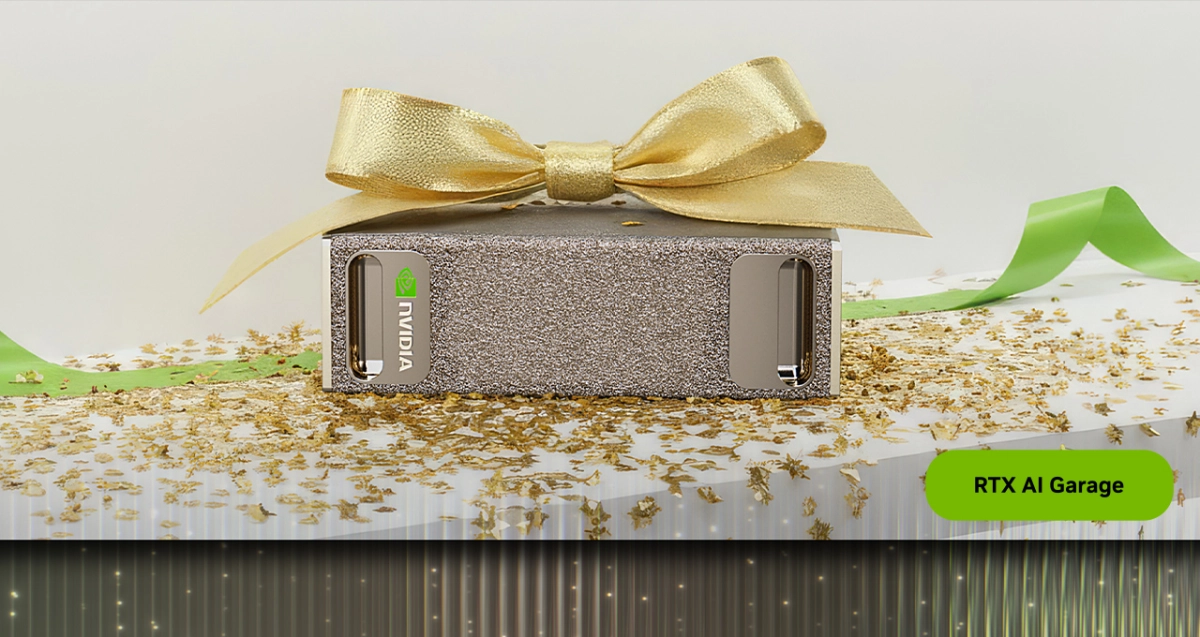
The DGX Spark represents a significant advancement in local AI development, offering a compact desktop supercomputer with capabilities far exceeding typical consumer PCs. Built on the NVIDIA Grace Blackwell architecture, it delivers a petaflop of FP4 AI performance and 128GB of unified CPU-GPU memory, addressing critical bottlenecks for larger models and advanced fine-tuning techniques. This robust local capacity enables developers to tackle models exceeding 30 billion parameters and execute memory-intensive full fine-tuning or reinforcement learning workflows without relying on cloud instances. DGX Spark effectively democratizes access to high-end AI compute, allowing for rapid iteration and experimentation on complex tasks, from LLM fine-tuning to high-resolution diffusion models, directly from a developer's desk. Its ability to bypass cloud queues and provide immediate access to powerful hardware is a game-changer for agile AI development.