

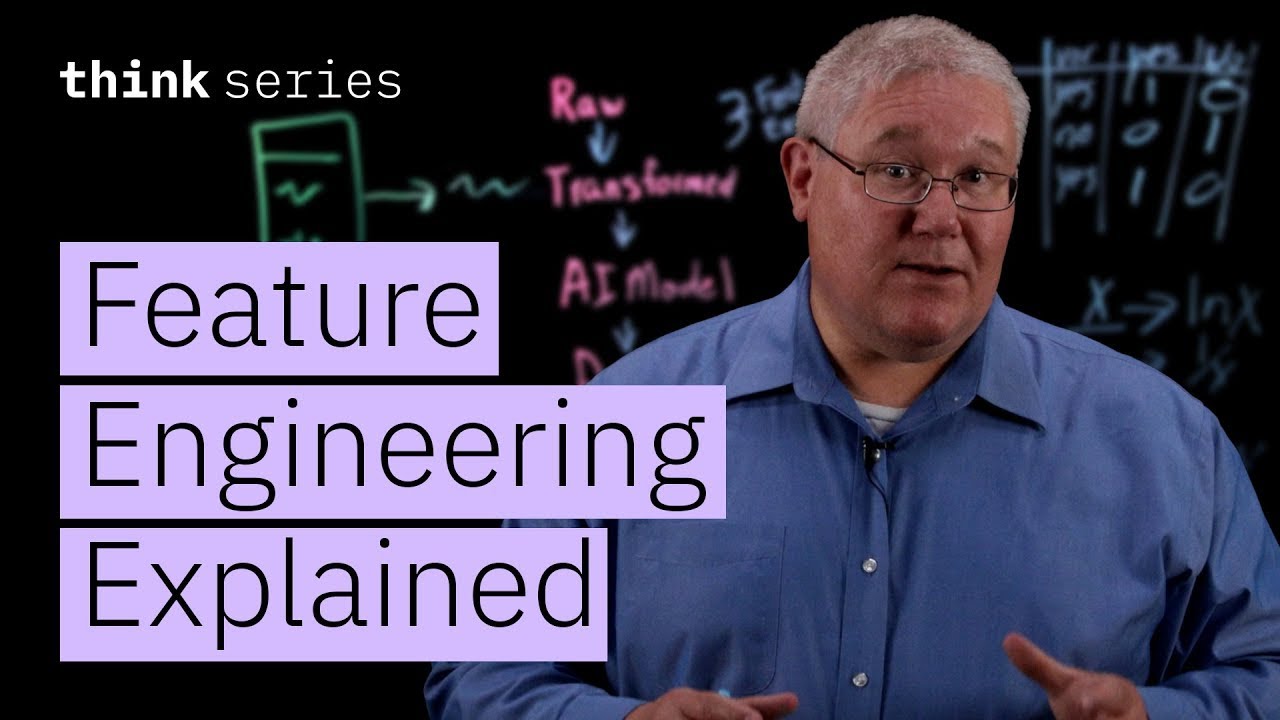
In the relentless pursuit of intelligent systems, the journey from raw data to actionable insights is often oversimplified. Yet, as Shad Griffin, an AI Engineer at IBM, elucidates, a critical intermediary step, feature engineering, serves as the bedrock for robust and predictive artificial intelligence models. It is the often-overlooked crucible where disparate data elements are forged into meaningful inputs, directly influencing an AI's efficacy.
Griffin delivered a concise presentation on the critical role of feature engineering in artificial intelligence. He highlighted that while the processes of AI model building and deployment receive significant attention, the transformation of raw data into a usable format is arguably the most vital. This initial stage, often referred to interchangeably as data pipelines, ETL (Extract, Transform, Load), or variable transformation, is fundamental to an AI system's ultimate success.
The core essence of data science, Griffin explains, is to "take raw information that exists in the world and from that information, we generate actionable insights." Raw data, in its native state, is frequently unsuited for direct consumption by AI algorithms. This necessitates meticulous manipulation to unveil underlying patterns and relationships that empower models to derive accurate conclusions. As Griffin states, "One part that I don't think gets quite the attention that it deserves is this part right here: going from raw information to transformed information. And this is what we call Feature Engineering."
Consider the common challenge of categorical data, such as "yes" or "no" responses, which many AI models cannot directly process. Griffin explains the technique of "dummy variables" or "one-hot encoding," where a single categorical column is expanded into multiple numerical columns. For instance, a "yes" entry might become a '1' in a 'yes' column and a '0' in a 'no' column, effectively translating qualitative information into a quantitative format digestible by the AI.
Beyond simple categorical conversions, feature engineering encompasses a spectrum of sophisticated transformations. Numerical data, for example, might undergo natural log or inverse transformations to normalize distributions or emphasize specific relationships within the dataset. Furthermore, combining existing variables through multiplication or other mathematical operations can create entirely new features that capture complex interactions not evident in individual data points. This iterative process of refinement enhances the data's signal-to-noise ratio, allowing AI models to learn more effectively.