


The current trajectory of artificial intelligence investment presents a paradox: while the potential of the technology is undeniably transformative, the market is exhibiting classic signs of a speculative bubble, even to those at its very core. This was the central tension explored by CNBC's Deirdre Bosa in a recent segment, where she spoke with industry leaders like Dan Niles of Niles Investment Management, Josh Woodward, Alphabet’s VP of Google Labs, and Aaron Ginn, CEO of Hydra Host, about the escalating capital inflow, Google's strategic resurgence, and the underappreciated geopolitical risks threatening market leaders like Nvidia.
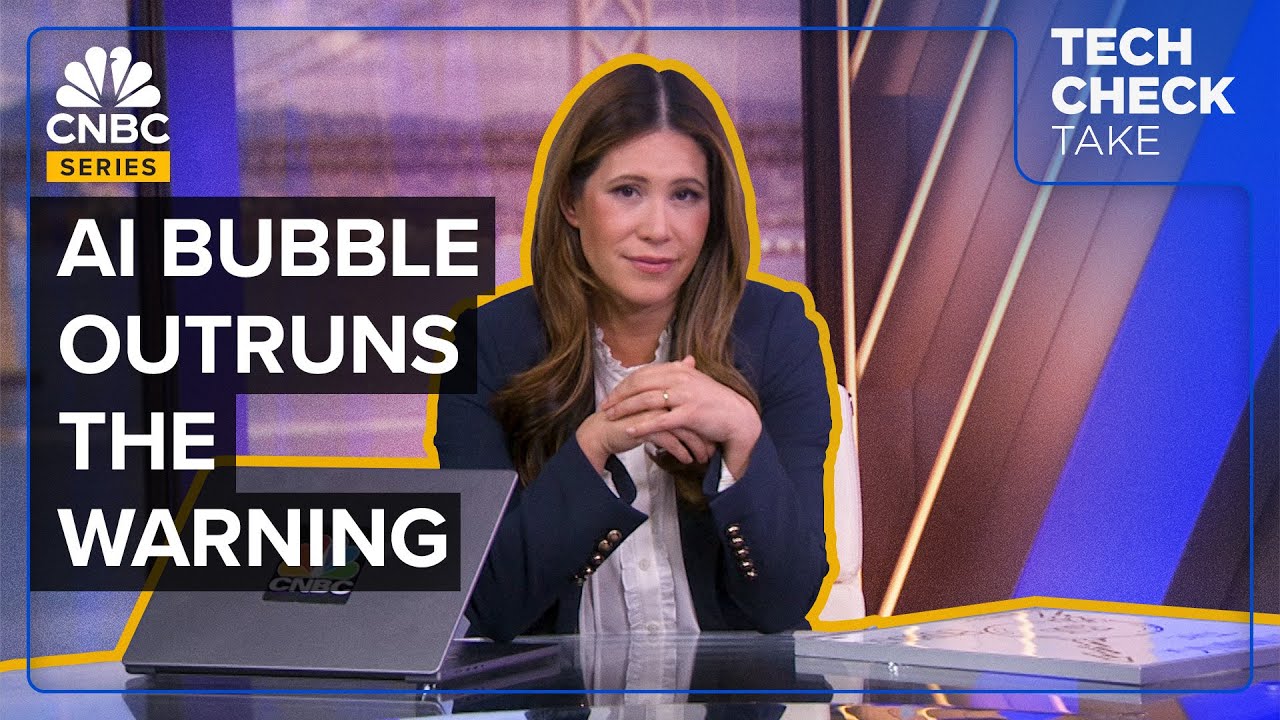
Dan Niles cut straight to the chase, asserting, "Unless you're the most optimistic person on the planet, you know you're in a bubble. Right? There is no question you're in a bubble." This sentiment, once confined to skeptics and Wall Street bears, is now echoed by tech titans. Sundar Pichai, Alphabet's CEO, acknowledged the presence of "irrational exuberance," though he balanced it with "rational excitement" for AI's potential, noting that investment cycles inherently "overshoot." Demis Hassabis, CEO of Google DeepMind, went further, stating plainly that "we're seeing classic signs of an AI bubble." This candidness from within the very companies driving the AI revolution underscores a critical insight: the market's enthusiasm is outpacing tangible, immediate capabilities, leading to valuations that may be unsustainable. Scott Wapner highlighted the absurdity of "seed rounds with just nothing really being tens of billions of dollars," calling it "a little unsustainable," while Anthropic CEO Dario Amodei expressed deep discomfort with a future where a handful of companies dictate the technology's path. Yet, despite these mounting warnings, capital continues to flood into the sector, creating a palpable disconnect that fuels the bubble's expansion.
Related Reading
- Google's AI Ascent Rattles OpenAI's Financial Foundation
- Google’s Full Stack AI Strategy Takes Center Stage with Nano Banana Pro
- Google's Gemini 3 Dominance Reshapes AI Landscape
Amidst this backdrop of market anxiety, Google is staging a remarkable AI comeback, largely unburdened by the very bubble fears its leaders articulate. The company, once perceived as an "AI laggard," is now demonstrating a formidable "full stack edge" that positions it as a dominant force. Josh Woodward, a key operator behind Google's AI push, radiated enthusiasm, stating, "I'm never had more fun than right now. And I think it's partly the pace, it's partly the abilities these models give to kind of people who can imagine new use cases and products. It's unparalleled." This resurgence is powered by Google's integrated approach: developing its own custom silicon (TPUs), crafting powerful proprietary models like Gemini 3, and leveraging its vast distribution network. The recent launch of Nano Banana Pro, an image generation model built on Gemini 3 and served on Google's TPUs, exemplifies this strategy. It empowers users with "professional design superpowers," transforming complex data into infographics and slide decks with unprecedented ease. This seamless integration of hardware, software, and user accessibility is a clear differentiator, allowing Google to execute on its AI vision at scale and, crucially, at a lower cost than many rivals.
While the West grapples with the AI bubble and Google reclaims its leadership, a significant, yet underappreciated, threat looms from China, particularly for hardware giants like Nvidia. Nvidia's recent blow-out earnings, with data center revenue up 62% year-over-year and a projected 65% growth, painted a picture of insatiable demand. However, a deeper look reveals vulnerabilities. Aaron Ginn, the "GPU whisperer," articulated a crucial insight: the Western market's "attitude" towards Chinese AI is creating a self-inflicted wound for companies like Nvidia. He argues that many investors in the West "don't really understand the threat of Huawei because they don't even understand what the advantage of Nvidia is." Nvidia’s dominance stems from its integrated software and hardware ecosystem, akin to Apple. China, driven by a national imperative for internal stability and technological sovereignty, is actively building its own parallel AI ecosystem. Chinese tech giants are being directed to switch from Nvidia chips to domestic alternatives from companies like Huawei, Biren Technology, and Moore Threads. These Chinese firms are developing open-source models that compete with leading US models, but at a "fraction of the cost and compute." Ginn emphasizes that "the world is embracing open source," not closed, proprietary models. China is strategically using open-source models as a means to sell its own hardware globally, effectively offering infrastructure at "zero marginal cost." This aggressive, government-backed push, coupled with the global trend towards low-cost models, poses a profound long-term risk to Nvidia's market share and profitability, a risk that remains largely underestimated by the Western investment community.

