

Stripe paid $10 billion for the layer between AI models. Travis Kalanick raised $1.7 billion for the factory floor.

Physical AI and AI routing infrastructure dominated the week of July 21-27: Atoms raised $1.7B, Etched hit a $10.3B valuation, and Stripe is in talks to buy OpenRouter for $10B.

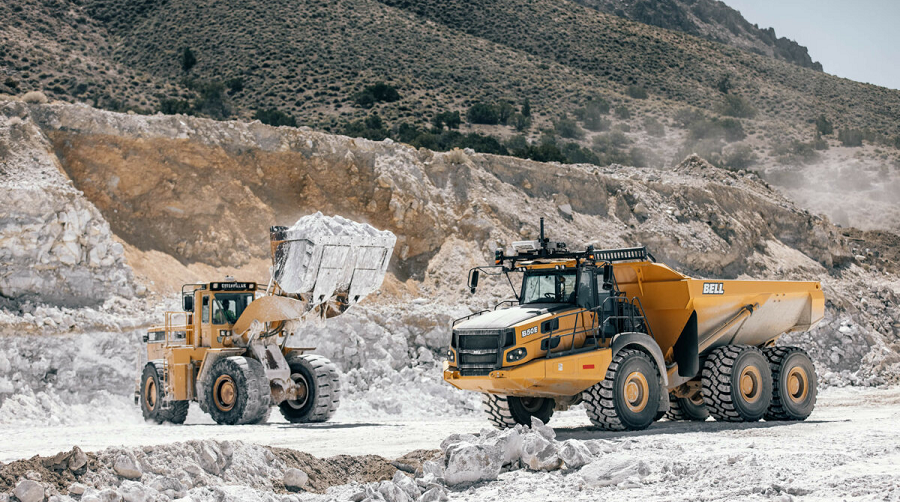
Atoms autonomous vehicle technology from Travis Kalanick's $1.7B industrial AI bet
Atoms, Travis Kalanick's industrial automation company, raised $1.7B led by a16z to deploy AI in restaurants, mines, and transportation

Two stories defined the week of July 21 in AI venture capital, and they point in the same direction. On July 24, The Wall Street Journal reported that Stripe is in talks to acquire OpenRouter for approximately $10 billion. On July 23, Travis Kalanick's industrial automation startup Atoms closed $1.7 billion in equity and debt financing, led by Andreessen Horowitz, with Uber as a co-investor. Neither company is building a foundation model. Neither company is building an AI product in the traditional sense. Both are building infrastructure. One is the routing layer between AI models and the enterprises that use them. The other is the infrastructure that puts AI-controlled machines in restaurants, mines, and transportation depots. The week's capital allocation voted, loudly, for the layer that sits beneath the AI product.

The Boring Company's $4 billion raise at a reported $20 billion valuation led the week by size, but it is the least instructive of the big checks: Elon Musk's tunneling venture is a physical infrastructure bet that predates the current AI cycle. Strip it out, and the remaining capital deployed comes to approximately $4.5 billion. Within that figure, physical AI hardware and robotics accounted for $2.2 billion across three deals: Atoms ($1.7 billion), Genesis AI (reportedly in talks to raise $500 million), and Ropedia ($22 million). AI data center infrastructure accounted for another $1.13 billion between Fluidstack ($830 million) and Etched ($300 million). That is $3.3 billion out of $4.5 billion, or roughly 73 cents of every non-tunneling dollar this week, going to physical infrastructure and the infrastructure that powers it. Software-only AI companies shared the remaining 27 cents.

This pattern is not accidental. StartupHub.ai data across 74 tracked rounds in robotics and physical AI sectors shows $16.4 billion deployed in 2026 to date, against $1.8 billion across 27 rounds in all of 2025. Capital into this category has grown roughly nine times year over year. The vocabulary is crystallizing at the same pace: "physical AI," "embodied AI," and "large behavior models" have moved from research paper language to investor pitch decks in under eighteen months.

The numbers

Metric Jul 21-27 (this week) Jul 14-20 (prior week) Change
Total capital raised $8.5B $25.2B -66%
Rounds with disclosed amounts 33 61 -46%
Median check size $24M $65M -63%
Seed rounds 11 10 +10%
Series A rounds 8 13 -38%
Robotics and Physical AI capital $2.2B $682M +222%

The prior week's headline number was distorted by DeepSeek's $7 billion round. Strip that outlier and the prior week total was approximately $18.2 billion, still more than double this week. The median check size tells a more interesting story than the total: $65 million last week versus $24 million this week reflects that late-stage capital concentration gave way to a week where Seed and Series A accounted for 19 of 33 rounds. Seed-stage activity actually held steady (11 this week versus 10 last week). The compression happened above Seed: Series B, C, and D rounds fell from 13 combined the prior week to just 2 this week.

Three robotics companies raised in one week, and that is not noise

When multiple unrelated companies in the same narrow sector announce rounds in the same five-day window, the usual explanation is coincidence or calendar clustering. In this case, the evidence points to a coordinated market signal. atoms com Atoms closed $1.7 billion in equity and debt to deploy AI-controlled machines in restaurant, mining, and transportation operations. Uber co-invested, giving the round a strategic dimension: Kalanick's CloudKitchens operating infrastructure, accumulated over eight years, becomes the training and deployment environment for Atoms' robotics systems. Andreessen Horowitz led, with Ben Horowitz joining the board. The framing is explicit: Atoms is not selling robots. It is deploying and operating them, taking a share of the economic value produced rather than charging a hardware license fee. That business model, operating as-a-service rather than selling hardware, is a meaningful structural bet on margin durability.

bloomberg com Genesis AI, a general-purpose robotics startup, is reportedly in talks to raise $500 million, per Bloomberg. ropedia ai Ropedia raised $22 million pre-Series A to build data infrastructure for embodied AI systems: the training data pipelines that physical AI companies need to teach robots how to move through unstructured environments. Ropedia is the picks-and-shovels play in the physical AI category, which is notable because that category is now large enough to have its own infrastructure layer. Three weeks ago, a company building data pipelines for embodied AI would have been a speculative niche bet. This week, it raised at a pre-Series A stage, suggesting investors are treating physical AI data infrastructure as a necessary input with its own defensible position.

The language shift reinforces this reading. "Embodied AI" appears in Ropedia's disclosed investment type, a term that did not appear in any disclosed funding round before 2026. "Physical AI" is Atoms' primary market descriptor, translated directly from Kalanick's investor materials. Both terms signal the same thing: AI that must reason about and act on the physical world, with constraints that software-only AI does not face, including latency, sensor noise, mechanical failure, and the inability to roll back a bad decision the way a software bug can be patched. The vocabulary is crystallizing, and capital is following it.

Etched is betting $10.3 billion that transformers never die

etched com Etched raised $300 million in a Sequoia-led Series C, doubling its valuation from $5 billion to $10.3 billion in seven months. The company builds chips designed specifically for transformer architecture AI inference. That specificity is the entire thesis, and also the entire risk. Every other major chip company, including Nvidia, AMD, and a dozen startups, builds chips that can run multiple model architectures. Etched builds chips that only run transformers. If a successor architecture gains commercial traction, Etched's hardware becomes worthless in the specific use case it targets.

The round suggests Sequoia, Andreessen Horowitz, SK Hynix, and Jane Street are pricing that risk as low. The timing matters: Etched announced it had manufactured working chips and booked $1 billion in orders before closing the Series C. TechCrunch reported that Sequoia described this as "the highest valuation ever for a Sequoia-led Series C." This is not a pre-product bet at $10.3 billion. It is a bet on a company with production hardware and a real order book, made by investors who have looked at the near-term AI architecture landscape and concluded that transformers will remain the dominant inference target long enough for Etched to generate returns at this valuation. That conclusion is not about transformers being optimal. It is about transformers being entrenched. Anthropic, OpenAI, Google, and Meta's production models all run on transformer variants. The replacements, including state space models and hybrid architectures, have not demonstrated production-scale commercial equivalence at the scale where Etched's chip economics matter.

The implicit argument is that transformer architecture has already won the commercial inference market for the next five to seven years, regardless of what happens in research. Etched's investors are not predicting the future of AI architecture. They are predicting the pace at which enterprises will migrate away from a working, deployed architecture. History suggests that pace is slow.

Stripe bought the routing layer, and that revalues what sits between AI models and enterprises

openrouter ai OpenRouter operates as the intermediary between AI model providers and the developers and enterprises that consume them. A company using OpenRouter sends a request; OpenRouter routes it to the appropriate model based on cost, latency, and capability requirements; the user gets a response. The company was valued at $1.3 billion in a May 2026 funding round. By late July, stripe com Stripe is reportedly in talks to acquire it for approximately $10 billion, a roughly 7.7 times increase in eight weeks.

The business logic from Stripe's perspective is clearer than it first appears. Axios reported the framing internally as "AI currency": Stripe sees OpenRouter as controlling the flow of AI compute requests the way payment rails control the flow of money. Stripe already processed OpenRouter's customer payments before any acquisition talks. The routing layer is, functionally, an interface that determines which API gets called for a given enterprise workload. Stripe's core business is determining which payment processor gets called for a given transaction. The two businesses are structurally similar: they both sit in middleware, they both accrue value by being the default choice, and they both benefit from network effects that make switching costly once integrations are built.

If that framing holds, the routing layer between AI models is worth as much as payment infrastructure. That has significant implications for every company building similar middleware: LLM gateways, AI orchestration platforms, model-serving APIs. OpenRouter's implied exit multiple gives those companies a new reference point. Whether this specific deal closes or not, the valuation signal has already escaped into the market.

Construction tech ran three separate experiments in the same week

Three companies targeting workflow automation in construction and adjacent industries announced rounds in the same five-day window, each from a completely different angle. This is the kind of micro-cluster that does not appear in the top-line numbers but reveals where patient institutional capital is placing bets on a sector that has seen almost no productivity improvement in thirty years.

prentis ai Prentis, co-founded by Reid Hoffman and Marc Pincus, is in talks to raise $100 million at a $1 billion valuation. The company trains AI models to learn how office workers navigate routine workflows, including insurance claims and customs refunds, then builds agents that can control computers to automate those tasks. Prentis charges a share of the savings its agents produce rather than a seat license, which means its revenue scales with the value it creates. The Hive-32B model it has deployed reportedly beats both GPT-5.4 and Claude Opus 4.6 on computer-use benchmarks at one-tenth the per-task cost. At a projected $75 million annualized run rate by Q3 2026, that model appears to be working. Stripe paid $10 billion for the layer between AI models. Travis Kalanick raised $1.7 billion for the factory floor. 1872 raised $15 million in Seed funding to bring machine learning to construction hardware. cascadeprojects io Cascade raised $3.5 million in Seed funding to help construction firms use predictive analytics when bidding on projects, targeting the estimation error that causes most construction cost overruns.

Three different layers of the same industry, funded in the same week: agentic workflow automation at the office layer, ML hardware at the physical layer, and predictive analytics at the planning layer. Each of these bets is small enough to be dismissed individually. Together, they look less like coincidence and more like a sector rotation beginning to show up across deal sizes simultaneously.

Language drift: "Agentic AI" is now the default descriptor for new startups

Looking at the sector taxonomy of the 600-plus startups published to StartupHub.ai in the past seven days, one combination dominates: "Agentic AI" paired with "AI Agent" and "Workflow Automation" appears as the primary cluster in more distinct sector-tag combinations than any other grouping, with 15 or more startups sharing some version of this taxonomy across the week. Compare this to the vocabulary that dominated six months ago, which used "AI Platform" or "Enterprise Software" with "Generative AI" as the modifier. The shift is meaningful: "Agentic" implies autonomy, task completion, and consequence, rather than generation and assistance. Companies are no longer positioning their AI as a tool a human uses. They are positioning it as an agent that completes tasks independently.

Two secondary terms are also newly prominent. "Voice AI" has separated from "Conversational AI" as a standalone descriptor, appearing in dedicated sector combinations rather than as a subcategory of customer service automation. "Contact Center AI" has become a primary descriptor rather than a deployment context. This reflects a maturing market: the AI category has fragmented into specific verticals rather than a single platform play, and the self-descriptions of new companies are reflecting that fragmentation.

Microtrends worth watching

  • Identity infrastructure is getting two simultaneous bets. Sam Altman's World raised $52.5 million via crypto sale, and World Foundation separately raised another $52.5 million for World ID infrastructure. The signal: biometric proof-of-humanity infrastructure is being funded specifically because AI makes fake identity easier to produce at scale. The positioning is explicitly defensive.
  • Anduril's $100 billion valuation is reportedly in play. The defense tech company is in talks for a round that would value it at over $100 billion, more than three times its previous mark. If it closes at that number, it resets the valuation ceiling for defense AI globally.
  • Cybersecurity had three small rounds in the same week. Abstract Security raised $25 million in a Series A extension, Beelzebub raised $3 million, and Ossprey raised $2.65 million. None alone would attract notice. Together, they suggest seed and early-stage cybersecurity deal flow is active even as later-stage rounds in the sector have slowed.
  • Moonshot AI went public at a $30 billion valuation. The maker of the Kimi assistant, which crossed $300 million in annual recurring revenue in June 2026, listed in Hong Kong. Its trajectory from a $4.3 billion private valuation in December 2025 to a $30 billion public valuation in seven months is among the fastest in the AI sector globally. It also creates a public market benchmark for Chinese AI capabilities companies that did not exist six months ago.
  • Fluidstack's $830 million Series A is building the data center backbone for Anthropic's $50 billion program. The round, closed in January but announced July 21, reveals who is actually constructing the physical infrastructure behind the largest AI lab capital commitments. Fluidstack claims it can deliver gigawatts of compute capacity in six months, against the industry standard of 18 to 24 months. If that claim holds at scale, it changes the economics of large-scale AI infrastructure buildout.

What might happen next week

Two predictions, both specific enough to be wrong.

First: Anduril will formally announce its new round at or near the $100 billion valuation by August 3. The company has been "in talks" per TechCrunch's July 24 reporting, and rounds at this scale rarely stay in talks for more than two weeks after the first leak. If it closes, expect the defense AI valuation conversation to reset, with Shield AI, Sarcos, and their peers repricing in investor models.

Second: At least one more robotics or physical AI company will announce a round above $200 million in the coming week. The Atoms close and the Genesis AI talks, happening simultaneously, suggest a pipeline of physical AI raises that were coordinated or pulled forward by the first disclosures. When a category gets two headline rounds in one week, the next company in the same category tends to accelerate its announcement. The category now has enough velocity that a quiet week in robotics would itself be the anomaly.

What is less likely than the headlines suggest: the Stripe-OpenRouter deal closing as reported. Negotiations at $10 billion for an eight-month-old company with a $1.3 billion prior valuation are described as "fluid" by the WSJ's sources. That language often precedes a deal falling apart or a competing bid arriving. OpenRouter's infrastructure position is real. Whether Stripe is the right buyer at the right price is a different question, and the answer will arrive before end of Q3.

© 2026 StartupHub.ai. All rights reserved. Do not enter, scrape, copy, reproduce, or republish this article in whole or in part. Use as input to AI training, fine-tuning, retrieval-augmented generation, or any machine-learning system is prohibited without written license. Substantially-similar derivative works will be pursued to the fullest extent of applicable copyright, database, and computer-misuse laws. See our terms.