

The chasm between cutting-edge AI tools and the practical needs of data professionals has long been a frustrating reality, particularly for those grappling with complex, unstructured data. Rohan Kodialam, Co-founder of Sphinx, illuminated this divide in a recent interview, explaining how current AI solutions, while adept at tasks like copywriting or software engineering, often fall short for data scientists, quantitative researchers, and analysts. His company, Sphinx, has emerged from this gap, launching with significant funding to redefine how machine intelligence truly collaborates with data.
Kodialam, whose career spans deep AI research into transformer-based models and high-stakes quant finance, spoke with Swyx of Smol AI, detailing the genesis and vision behind Sphinx. His experience building AI agents capable of navigating the unpredictable terrain of the stock market instilled a profound understanding: for AI to deliver real value, it must be "objectively correct" and capable of uncovering insights from complex, often messy, data. This isn't just about looking good; it's about generating revenue and solving tangible business problems.
The core issue, Kodialam explained, stems from two primary challenges. First, the "representation problem": Large Language Models (LLMs) inherently excel at understanding natural language and code, which are essentially artificial languages. However, they struggle to natively comprehend tabular, structured, or time-series data. Feeding such traditional datasets to LLMs often results in "junk out", unusable or nonsensical outputs. Second, the "reinforcement problem" highlights a fundamental mismatch in workflows. While many AI applications follow a linear "did I do X, if not, try again" loop, real-world data science, particularly exploratory data analysis (EDA) and cleaning, is inherently non-linear. It demands iterative exploration, backtracking, and making nebulous decisions that LLMs, prone to "mode collapse" (sticking to the most likely path), are ill-equipped to handle.
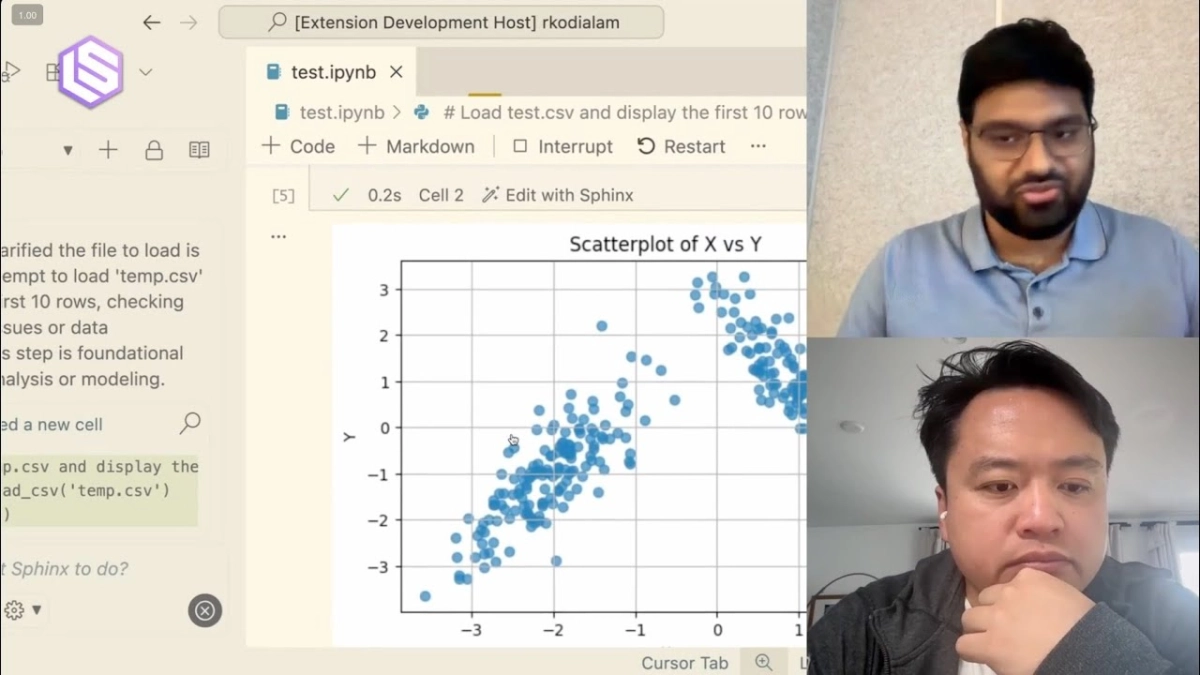
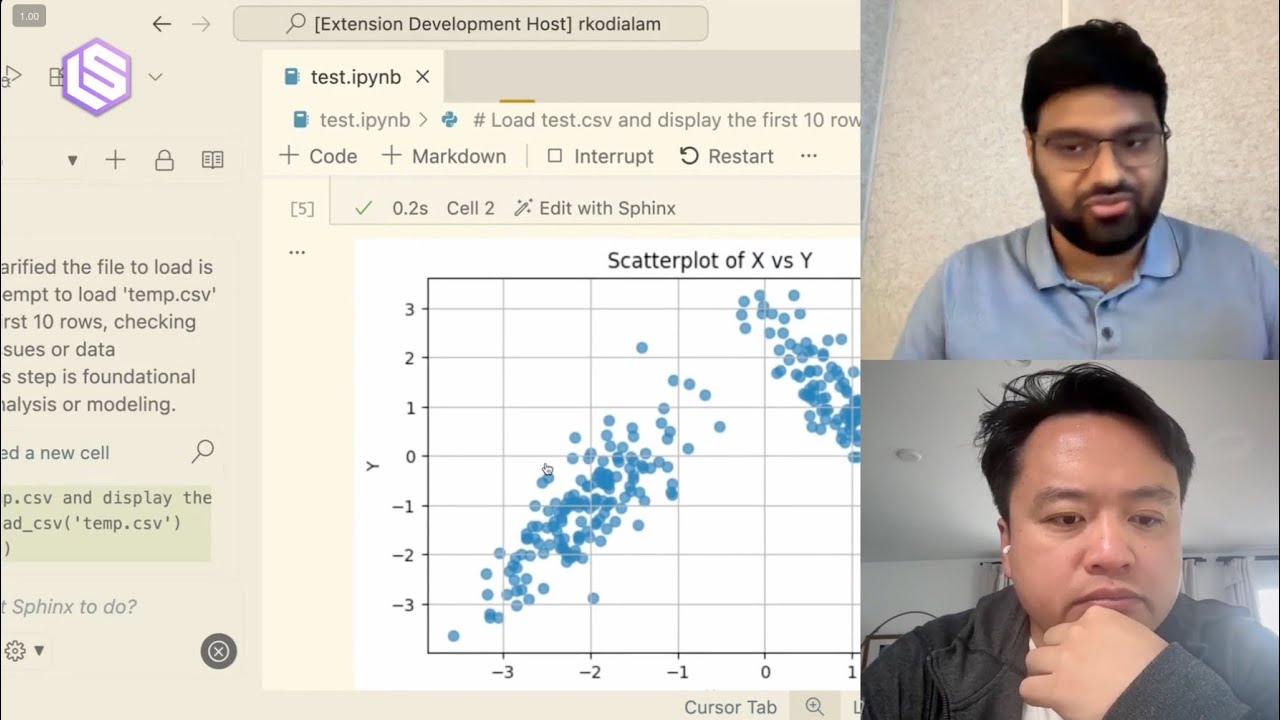
Sphinx addresses these limitations head-on by developing agentic co-pilots specifically designed for data professionals. Integrated directly into familiar environments like Jupyter Notebooks, Sphinx agents combine a native understanding of diverse data types with exploratory capabilities. They are built to act as genuine thought partners, capable of asking hard questions, iterating through possibilities, and learning from human intervention.
This approach starkly differentiates Sphinx from other AI tools on the market. Unlike generic code-generation co-pilots such as GitHub Copilot, which primarily assist software engineers in writing code, Sphinx focuses on the unique complexities of data science. Similarly, it moves beyond traditional Business Intelligence (BI) tools that primarily answer fixed, pre-defined questions. Sphinx aims to tackle the "hard questions", those that require deep exploration, nuanced interpretation, and iterative refinement, such as "What can I change about my business to make more money?" rather than simply "How much revenue did we make last quarter?"