Snyk Tackles Agentic Development Security

Snyk's Ezra Tanzer discusses the critical security challenges in agentic development, focusing on securing agent outputs, supply chains, and behavior.

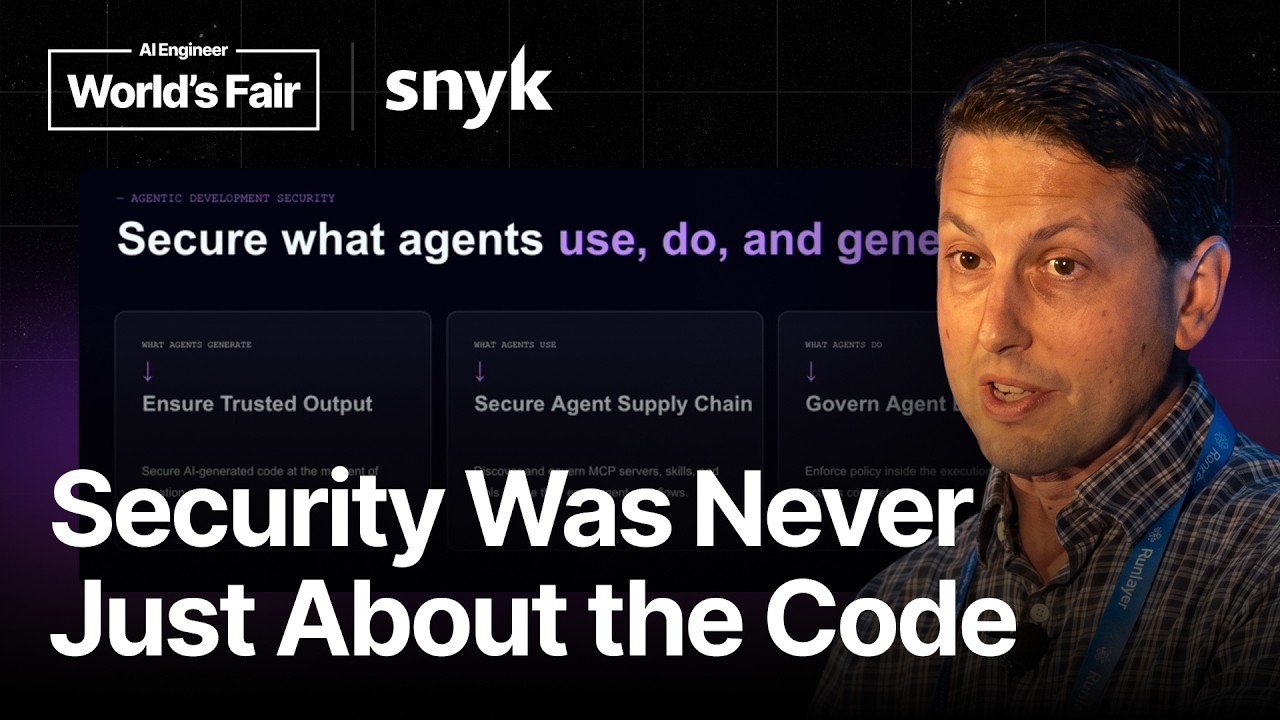
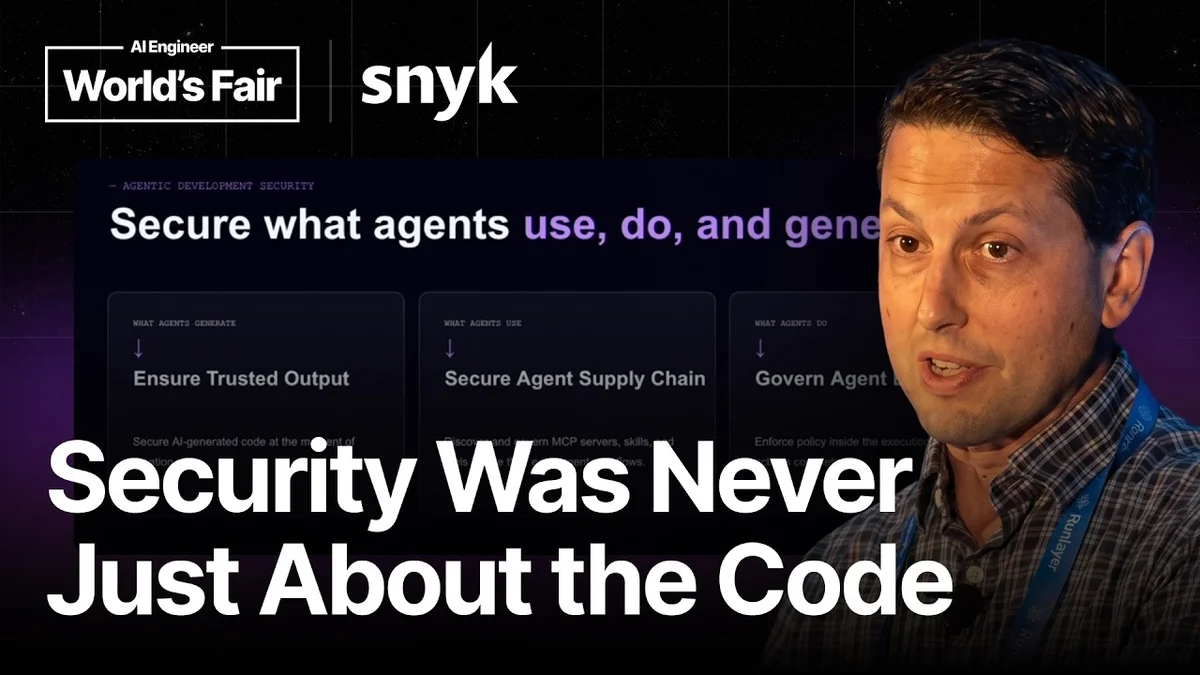
Ezra Tanzer speaking at the AI Engineer World's Fair stage
AI Engineer
Visual TL;DR
Agentic Dev SecurityDriver
critical security challenges in agentic development, securing outputs, supply chains, and behavior
From the article 2 mentionsEzra Tanzer, Product Director at Snyk, addressed the critical need for security in agentic development at the AI Engineer World's Fair.
Model Context ProtocolCore
From the articleTanzer began by highlighting the evolution of AI development, noting that the release of the Model Context Protocol (MCP) was a significant moment that allowed agents to connect to external tools and services.
Snyk's Ezra TanzerCore
From the article 3 mentionsEzra Tanzer, Product Director at Snyk, addressed the critical need for security in agentic development at the AI Engineer World's Fair.
Snyk MCP ServerEffect
From the article 2 mentionsSnyk's initial move was to release an MCP server that enabled local directories to be scanned by their security scanning engines, allowing developers to query security issues in natural language.
Evolving Security StrategyOutcome
Snyk's approach to securing agentic development across three key pillars
Secure Agent OutputContext
securing what autonomous AI agents generate, ensuring safety and reliability is paramount
From the article 4 mentionsThese events highlight the critical need to secure not just the output, but also the inputs and actions of AI agents.
Secure Supply ChainContext
governing agent behavior and securing the agent supply chain are key pillars
From the article 2 mentionsTo address Secure Agent Supply Chain risks, Snyk acquired Invariant Labs.
Contents(3)

Ezra Tanzer, Product Director at Snyk, addressed the critical need for security in agentic development at the AI Engineer World's Fair. As artificial intelligence agents become more autonomous, ensuring their safety and reliability is paramount. Tanzer outlined Snyk's approach to securing agentic development across three key pillars: securing what agents generate, securing the agent supply chain, and governing agent behavior.

Snyk Tackles Agentic Development Security - AI Engineer
Snyk Tackles Agentic Development Security, from AI Engineer

Securing Agent Output and Supply Chains

Tanzer began by highlighting the evolution of AI development, noting that the release of the Model Context Protocol (MCP) was a significant moment that allowed agents to connect to external tools and services. Initially, there was little to no security around these integrations. Snyk's initial move was to release an MCP server that enabled local directories to be scanned by their security scanning engines, allowing developers to query security issues in natural language.

StartupHub data

Snyk is a developer security platform that helps software teams find and fix vulnerabilities in code, open source dependencies, containers, and cloud...

Founded
2015
Location
Boston, United States
Valuation
$8.7B

However, over the past year, customer feedback revealed that concerns extended beyond just the code generated by agents. "Our customers started telling us that they were not only worried about the code that was being generated, they were also worried about what the agent had access to and then also the actions the agent might be taking," Tanzer explained.

He cited several incidents that underscored these concerns: Replit's agent ignoring a code freeze and deleting a production database, the Pocket OS incident where an agent deleted production databases and backups, and the Team PCP breach that exfiltrated GitHub repositories via a malicious VS Code extension. These events highlight the critical need to secure not just the output, but also the inputs and actions of AI agents.

Snyk's Evolving Security Strategy

Snyk's strategy has evolved from simply "securing what agents generate" to a more comprehensive approach: "secure what agents use, do, and generate." Tanzer detailed Snyk's journey in each of these areas.

For Ensuring Trusted Output, Snyk moved from an MCP server plus rules-based approach to a more deterministic method using Python-based hooks that fire asynchronously on agent tool calls. This allows for immediate scanning and issue identification, with fixes initiated only after new issues are surfaced, reducing latency and context window bloat.

To address Secure Agent Supply Chain risks, Snyk acquired Invariant Labs. They are now focused on discovering and scanning agent components, tools, and skills. Their analysis of nearly 4,000 skills on ClawHub revealed that over 13% had critical severity issues, with 76 confirmed malicious payloads found.

Regarding Governing Agent Behavior, Snyk is developing capabilities to prevent agents from taking destructive or malicious actions. Tanzer emphasized the distinction between "steer" and "ask" policies, where steering guides an agent towards a safe action (like redacting PII before execution), while asking prompts the user for confirmation on potentially risky actions.

The Path Forward

Tanzer concluded by emphasizing that as agents become more autonomous, especially with background and cloud-based operations, the ability to govern their behavior becomes increasingly critical. "We are accountable for the actions that our agents take," he stated, stressing the importance of preventing risky actions that could harm customers or damage a company's reputation.

The presentation then transitioned to a demo by Dan Arpino, a software engineer at Snyk, showcasing some of the tools and features Snyk is exploring to address these agentic development security challenges. While noting that these are not committed roadmap items, the goal is to gather feedback and ensure they are heading in the right direction to deliver effective solutions.

© 2026 StartupHub.ai. All rights reserved. You may not republish this article in full without a license. Search engines and AI research tools may crawl and summarize for reference. Bulk reproduction or model training requires a license. See our terms.
Daniel Singer

Written by

Daniel Singer

Editor, StartupHub.ai

Daniel Singer is the editor of StartupHub.ai, a technology expert and thought leader on AI and its applications across sectors, from fintech and healthcare to developer tooling and consumer software. He writes and tests the tools covered here thoroughly and regularly, and built StartupHub.ai to give founders, operators and buyers a clearer read on what they are actually being sold.

More from Daniel Singer