

Rep. Magaziner: AI Regulation is Needed

Rep. Seth Magaziner discusses the urgent need for proactive federal AI policy, balancing innovation with safety and economic impact.

4 min read
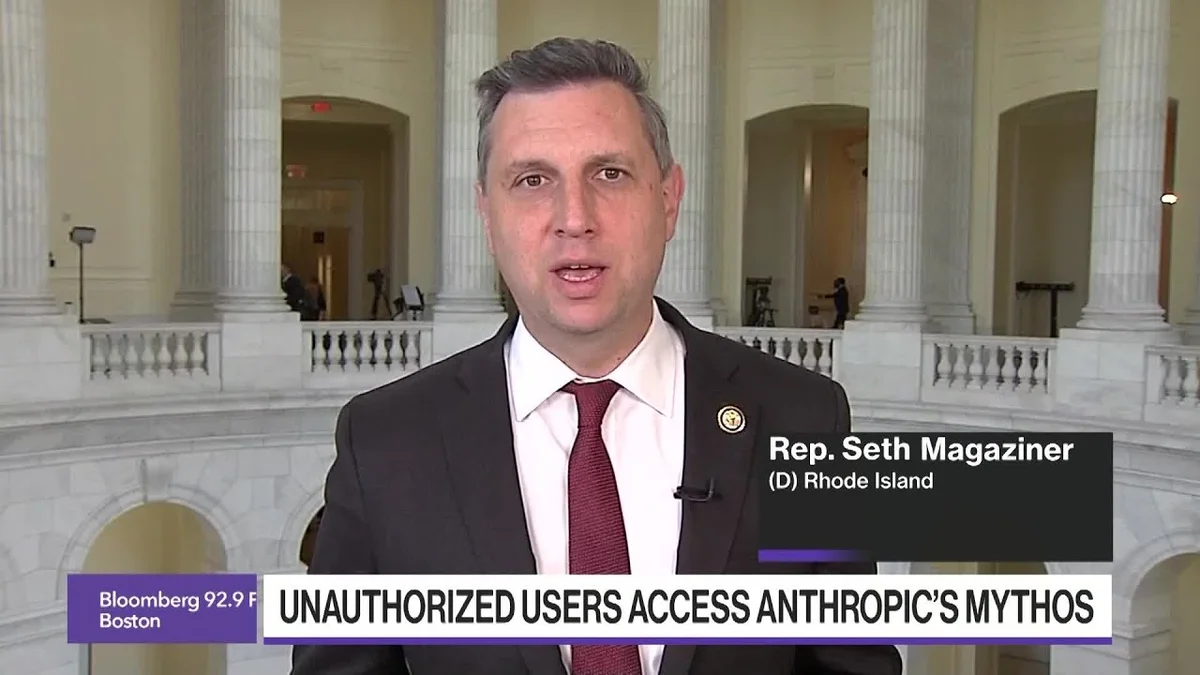
Representative Seth Magaziner speaking on a split screen with a news anchor.
Rep. Seth Magaziner discusses artificial intelligence regulation.· Bloomberg Podcast

Representative Seth Magaziner, a Democrat from Rhode Island and a member of the House Homeland Security Committee, recently discussed the critical need for a more robust federal policy framework to govern artificial intelligence. His comments came in the context of ongoing global discussions about AI safety and national security, highlighting concerns that current regulatory approaches may not adequately address the rapid advancements and potential risks associated with AI technologies.

Magaziner emphasized that while AI offers significant potential to improve various aspects of society, it also presents risks that require careful management. He stated that the current situation necessitates "a more proactive federal policy" to ensure that AI products are developed and deployed safely. This includes a dual focus on safeguarding national interests and maintaining a competitive advantage against global rivals, particularly China.

The Congressman outlined three key areas where he believes policy action is urgently needed. Firstly, there is a need to ensure the safety of AI products before they are released to the market. Secondly, the United States must work to maintain its competitive edge in AI development. Finally, Magaziner stressed the importance of protecting American workers from potential job displacement due to AI automation.

The full discussion can be found on Bloomberg Podcast's YouTube channel.
Related startups

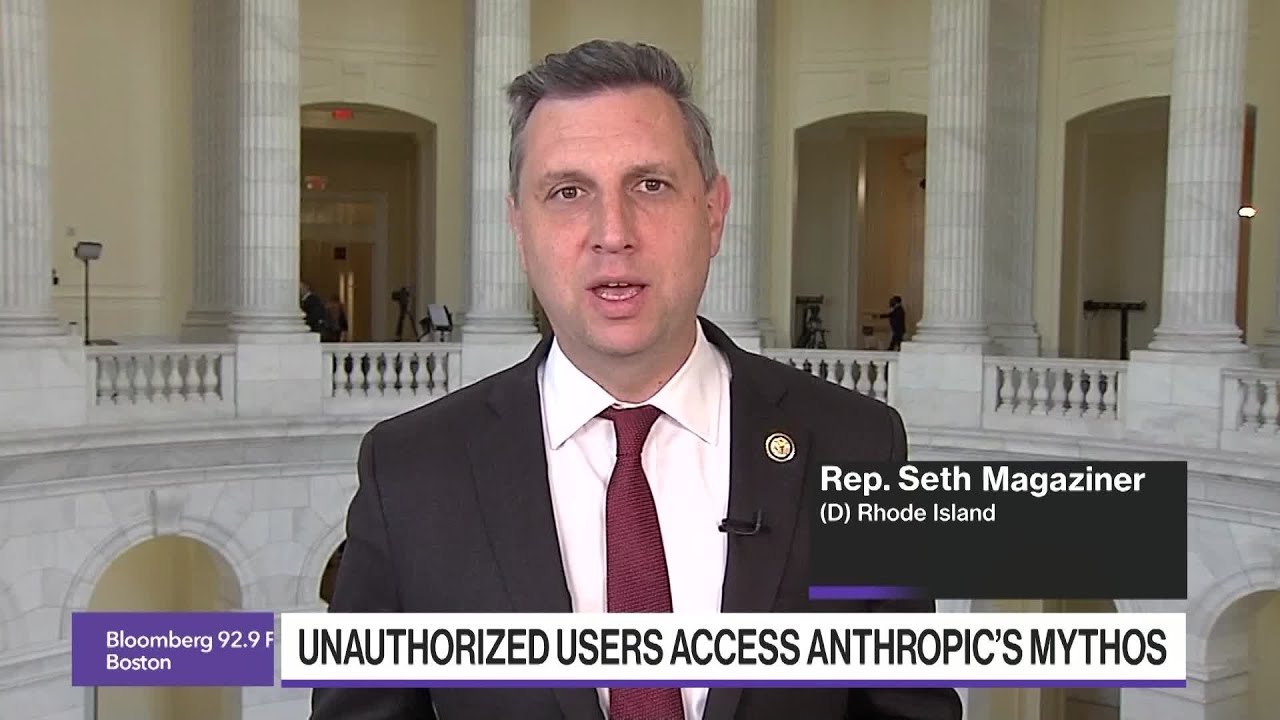
Mythos Breach Shows Need for AI Framework, Magaziner - Bloomberg Podcast
Mythos Breach Shows Need for AI Framework, Magaziner — from Bloomberg Podcast

AI's Dual Nature: Opportunity and Risk

Magaziner acknowledged the transformative potential of AI, noting that it has the ability to "improve the world dramatically". However, he immediately pivoted to the inherent risks, stating that AI also has the capacity to "throw the world into chaos". This duality underscores the complex challenge policymakers face in crafting regulations that foster innovation while mitigating potential harms.

He drew a parallel to past geopolitical events, suggesting that the current geopolitical climate, including tensions with Iran, exacerbates the urgency of addressing AI's potential for misuse. The Congressman's remarks suggest a growing awareness among lawmakers about the strategic implications of AI, extending beyond purely technological considerations to national security and international relations.

The Need for Proactive Regulation

Magaziner advocated for a shift from reactive to proactive regulatory measures. He believes that the current approach is insufficient, particularly in light of events such as the reported unauthorized access to Anthropic's "Mythos" model, which he cited as an example of the potential vulnerabilities. "It is time for a more proactive federal policy", he asserted, to guide the development and deployment of AI technologies.

His proposed policy objectives include:

  • Ensuring AI products are safe before market release.
  • Maintaining the United States' competitive edge in AI development.
  • Protecting workers whose jobs may be impacted by AI advancements.

He specifically mentioned the need to avoid a situation where AI is used to launch weapons without human control or to conduct surveillance of U.S. citizens, referencing concerns that have been raised in legislative debates surrounding surveillance powers.

Comparative Policy Stances

Magaziner drew a contrast between the current administration's approach and what he believes is necessary. He criticized the current administration's handling of foreign relations, suggesting that their policies have led to a situation where "the U.S. and Iran [are] deadlocked over Hormuz." He implied that this diplomatic impasse, coupled with a perceived disregard for civil liberties, necessitates a stronger legislative hand.

He stated that the government's actions have "given us a lot of reasons not to trust them to use the tools that they have at their disposal responsibly." This sentiment reflects a broader concern about executive overreach and the need for congressional oversight in matters of national security and surveillance.

Calls for Congressional Action

The Congressman explicitly called for Congress to take a more active role in shaping AI policy. He suggested that lawmakers should "put in place guardrails" to ensure responsible AI development and deployment. This includes a call for greater transparency and accountability from both government agencies and private AI developers.

Magaziner pointed to the recent short-term extension of Section 702 of the Foreign Intelligence Surveillance Act (FISA) as an example of a critical deadline that is approaching. He expressed his view that the extension, while necessary, highlights the ongoing debate about surveillance powers and the need for legislative reform. He stated, "We need to get the adults back in charge and recommit ourselves to diplomacy."

He also referenced the passing of Representative David Scott, a Democrat from Georgia, who served for 23 years. Magaziner described Scott as a "great man" who "made history" as the first African American to chair the House Agriculture Committee and served his district for over two decades. This personal note added a somber tone to the discussion, emphasizing the human element in the legislative process and the weight of responsibility that lawmakers carry.

© 2026 StartupHub.ai. All rights reserved. Do not enter, scrape, copy, reproduce, or republish this article in whole or in part. Use as input to AI training, fine-tuning, retrieval-augmented generation, or any machine-learning system is prohibited without written license. Substantially-similar derivative works will be pursued to the fullest extent of applicable copyright, database, and computer-misuse laws. See our terms.