

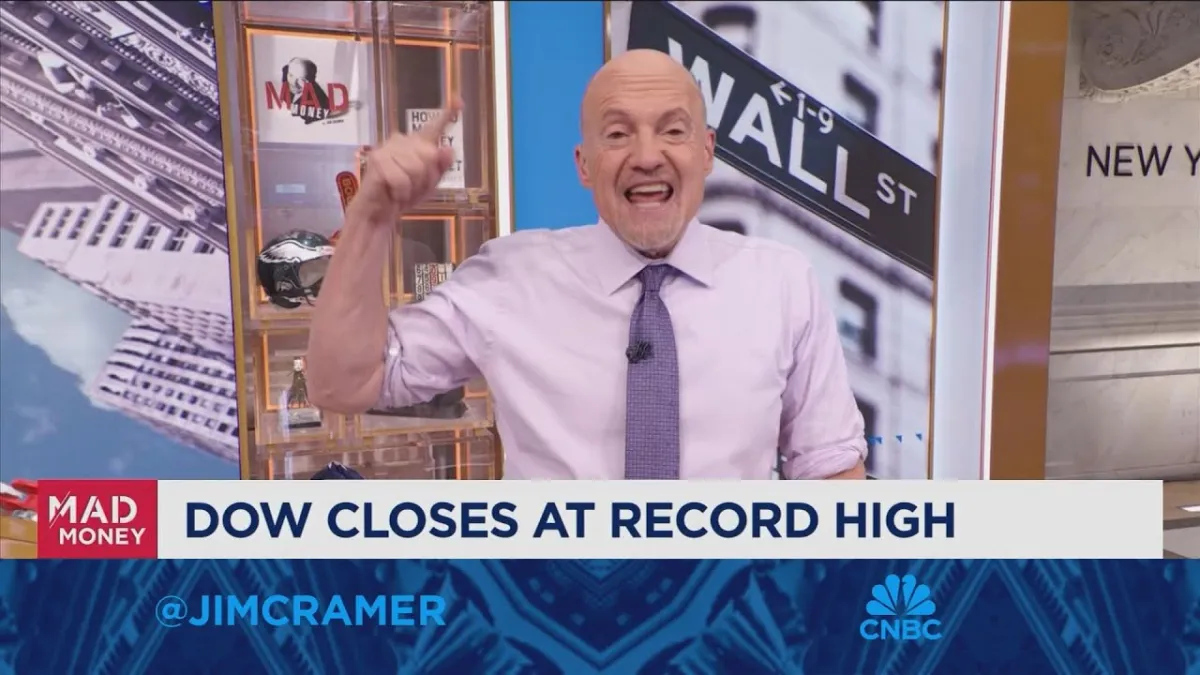
“This was a good day for the real economy, not-so-hot day for the artificial intelligence revolution,” declared Jim Cramer, host of CNBC’s Mad Money, from Salesforce’s Dreamforce conference. His commentary captured the essence of a turbulent Tuesday market session, highlighting a significant divergence in investor sentiment between established, tangible economic sectors and the high-flying, often speculative, realm of artificial intelligence and broader tech. Cramer’s analysis painted a vivid picture of a market grappling with macroeconomic realities, where the promise of future innovation temporarily took a backseat to the immediate concerns of interest rates, inflation, and geopolitical tensions.
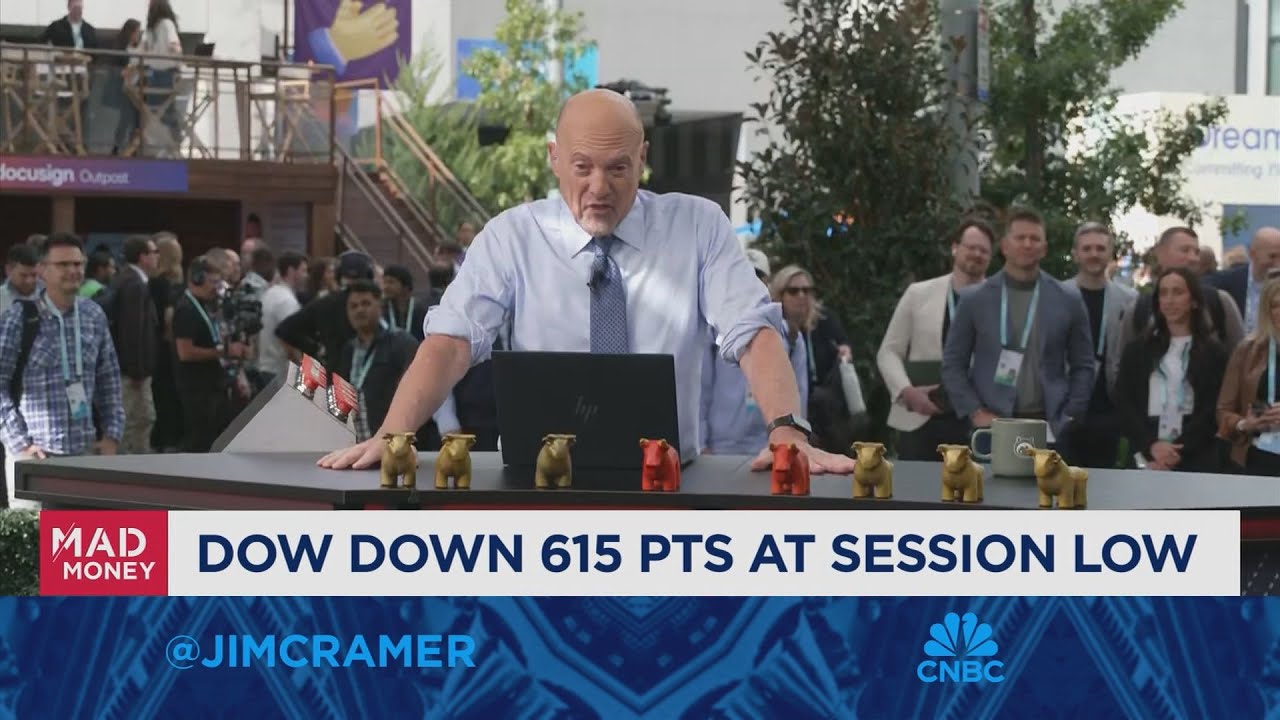
The day began on a decidedly grim note for tech and AI enthusiasts. Overnight trading saw "speculative stocks just getting clobbered," setting the stage for what Cramer described as a "hideous opening." Technology companies, particularly those often associated with the burgeoning AI revolution, bore the brunt of this early downturn. The Nasdaq Composite, a bellwether for the tech sector, experienced a significant dip, reflecting a broader sell-off that seemed to target the very companies driving the narrative of exponential growth and disruption. This initial market reaction underscored a prevailing nervousness among investors, who appeared to be shedding riskier assets in favor of more stable holdings.
However, the market’s narrative took a dramatic turn mid-day, largely influenced by remarks from Federal Reserve Chairman Jay Powell. Powell’s indication that the economy might need "the Fed's help," coupled with discussions about potentially ceasing the Fed's "endless bond selling," acted as a powerful catalyst. This shift in tone from the central bank, hinting at a more accommodating monetary policy, immediately buoyed sectors historically sensitive to interest rate movements. The turnaround was palpable, with bank stocks leading the charge and injecting a much-needed sense of optimism into the broader market. "It was led by the bank stocks, and they are so important to the health of the real economy. I cheered," Cramer enthusiastically recounted, emphasizing the fundamental strength these traditional industries represent.
This surge in the "real economy" was a stark contrast to the earlier struggles of the tech sector. While the Dow Industrials ultimately finished the day in positive territory, the S&P 500 and Nasdaq Composite, heavily weighted towards technology and growth stocks, remained in the red. This outcome reinforced Cramer’s central thesis: the day’s action was less about the futuristic allure of AI and more about the foundational elements of the economy. The market's pivot revealed an underlying preference for stability and value, as investors sought refuge in sectors like financials, industrials, and consumer staples, which often benefit from lower interest rates and a more robust economic outlook.
The market’s volatility wasn’t solely attributable to Fed pronouncements. A late-day "antagonistic post" from the President on Truth Social regarding China talks further unsettled investors, erasing a "big chunk of the gains" that had accumulated. This geopolitical ripple effect served as a reminder that even in an era dominated by technological advancements, traditional geopolitical and economic factors retain immense power to sway market sentiment and trajectory. Such external shocks often disproportionately impact growth-oriented tech stocks, which are more sensitive to global trade and economic stability.